A. T. Robertson, Paul, the Interpreter of Christ (Logos Free Book of the Month)

Logos has been giving away a free book each month for the last couple of years. This month they are offering a free copy of A. T. Robertson, Paul, the Interpreter of Christ for the Logos Library. This 154 page book is fully formatted for the Logos Library with real page numbers. All the features of Logos are available and the book will appear in the user’s library on both the desktop version of Logos and the iOS Logos app.

If we stop studying Paul, we shall miss much of Christ. A. T. Robertson, Paul, the Interpreter of Christ, p. 6.

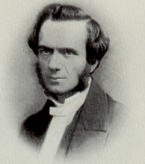
AT RobertsonA. T. Robertson (1863-1934) is perhaps best known his massive A Grammar of the Greek New Testament in Light of Historical Research. His Word Pictures in the New Testament was a standard work for pastors for many years. He taught at the Southern Baptist Theological Seminary in Louisville until he died in 1934.  Paul, the Interpreter of Christ was published in 1921 and is a companion to his life of Paul (Epochs in the Life of Paul, 1914). He tries to show that Paul did know Jesus, but interpreted him in a way that was distinct from Peter: “It was not a new Christ that Paul had to preach, but he had a more just perspective of the world-mission of Christ than any of the apostles had yet grasped (p.21-22)”

This book deals with some of the problems relating the message of Jesus and Paul. This is a topic which continues to be discussed in contemporary scholarship. David Wenham’s Did Paul Get Jesus Right (Kregel, 2010) and the essays in Todd Still, Jesus and Paul Reconnected (Eerdmans, 2007) indicate that there is a great deal of interest in showing that Paul was an accurate interpreter of Jesus, while Pamela Eisenbaum’s Paul was not A Christian (Harper, 2009) separates Paul from Jesus (or at least the later interpretations of Jesus).

Since the book is long past copyright, it appears in a variety of formats at the Internet Archive, and I did notice someone trying to sell it for $2.99 in the Kindle store. Most of the time these are books I already owned because they were part of some collection I had purchased in the past.  For some reason, this one is new to me. In fact, I enjoyed reading the book as I teach Pauline Lit this semester!

The offer expires at the end of October 2013, so head on over to Logos and get this free book for your Logos library.
Free Larry Hurtado Commentary for Logos Bible Software

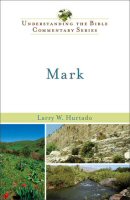
Hurtado, MarkLogos Bible Software is giving away a copy of Larry Hurtado’s commentary on Mark in Understanding the Bible series from Baker.  This series used to be published by Hendricksen as The New International Biblical Commentary Series.  When it moved to Baker Academic there was a name change and redesigned covers, but I believe the content is the same.  The series is a good “pastor’s commentary,” light comments on the English and Greek text. It is a very useful commentary for anyone who wants more depth than the average study Bible.  Visit the Logos Blog and get the code for the free book.

On the same page Logos offers a $20 gift code if you fill out a survey and fill out a FaithLife Study Bible Profile. The survey is long, but you can start and re-start it if you need to. (I tried to finish it today, but it stops after several questions; perhaps they will fix that soon!)

There are a number of discount codes from Logos the Blog as well, including D. A. Carson’s Pillar Commentary on Matthew (40% off).

Logos Free Book of the Month for August

Logos Bible Software is offering a free book each month in 2012.  For August, you can download B. F. Wescott’s Epistle to the Hebrews.  The book can be read with either Logos Bible Software, Vyrso, or Bilbia.com, either on your desktop computer or using the Logos App for iPad or the Android. Follow the link to download the book and enter the drawing for the 14-volume Classic Commentaries of the New Testament set, including J. B. Lightfoot’s classic, St. Paul’s Epistle to the Galatians and Swete on Mark.

Wescott (1825-1901) is an important NT scholar who is well known for his critical edition of the Greek New Testament (with F. J. A. Hort).  He served as Bishop of Durham (1890-1901), and was one of the Cambridge Apostles.

I included this commentary as part of my Top Five Commentaries on Hebrews, as a “classic.”   This is a classic commentary on Hebrews, available as an e-Book through Google (a 1903 third ed.) recentlyreprinted by Wipf & Stock (the first ed.) Like many older commentaries, this book runs the Greek text across the top of the page, with detailed (and occasionally cryptic) notes in dual columns. There are numerous “additional notes” scattered through the commentary which give additional lexical or theological content. What is it about a one-hundred year old commentary that makes it worth reading? Commentaries of this age are notoriously brief, cutting to the heart of the matter as quickly as possible. Wescott especially has a sense for reading Hebrews in the light of the rest of scripture, which is all the more impressive since he live well before computers made finding potential parallels quite easy.  The most intimidating thing about this commentary is that all parallel texts are given in Greek!

The book is free for Logos / Vyrso users,  download B. F. Wescott’s Epistle to the Hebrews and enter the drawing for the Classic Commentaries.

Logos Free Book of the Month for July

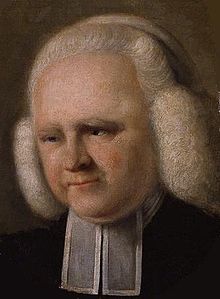
Logos Bible Software is offering a free book each month in 2012.  For July, you can download  Selected Sermons of George Whitefield  for free.  This Logos resource contains 59 sermons on a variety of topics, The book can be read with either Logos Bible Software, Vyrso, or Bilbia.com, either on your desktop computer or using the Logos App for iPad or the Android. Follow the link to download the book and enter the drawing for the 13-volume Works of George Whitefield.

George Whitefield (1712-1770) was an Anglican priest and one of the founders of Methodism.  He was a talented preacher and  influential evangelist during the Great Awakening. While he is associated with Methodism, his theology is Calvinist.  This collection of sermons covers several biblical passages, but also a few topics which are not as well-developed in contemporary preaching.  I cannot recall the last time a I heard a sermon on “The Heinous Sin of Profane Cursing and Swearing.”  His sermon on “The Benefits of an Early Piety” is quite good.

This book has been floating around the internet since Al Gore invented it.  If you would like to sample the sermons in HTML, visit the Christian Classics Ethereal Library.  The book is free for Logos / Vyrso users,  download a copy of  Selected Sermons of George Whitefield  and enter the drawing for the Works of George Whitefield.

Logos Free Book of the Month for June

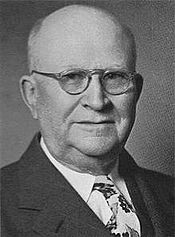
Harry A. Ironside

Logos Bible Software is offering a free book each month in 2012.  For June, you can download The Four Hundred Silent Years, by H. A. Ironside. The book can be read with either Logos Bible Software, Vyrso, or Bilbia.com, either on your desktop computer or using the Logos App for iPad or the Android. Follow the link to download the book and enter the drawing for the 65-volume Complete Works of H. A Ironsides.

Ironside (1876-1951) was a pastor and teacher often associated with the Plymouth Brethren, although he is well-known for his evangelistic preaching throughout America.  He was a visiting lecturer at both Moody Bible Institute and Dallas Theological Seminary, although he never accepted calls from either school to join the faculty.  He wrote commentaries on most books of the Bible as well as a large number of short booklets and tracts. Many of his books have been republished by both Kregel  Books and Loizeaux Brothers.  Ironside popularized of Dispensationalism in his books and was sometimes called  “the Archbishop of Fundamentalism.”  He is a member of the Brethren Writer’s Hall of Fame (although I suspect this is an unofficial list).

The Four Hundred Silent Years is a short book (only 104 pages) on the intertestamental period traces the history of Israel.  He first treats the period from the rise of Persia through the Hellenistic period in a chapter, with an emphasis on Ezra and Nehemiah.  There is a  chapter each on the Maccabean revolt and the “end of the Asmonean Dynasty.”  He describes the rise of the Herodians as “The Edomite Ascendancy” and close the book with a 10 pages summary of the Literature of the Jews.   The books is written in a narrative style with very little reference to primary sources (1 Maccabees or Josephus). This will make the book a fairly easy read for the casual reader.

It is difficulty to describe this book as useful since it was completed well before the publication of the Dead Sea Scrolls, in fact, before most of the literature collected by Charlesworth’s Apocrypha and Pseudepigrapha was available to scholarship!  His chapter on the “Literature of the Jews” contains only a few books from the Apocrypha, although he mentions the Pseudepigraphical books found in R. H. Charles, published just a year before Ironside’s own little book.  These books are only mentioned,

I think that this book is interesting, however, because Ironside is described as a fundamentalist and an early proponent of Dispensationalism.  He at least made the effort to understand the intertestamental period – something  fundamentalists 100 years later largely ignore (or worse, consider Catholic!)  This little book is therefore at least a historical artifact, although the general outline of the history he retells is not inaccurate. There are better and more “up-to-date” re-tellings of this history, but this is a decent overview of the Maccabean period.

The book is free for Logos / Vyrso users,  download a copy of  The Four Hundred Silent Years and enter the drawing for the Complete Ironside.