The New Perspective on Paul: An Introduction

In the fall I will be teaching Pauline Literature and Theology at the undergraduate level. In order to prepare for this semester, I re-read some texts that I have found valuable in the past, but also a few new books on Paul and his theology. Pauline studies have taken on new life in the last twenty years, primarily due to the rise of New Perspective on Paul. In two recent popular level books on Paul from Zondervan, the New Perspective is not far from the surface. In Four Views on the Apostle Paul (edited by Michael Bird, 2012), Douglas Campbell represents what he calls a “post-New Perspective” on Paul, although in that particular book he is the scholar who most resonates with this view of Paul and his theology. In Four Views on The Role of Words at the Final Judgment (edited by Alan Stanley, 2013), James Dunn represents a “New Perspective” view of works, but Thomas Schreiner must deal with that view in his presentation of the traditional reformed view.

E. P. SandersIn fact, it is hard to imagine a work on Paul’s theology which does not address the so-called “New Perspective on Paul” (NPP). Since Ed Sanders published Paul and Palestinian Judaism in 1979, a landslide of books have been published developing and modifying his ideas. The 2010 meeting of the Evangelical Society was almost entirely devoted to a discussion of the New Perspective, especially as expressed in the writings of N. T. Wright. I heard papers decrying the New Perspective as an attack on the assured results of the Reformation (one paper concluded with a lengthy quite of the Westminster Confession, as if that somehow proved the point being argued!) I have also heard papers from Wright Fan-Boys taking his ideas as if he has somehow become the Pope of Evangelicalism.

Usually these sorts of scholarly arguments are confined to the Academy. Several factors have dragged the New Perspective out of the University or Seminary classroom and into the popular media. First, the growing popularity of N. T. Wright over the last ten years has brought these ideas to the public’s attention. Wright has attempted to communicate at the popular level both in print and in his many speaking engagements every year. Second, since Wright is perceived as a representative of the New Perspective, he has come under fire from advocates of the traditional view of Paul’s theology. This too has taken place in more popular media than most academic debates. John Piper wrote a popular book which sought to correct Wright, although he more or less defends the traditional view of justification by faith. Wright responded with a book intended for laymen, Justification. Third, in the last seven years the phenomenon of “the Blog” has propelled otherwise arcane theological debates into the public eye. Bloggers do not have the same level of accountability as a major publisher and are far more likely to describe Wright as an arch-heretic bent on destroying God-Ordained Reformation Churches.

This sort of thing is picked up by pastors and teachers in local churches and trickles down to congregations. As a faculty member teaching in a conservative institution I am regularly asked what I think of Wright’s books. Rarely does the person asking the question know who James Dunn is, and they never have any idea who E. P. Sanders is nor do they have any real familiarity with the main issues in this debate.

That is the purpose of revising this series on Reading Acts. The New Perspective is not a dangerous idea which will destroy the heart of Christianity, although it will force a reconsideration of some of the assumptions of the Protestant Reformation. This is not to say it will turn Protestants into Catholics. As Wright frequently says, all he is trying to do is to continue the reformation by being faithful to Scripture and accurately describing Paul’s theology. Of course, that is what advocates of the traditional formulation are doing too.
NT Wright on Time

Yes, This is Fake

I find the reactions to Sanders, Dunn and Wright somewhat bewildering, mostly because I do not work within a context of a Protestant Reformed denomination. I have always resonated with a more Calvinist view of salvation, but I am not bound by a commitment to a confession nor do I have a strong affinity for Luther and the reformation, although that is probably because my tradition moved beyond the reformation in Eschatology and Ecclesiology. I agree with Wright that there is nothing wrong with “reforming the Reformation,” Calvin and Luther would want the discussion of Pauline theology to continue and make use of all of the evidence available today.

Because this is an important issue, I am going to devote five or six postings to the New Perspective in anticipation of my Pauline Theology and Literature class I will be teaching this fall. Here is my plan for this series, although I might add one or two more topics before I am finished. Feel free to suggest a potential topic for the series.

I will admit that this is a brief overview. Each of the topics ought to be a chapter of a book (they probably will be, eventually!) I am confessing up front that this series is woefully inadequate for a full understanding of the topics. For this reason I will provide a list of other resources for each post “for further study.” My goal is to provide a brief orientation to the New Perspective on Paul so that a student may read other works on the New Perspective with some context.

Book Review – Francis Watson, Gospel Writing: A Canonical Perspective (Part 4)

Watson, Francis. Gospel Writing: A Canonical Perspective. Grand Rapids, Mich.: Eerdmans, 2013. 665 pages, pb. $48  Link to Eerdmans.

[NB: This is a review of the third and final section of Gospel Writing by Francis Watson. I covered the first section (“Eclipse of the Fourfold Gospel“) here and the second (Reframing Gospel Origins) in two parts entitled “Reclaiming Gospel Origins” and “The Process of Gospel Writing.” My intention is to draw this lengthy review to a close in this post, briefly commenting on the final section of the book and providing some overall evaluation.]

Watson Gospel WritingPart 3:  The Canonical Construct

When I began reading Gospel Writing, I looked over the chapter titles and assumed that the last four chapters would be my least favorite of the book.  I thought that this would be a review of the commonly known history of the development of the fourfold Canon.  Certainly, that history is presented, but only in the service of the book’s major thesis that the non-canonical Gospels ought to be included in the discussion of Gospel formation. As outlined in my previous post, Watson wants to include non-canonical books like the Gospel of Thomas and Gospel of Peter as important witnesses of how the Gospel writers read the traditions they received and interpreted them in a different context.  I thoroughly enjoyed this section of the book, although it strikes me as rather far removed from the central section of the book. It could stand on its own as a brief monograph on the origins of the fourfold Gospel and the Canon.

Watson observes that one can approach the Gospels with the assumption that the many non-canonical Gospels postdate the four canonical Gospels. GThomas can be excluded from any account of how the Gospels were written because it was written after the “completion of the canon,” and it is therefore out-of-bounds. On the other hand, some scholars have pushed the date of the composition of GThomas earlier and argue that the book developed independently of the canonical Gospels. Such Gospels should be prioritized in the account of Gospel writing.

Both extremes are rejected simply because the dividing line between canon and non-canonical Gospels is arbitrary and value-laden.  To call a particular text “non-canonical” or “apocryphal” (or worse, unorthodox or heretical) is to presume something about that Gospel before it is read. It is entirely possible, Watson observes that authentic and authoritative words of Jesus are to be found in a Gospel which later was not recognized as canonical.

In order to support this thesis, Watson draws on references to the gospels in Clement of Alexandria. While Clement knew of a fourfold Gospel that “was handed down to us,” he also referred to the Gospel of the Egyptians. In dialogue with Julius Cassianus, Clement interacts with this non-canonical Gospel, but there is no indication that Clement did not accept at least the cited portion of the gospel as scripture.  Watson points out that Clement disagrees with the interpretation of the Gospel of the Egyptians rather than the use of the book. In fact, Clement is able to correct Cassianus’s interpretation by quoting more of the context of the saying (p. 420-1).  He does not state that the cited text is apocryphal or non-authoritative.

For Watson, Clement lives at a time when the fourfold canon is beginning to develop the authoritative standing it will have officially by the time of Eusebius.  In fact, Eusebius’s discussion of canon relies heavily on Clement. However, his references to other gospels are ‘suppressed” (p. 438). By the time Eusebius writes, the boundary between canon and non-canon is clear. Some gospels are “outside” of that boundary.  That is not necessarily “repressive.” However, it might have been understood that way by some Christians who cherished the Gospel of Peter, for example (p. 452).

If Eusebius stands on one end of the creation of a fourfold canon, Irenaeus represents its beginning (p. 454). This is often recognized, and because the classic statement on the four Gospels appears in Irenaeus’ work on heresy, it is often assumed that the motivation for a canonical list of Gospels is the response to heretics. Usually, this canon is a response to Marcion, mostly since Marcion offered his own “canon.” But Marcion still used the traditional texts, even if he narrowed the canon. However, like many other things in this book, Watson challenges this consensus view.  Irenaeus never states that the heretics are wrong because they use non-canonical gospels. In Gospel Writing, Watson shows that the Gnostic Valentinius appealed to the four Gospels rather than to any Gnostic gospels.

Irenaeus was motivated by a potential division between the Eastern Church (Ephesus) and the Western Church (Rome). Mark and Luke reflect the preaching of Peter and Paul, who are assumed to represent the West, while John and Matthew represent Ephesus and Antioch to the East. By advocating a fourfold Gospel, Irenaeus achieves “an ecumenical consensus by securing Western recognition of the gospel from Asia” (p. 502).

Watson includes a chapter on Origen, one of the first commentary writers.  “Commentary presupposes normativization” (p. 528), so Origen’s commentaries on Scripture are a window into what was considered canonical in the second century. Returning to themes he began early in his book, Watson describes how origin dealt with the differences between the four Gospels.  Origen approached the fourfold Gospel as a unit and represents a “reinterpretation of the complex textual object still known as ‘the gospel, though consisting of four gospels” (p. 552).

Conclusion. Watson’s Gospel Writing is (for me, at least) one of the more anticipated books of 2013. While this is not the last word on the Synoptic Problem, Watson has produced a major attack on the consensus view of Q.  While others have done similar work, Gospel Writing is one of the most comprehensive and cohesive arguments against the Q theory to date. Watson offers a “process” that explains how (and why) the Gospel writers used and reinterpreted received tradition. Perhaps more troublesome for more conservative scholars is his insistence that the non-canonical Gospels be included in the discussion. But Watson never argues that these Gospels are authoritative for doctrine or practice, only that they illustrate the process of Gospel Writing in the first century.

In a book of this size, there are many smaller issues that are open to question or clarification.  In some places, I think that Watson goes a bit beyond the evidence. Clement’s use of the Gospel of the Egyptians, for example, does not imply that he cherished the book. He may be quoting an opponent’s favorite text and pointing out that he has interpreted it wrong. That the fourfold Gospel was not a response to heretics may be too strongly stated since Clement does state that an opponent used a non-canonical gospel. Nevertheless, Gospel Writing is a valuable contribution to the ongoing discussion of the Synoptic Problem.

Eerdmans has produced a few “social media” extras for Gospel WritingHere is an interview with Watson discussing his canonical approach to the Gospels. In addition, there is a blog for the book with photographs to supplement several footnotes in chapter 11.


NB: Thanks to Eerdmans for kindly providing me with a review copy of this book. This did not influence my thoughts regarding the work.

Book Review – Sunday School That Really Excels

Parr, Sunday SchoolParr, Steven R. Sunday School That Really Excels. Grand Rapids, Mich.: Kregel, 2013. 204 pages, pb. $14.99. Link.

Sunday School That Really Excels is not the type of book that I usually review on Reading Acts. My reason for wanting to read the book is that I am involved in a local church that values Sunday school and I have regularly taught an adult Sunday school class for many years. I am always interested in improving what I do as a teacher and helping our church to improve as an organization.

Steve Parr has two other books in this series. In Sunday School That Really Works Parr lays out several principles for helping local churches develop their Sunday school programs. In Sunday School That Really Responds (2011) coaches leaders through challenges that Sunday schools may face on an organizational level.

But Sunday school is not considered important in many churches, especially for adults. Even the name “Sunday school” sounds a bit too old-fashioned for most modern churches. My own church re-named our Sunday school “Second Hour” in order to avoid the aversion to the word “school” that some people have. But as Thom Rainer says in this book, there is a correlation between church health and a strong Sunday school program (p. 27). Churches that reduce Sunday school or replacing it entirely with small groups run the risk of not providing a full range of discipleship for their congregations.

In Sunday School That Really Excels Parr illustrates some principles of excellent Sunday school programs in a variety of contexts. Each chapter is written by a director of education at a church, a pastor, or educational specialist familiar. Some chapters focus on a particular cultural context for doing Sunday school such as “the middle of nowhere,” Rural ministry, small congregations, or multicultural communities. Other chapters focus on Sunday schools excelling in a particular situation, such as an established ministry, a declining ministry, “on the heels of a crisis,” or in coordination with an attendance campaign. Each chapter describes a success story of a Sunday school that excels in a particular context. The author then draws some principles from that positive example that may help other churches in similar situations.

Two chapters address doing Sunday school along side of small groups. Many churches have already moved from a traditional Sunday school to a more socially oriented small group program. It is possible to argue that a traditional Sunday school simply does not work with modern young adults, for example, but a small group gathered for fellowship and Bible is attractive to that particular demographic. Elmer Towns offers some advice on the transition from a Sunday school to a small group program. Sunday school specialist Tim Smith’s chapter offers some advice on combining Sunday school and small groups.

Parr himself contributes a chapter on the “state of Sunday school today” as an introduction to the book. The chapter consists of an interview with Thom Rainer, former dean of the Billy Grahm School of Evangelism at Southern Baptist Theological Seminary and currently the president of Lifeway Christian Resources. Rather than list a series of statistics drawn from a Barna study to frighten readers about the state of the church, Rainer describes positively how a strong Sunday School contributes to the health of a church and to evangelistic community outreach.

In his final chapter, Parr offers a plan to help “excel-erate” a Sunday school program. Bad pun aside, this chapter takes the non-word “excel-erate” and presents a series of common sense principles that will help any church to improve and “accelerate” a Sunday school program. Because he is creating an acrostic, the order of these suggestions are not very well organized. But the list of principles are simple and clear. Each couple be expanded beyond the paragraph Parr is able to spend on them in this short book.

Conclusion. This little book illustrates how Sunday school can contribute to the health of a local church in a variety of contexts. For those who attend Baptist churches, the situations described by these chapters will be familiar. This does not mean that other denominations cannot find value in the book, but it is a decidedly Southern Baptist text. In addition, I would have liked to have seen the book organized better, however. The chapters seem a bit random at times, perhaps gathering all of the chapters dealing with different types of churches into a single section and chapters dealing with leadership issues into another section would have been helpful. There is a typo on page 163, the verb “live” is missing from the quote from Mark Twain (“I can live for two months on a good compliment.”)

These criticisms aside, this is a valuable book. It collects in very brief form some valuable suggests for “doing Sunday school” with excellence. Sunday School That Really Excel is an inexpensive book and would make a nice gift for Sunday school superintendents, pastors and teachers in order to encourage them in their ministries.

Thanks to Kregel Academic for kindly providing me with a review copy of this book. This did not influence my thoughts regarding the work.

Last Call for Carnival Links for August 2013

Pope CarnivalThe August 2013 Biblical Studies Carnival will be hosted by Brian LePort at Near Emmaus. Brian is a veteran Biblioblogger who will be giving a paper at the Blogger and Online Publication section at SBL this fall. But he could always use a few nominations as he collects the best blog posts on Biblical and Theological studies for the month.  Brian posted a “call for links” earlier in the month, so post your links there.

There was no volunteer for the July 2013 Carnival, so Jim West’s Avignonian Papacy Edition of the Carnival was official, an awkward reuniting the blog carnivals, slightly reminiscent of Pope Eugene IV meeting with dissident Nestorian groups in Mesopotamia in 1444.  Or the last family reunion I attended.  You get the idea.

This is the schedule for upcoming carnival for the rest of 2013 and beyond.

If are are willing to cover an upcoming Carnival, let me know and I will add you to the schedule.
Pope Carnival 2

Free Larry Hurtado Commentary for Logos Bible Software

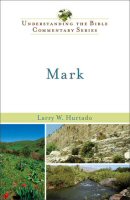
Hurtado, MarkLogos Bible Software is giving away a copy of Larry Hurtado’s commentary on Mark in Understanding the Bible series from Baker.  This series used to be published by Hendricksen as The New International Biblical Commentary Series.  When it moved to Baker Academic there was a name change and redesigned covers, but I believe the content is the same.  The series is a good “pastor’s commentary,” light comments on the English and Greek text. It is a very useful commentary for anyone who wants more depth than the average study Bible.  Visit the Logos Blog and get the code for the free book.

On the same page Logos offers a $20 gift code if you fill out a survey and fill out a FaithLife Study Bible Profile. The survey is long, but you can start and re-start it if you need to. (I tried to finish it today, but it stops after several questions; perhaps they will fix that soon!)

There are a number of discount codes from Logos the Blog as well, including D. A. Carson’s Pillar Commentary on Matthew (40% off).