Logos Bible Software is offering a free book each month in 2012. For August, you can download B. F. Wescott’s Epistle to the Hebrews. The book can be read with either Logos Bible Software, Vyrso, or Bilbia.com, either on your desktop computer or using the Logos App for iPad or the Android. Follow the link to download the book and enter the drawing for the 14-volume Classic Commentaries of the New Testament set, including J. B. Lightfoot’s classic, St. Paul’s Epistle to the Galatians and Swete on Mark.
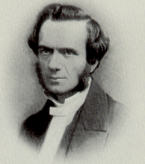
Wescott (1825-1901) is an important NT scholar who is well known for his critical edition of the Greek New Testament (with F. J. A. Hort). He served as Bishop of Durham (1890-1901), and was one of the Cambridge Apostles.
I included this commentary as part of my Top Five Commentaries on Hebrews, as a “classic.” This is a classic commentary on Hebrews, available as an e-Book through Google (a 1903 third ed.) recentlyreprinted by Wipf & Stock (the first ed.) Like many older commentaries, this book runs the Greek text across the top of the page, with detailed (and occasionally cryptic) notes in dual columns. There are numerous “additional notes” scattered through the commentary which give additional lexical or theological content. What is it about a one-hundred year old commentary that makes it worth reading? Commentaries of this age are notoriously brief, cutting to the heart of the matter as quickly as possible. Wescott especially has a sense for reading Hebrews in the light of the rest of scripture, which is all the more impressive since he live well before computers made finding potential parallels quite easy. The most intimidating thing about this commentary is that all parallel texts are given in Greek!
The book is free for Logos / Vyrso users, download B. F. Wescott’s Epistle to the Hebrewsand enter the drawing for the Classic Commentaries.
What is the best commentary on Hebrews? William Lane begins his introduction by describing the book of Hebrews as “a delight for the person who enjoys puzzles” (xlvii). I taught through the book of Hebrews in my evening Bible study in the fall of 2009, and I must agree with this assessment. One of the things which struck me about Hebrews commentaries when I was preparing for those sermons is that the sorts of questions and problems one encounters in Hebrews are unlike anything found in the Synoptic Gospels of Paul. In fact, I felt like teaching through Hebrews was like visiting a strange country where I did not quite know the language.
Authorship is main issue in the introduction to commentaries on Hebrews. The normal procedure is to “round up the usual suspects” and give some history of why these have all been rejected before settling on “anonymous” as the best solution. (I have a few posts on the authorship of Hebrews, if you are interested!)
The situation of the original readers is also an important matter which commentary introductions need to treat well. It is generally agreed that the audience is Jewish, living in Rome, and facing persecution. Is the “fiery trial” Nero’s persecution? Have they actually been persecuted, or is the writer anticipating a trial coming in the near future? That the readers are Jewish is assumed, but are they all Christian Jews? Is the letter something of missionary tract from a Jewish Christian to Jews in the Synagogue? Or is it aimed at Christian Jews to keep them from returning to the Synagogue in order to avoid persecution as a Christian?
Paul Ellingworth, The Epistle to the Hebrews (NIGTC; Grand Rapids, Mich.: Eerdmans, 1993). I am impressed by all the commentaries in the New International Greek Text series in terms of exegetical nuance and depth. Ellingworth provides 85 pages of introduction in addition to some 77 pages of bibliography. With respect to authorship, this commentary provides a comprehensive list of suggestions current to 1993, and settles on Apollos as the “least unlikely of the conjectures” (21). The commentary is comfortable with letting the author remain anonymous. He argues that the first readers were “predominately but not exclusively Jewish-Christian” (27), although it is only aimed as a particular group in Rome known to the writer. Like all the commentaries in this series, Ellingworth proceeds through the Greek text in a phrase-by-phrase fashion with all references cited in-text. This makes for a tough read since the language is quite technical. Commentaries on Hebrews necessarily must deal with the Hebrew Bible and Septuagint, Ellingworth demonstrates mastery of both. He regularly places the text of Hebrews in the context of Second Temple Period Judaism.
Craig R. Koester, Hebrews (AB; New York: Doubleday, 2001). This book replaces the earlier Anchor volume written by George Buchanan (1972), nearly tripling the size of the commentary. Like many of the early AB commentaries, Buchanan offered a new translation with only a light commentary. One thing I appreciated about the older commentary is that it had a Conclusion, offering several suggestions for authorship, origin, and purpose only after the book has been read exegetically. Most writers wait to writer their introductions last, but publishers always place the introduction (naturally) at the beginning of the book. Koester’s commentary offers a historical perspective absent from other studies. He begins with 63 pages on the “History of Interpretation and Influence.” He divides this introduction into several sub-sections (early church to 600; 600-1500; 1500-1750; 1750-present). This is an excellent overview of how Hebrews has been treated and will aid the reader in understanding what issues are at stake in reading Hebrews. Koester includes a “selected” theology of the book, since there are some any topics which can be covered theologically in Hebrews. The body of the commentary moves through the pericopes by offering a fresh translation, notes on the translation, and a comment on the theology of the section. Greek is treated in transliteration, sources are cited in-text, but a great deal of comparative literature appears in the footnotes as well.
James W. Thompson, Hebrews (Paideia; Grand Rapids, Mich.: Baker, 2008). This commentary is by far the most brief on the list, but Thompson’s work is very readable and will be useful for both scholar and layman. I think that this commentary might be the “first of the shelf” for the busy pastor. The commentary does an excellent job with the rhetoric of the letter, attempting to read the letter in the light of Greco-Roman homiletical tradition which was popular in the Hellenistic synagogue (13). He treats much of the writer’s use of the Hebrew Bible as midrash, a decidedly Jewish way of treating scripture. Hebrews 7 for example is a midrash on Gen 17:14-20 and Ps 110 (143). Thompson is also at home in the literature of the Second Temple Period, especially Philo. Commentaries on Hebrews must deal with parallels between the writer’s style and that of Philo of Alexandria, this commentary does so without losing sight of the biblical text. The commentary treats the English text with all Greek appearing in translation, sources cited in-text. There are numerous sidebars and occasional photographs in the commentary, something not usually including in scholarly works.
William L. Lane, Hebrews 1-8; Hebrews 9-13 (WBC; Dallas: Word, 1991). Lane’s commentary on Hebrews is one of the better in the Word series. He reads the letter as representing a Hellenistic synagogue, probably a loosely affiliated house church whose members are fairly typical of Diaspora Judaism. The church is located (most likely) in Rome and this letter is intended to encourage them to continue in their new faith in Jesus. Perhaps persecution is the main problem, but a kind of spiritual lethargy threatens the church as much as anything else. The introduction has a nice summary of discourse analysis as proposed by G. H. Guthrie. His summary of the theology of Hebrews is excellent, focusing primarily on the Christology of the book. The body of the commentary proceeds through each major section of the book by first providing a detailed bibliography (including many non-English works), followed by a fresh translation and notes on the text. The Word series always includes a Form/Structure/Setting section after the translation, Lane uses this section to comment on the rhetoric of the letter. The Commentary proper moves phrase-by-phrase, treating the Greek text without transliteration. Following the commentary proper is a short “explanation” drawing the exegesis back to the theology of Hebrews.
B. F. Westcott, The Epistle to the Hebrews (London: MacMillan, First ed. 1889, Second ed. 1892; Third ed. 1903). This is a classic commentary on Hebrews, available as an e-Book through Google (a 1903 third ed.) recently reprinted by Wipf & Stock (the first ed.) Like many older commentaries, this book runs the Greek text across the top of the page, with detailed (and occasionally cryptic) notes in dual columns. There are numerous “additional notes” scattered through the commentary which give additional lexical or theological content. What is it about a one-hundred year old commentary that makes it worth reading? Commentaries of this age are notoriously brief, cutting to the heart of the matter as quickly as possible. Wescott especially has a sense for reading Hebrews in the light of the rest of scripture, which is all the more impressive since he live well before computers made finding potential parallels quite easy. The most intimidating thing about this commentary is that all parallel texts are given in Greek!
Conclusion. There are a few commentaries on Hebrews I left off the list because the original series was a “top five” series. What! No F. F. Bruce?! David Allen’s new commentary from Broadman & Holman is worth a look, but I do not have a copy yet (here is a great review from Brian Small). This is why I give only five – this give you (the reader) a chance to let me know what you have found useful in your preaching and teaching.
Good evangelical commentary on Hebrews?Since I originally wrote this post, Gareth Lee Cockerill replace F. F. Bruce’s NICNT commentary (Eerdmans 2012) and Lexham Press posthumously published Grant Osborne’s Verse-by-Verse commentary (with George Guthrie), reviewed here. David G. Peterson replaced George Guthrie’s Hebrews in the Tyndale New Testament Commentary (IVP Academic, 2020), read my review here. Herb Bateman and Steven Smith launched the Kerux commentary series for Kregel Academic with their Hebrews commentary (arguing Barnabas was the author); read my review here.
One of the more common characterizations of Christians is that they live by “faith” not facts. Sometimes this is said in the context of a “faith versus science” debate. Scientists (we are told) hold to facts proven to be true, Christians believe in things that cannot be proven by facts. If a Christian is telling the story, then the scientist (probably an atheist Democrat) is too close-minded and too prejudiced to accept things he cannot explain rationally. If a scientist is telling the story, then the Christian is a soft-headed uneducated person (probably a Republican from Texas) who believes in childish things.
I am reminded of a rather funny passage in Douglas Adams’ classic Hitchhikers Guide to the Galaxy. All science fiction stories have to come up with some explanation for why everyone in the future distant reaches of space all speak English. Star Trek has a universal translator, for example. In his story, Adams describes the Babel Fish, a tiny fish which, when inserted in one’s ear, translates all languages into what every language the host person thinks. This fish is so complex it could not have possibly evolved naturally, so it is a clear proof of the existence of God. Adams goes on to say:
Now it is such a bizarrely improbable coincidence that anything so mindbogglingly useful could have evolved purely by chance that some thinkers have chosen to see it as a final and clinching proof of the non-existence of God.
The argument goes something like this: “I refuse to prove that I exist,” says God, “for proof denies faith, and without faith I am nothing.” “But,” says Man, “the Babel fish is a dead giveaway isn’t it? It could not have evolved by chance. It proves that you exist, and so therefore, by your own arguments, you don’t. QED.”
“Oh dear,” says God, “I hadn’t thought of that,” and promptly disappears in a puff of logic. “Oh, that was easy,” says Man, and for an encore goes on to prove that black is white and gets himself killed on the next zebra crossing.
As funny as this is, it points out a misunderstanding about faith. Faith is not believing in things you know to be untrue, or impossible, or strange. Having faith in the Easter Bunny does not make him real.
The writer of Hebrews defines faith is being sure of what we believe in. When a Christian talks about having faith, they are certain what they believe is built on a proper foundation and is objectively true.
“Sure” here is an important word, used only two other times in Hebrews (1:3 and 3:14). The NIV renders this word in three different ways, although the difference between Hebrews 1:3 and Hebrews 11:1 should not be as great at the NIV translates (substance vs. sure). Literally, the word means that which stands under, or foundation. The word began as a medical or scientific term, although nothing of that meaning remains in the New Testament usage. The word then was used in philosophy to describe the reality of something, as opposed to the philosophical “being.”
BAGD identifies ὑπόστασις as “substantial nature, essence, actual being, reality…” The meaning here in Heb 11:1 is most often given as “realization” or “reality.” Or as Louw and Nida comment, faith is “that which provides the basis for trust and reliance – trust, confidence, assurance.” The NIV’s “sure” tries to combine these meanings, the substance of hope is the thing that gives one confidence that the hope for goal will occur, something that gives assurance of an abstract concept, something that is not necessarily provable, without substance.
The “substance/proof” is for things that are hoped for, not seen. Hope is “to look forward with confidence to that which is good and beneficial.” In the New Testament, it is Jesus Christ that provides the basis for that hope, first in his work on the cross, and secondly in his promise to return. In the other five occurrences of the word in Hebrews, hope is rooted in salvation, each verse is talking about the content of our salvation, and in each case that hope is certain.
Hope in modern use tends to be more “wishful thinking.” I hope this is over soon, I hope I get that for Christmas, I hope my kids grow up right, etc. Biblical hope is an expression of something that will happen at some point in the future and it is so certain that I can live my life on the foundation of my hope.
Collin Hansen has an excellent interview with Peter O’Brien which specifically discusses the warning passages in Hebrews. Essentially, O’Brien makes the point that there are two kinds of faith in Hebrews, a genuine faith, analogous to the Parable of the Sower. Some people respond to the gospel, but not fully and therefore recant their faith when a time of persecution comes. Indeed this is usually the case when the gospel is preached, whether in the ministry of Jesus, people may respond positively but not come to real Faith in Jesus. That inadequate response is found in John’s Gospel as well. Nicodemus was positive towards Jesus, even friendly towards his teaching, but in John 3 I think he falls short of “saving faith.”
Scot McKnight has a response to this interview. He does not like this two-kind-of-faith approach, stating that it “strains the very language of the letter to the Hebrews.”In essence, McKnight says that it really does not make any sense to warn someone about apostasy (falling away from faith) if they have no faith to begin with! If someone has “spurious faith” then they really ought not be encouraged to continue in that faith. McKnight does not understand what “spurious faith” means in this context, although late in the article he offers what might be a good definition real faith “perseveres and to salvation” and spurious faith “doesn’t persevere and that leads to judgment.”
I wonder if O’Brien’s parallel to the Parable of the Sower is not a useful way to understand these warning passages. Within a group of followers of Jesus, there is a range of responses to the Faith. They all have heard the real gospel and have some sort of a response to it. They have all responded positively, but only one type of response is “salvation which perseveres.” In the Parable, it is the person who bears fruit. To appreciate the faith, or to admire Jesus and his teaching, or to enjoy the gifts of the Spirit is simply not enough. To be “right with God” one clings tenaciously to the Faith as it has been handed down to them, they bear fruit, and they endure whatever persecution comes their way. In fact, suffering for the faith seems to be a hallmark of “genuine faith” (Hebrews 12:3-11).
If this analogy is useful, then the exhortations in Hebrews are trying to draw those with weak or inadequate faith into a deeper, more full understanding of this “great salvation.” The time is coming, says the writing of Hebrews, when you cannot play at being a Christian – you may have to pay with your life!
Of all the letters in the NT, only Hebrews and 1 John lack the typical opening expected in a Letter. Why does the author remain anonymous?
It is possible the letter was not anonymous in the first place, but the address was lost early in the history of the letter. Perhaps the original document was intended to be delivered with a cover letter from the author which was customized for various synagogues or churches in Rome. Since the cover letter was unique to the church, it was not copied in the same way the letter might. But there is no evidence for this, either by manuscript or tradition. It is better to see the letter as intentionally anonymous.
It is also possible the letter was anonymous to protect the writer from any attacks from either Jews hostile to the gospel or Romans wishing to persecute the leaders of the church. Some scholars have pointed out that the Gospel of John does not identify every disciple (there are unknown disciples throughout the book). At least one explanation for this was to protect these still-living disciples from persecution. But this would seem odd for the author to hide his identity given that the letter encourages the readers to face persecution with boldness!
It is more likely that the letter was likely intended to be read in a number of different contexts as a literary piece, not a letter written for a particular occasion. Hebrews is a sermon addressed to anyone struggling with the relationship of Judaism and Christianity, although it is especially applicable in Rome in the early 60’s. An introduction with greetings from the author may not have been appropriate, if this is the case.
 Logos Bible Software is offering a free book each month in 2012. For August, you can download B. F. Wescott’s Epistle to the Hebrews. The book can be read with either Logos Bible Software, Vyrso, or Bilbia.com, either on your desktop computer or using the Logos App for iPad or the Android. Follow the link to download the book and enter the drawing for the 14-volume Classic Commentaries of the New Testament set, including J. B. Lightfoot’s classic, St. Paul’s Epistle to the Galatians and Swete on Mark.




You must be logged in to post a comment.