Factions in Rome (Part 1)

Factionalism was a problem for the Roman congregations before Paul.  Romans 14:1-15:7 indicates that there are some in Rome who considered food laws important enough to be a matter of contention, while others are not taking the food laws as applicable in Christ.

Romans 14:5-7 One man considers one day more sacred than another; another man considers every day alike. Each one should be fully convinced in his own mind. He who regards one day as special, does so to the Lord. He who eats meat, eats to the Lord, for he gives thanks to God; and he who abstains, does so to the Lord and gives thanks to God.

This may indicate divisions between Jewish Christians and Gentile Christians we have seen already by Acts 15 and Galatians.  Given the small size of congregations and immense population in Rome, it is likely that the churches functioned as islands of believers (to use Lampe’s word), perhaps initially ethnic enclaves.

Assuming that Philippians was written while Paul was in prison in Rome, it is possible to learn several things about the state of Christianity in Rome in the early 60’s.

Philippians 1:12-14 Now I want you to know, brothers, that what has happened to me has really served to advance the gospel. 13As a result, it has become clear throughout the whole palace guard and to everyone else that I am in chains for Christ. 14Because of my chains, most of the brothers in the Lord have been encouraged to speak the word of God more courageously and fearlessly.

Philippians 4:22 All the saints send you greetings, especially those who belong to Caesar’s household.

We know that Paul was influential in the household of Caesar.  He states that the whole palace guard has heard the gospel, presumably from solders converted while they were guarding him.  These guards would have been gentiles converted from paganism, as opposed to Jews converted within the synagogue. This indicates that Paul is continuing his two-part mission, to the Jew first and then to the Gentile.

Divided ChurchThat Paul had success among the Gentiles encouraged the local Roman church to also engage in a similar ministry. As we observed earlier, there was good reason for the Jews to avoid contact with the gentiles based on their expulsion under Claudius in A.D. 49.  Romans seems into indicate that the church in Rome was made up of a series of small house churches (Dunn calls them apartment churches, which is more accurate since the poor did not live in houses!)

There is some evidence in Philippians of factionalism.  Phil. 1:15 says that some people preach the gospel out of “envy and rivalry” and “false motives.” These opponents of Paul try to stir up trouble for Paul while he is in prison, possibly indicating that there are at least some who “preach the gospel,” meaning that Jesus is the Christ, the crucifixion and the resurrection, etc., but they are doing so in a way that is “against Paul.”  This may be personal, but it may also be theological. (Or some combination of the two, of course!)

This may indicate that they disagree with the more radical elements of Paul’s theology, that Gentiles come to Christ apart from the Law, without converting to Judaism.  It may be that these rivals opposed Paul and perhaps even disagreed with the Jerusalem council (or, were ignorant of it; or, did not feel that they ought to be bound by it). That there are Jews who would still oppose Paul in Gentile inclusion may indicate an earlier date for Philippians, or that the issue of Gentile inclusion remained a major sticking point for the early church.

It may be something of a surprise to find that there were some congregations in Rome that were openly hostile to Paul, that seems to be the evidence of the book of Philippians.

There is a bit more evidence of factionalism in 1 Clement.  This letter was written A. D. 95-97 by Clement, a bishop in Rome.  The church of Rome was undergoing persecution when the letter was written (1:1, 7:1) but still felt it important to contact the Corinthian church.  According to tradition, Clement was the third bishop of Rome, although it is not at all clear that there was a single unbroken line of bishops who exerted any kind of authority over all of Roman Christianity before the year A. D. 200.

Clement wrote this letter on behalf of the church of Rome to the church of Corinth for the purpose of advising them on certain church matters.  The letter was considered to have had some level of authority, although we do not know how it was received by the Corinthians.  For our purposes here, 1 Clement 5 is the key text, although Clement returns to Paul in chapter 47.

1 Clement 5:5-7 Because of jealousy and strife Paul by his example pointed out the way to the prize for patient endurance. (6) After he had been seven times in chains, had been driven into exile, had been stoned, and had preached in the East and in the West, he won the genuine glory for his faith, (7) having taught righteousness to the whole world and having reached the farthest limits of the West.  Finally, when he had given his testimony before the rulers, he thus departed from the world and went to the holy place, having become an outstanding example of patient endurance. (Translation by Holmes, p. 33.)

While Clement’s evidence is a bit later than Paul’s time, there is at least some evidence of the fact that Paul face opposition in those two years he was in Rome under house arrest.


The Church in Rome before Paul

Chronologically, Romans 16 provides the earliest glimpse at the character of the churches in the city of Rome before Paul arrived.   Christianity came to Rome through the synagogues.  It seems likely that Jews who heard the gospel while in Jerusalem at Pentecost returned to Rome and continued to fellowship in synagogues until at least A.D. 49, when Claudius “expelled the Jews.”  Paul wrote Romans in the second half of the 50’s to already existing congregations which have separated from the synagogues or were formed outside of the synagogues of Rome.

Paul in RomeEvidence for the church developing out of the synagogue is found in Romans 16.  Aquila and Priscilla are Jewish, as well as Andronicus, Junian and Herodion who are identified as Jewish (7, 11), the names Mary and Aristobolus may also indicate a Jewish origin.

According to Acts 18:2 and Seutonius, Claudius 25.4, Jews were expelled from Rome in A.D. 49 (although Dio Cassius dates the edict of Claudius to A.D. 41, Acts and Seutonius both agree with the early date).  Just who was expelled is debated, it is hardly possible to have the whole population expelled given a Jewish population of 30,000 at the time.  It is possible just the ringleaders were expelled, people such as Aquila and Priscilla.

Perhaps only a single synagogue engaged in the rioting over Chrestus and was completely expelled.  The bottom line is that by 49 there were lively debates among Jews over who Jesus was and these debates were violent enough to attract the attention of the authorities.  Romans implies that some Jews returned by the mid-50’s, specifically Aquila and Priscilla.  By the time Paul writes Romans, there are Jewish Christian congregations, perhaps mixed Jew and Gentile congregations, and maybe a purely Gentile Christian congregation.

How many congregations of Christians existed in the mid-50’s can be determined from Romans 16, Peter Lampe argues for at least five different Christian “islands,” but probably as many as eight, based on the following data:

  • The phrase “those with them” plus a proper name is used five times in Romans 16 (5, 10, 11, 14, 15). This may indicate Paul knows of five separate house churches in Rome.
  • There are other Christian names listed who probably did not belong to the same congregation (or they would be listed with the others), so at least two more could be implied.
  • Paul lived in Rome in a rented house, likely constituting an eighth congregation.
  • There is no central meeting place for these congregations.  Paul hosts at least one in his house, perhaps others met with him at other times for instruction and debate.  It is not too much of a stretch to imagine Paul engaged in the sort of ministry he had in Ephesus, teaching and debating the scriptures in an informal “school” at times when people could visit – afternoons and evenings.
  • In addition, there is nothing which requires a “church” to meet only on Saturday or Sunday, in ten different locations at general the same time.  It is possible that ten congregations meet at various times and in various places during the week, and even some individuals attending multiple churches.

The congregation size of a house church would vary depending on the home in which the church met.  I would suggest that the churches initially met on the analogy of a Synagogue, where ten men coming together to study the scripture constituted a synagogue. If this is the case, by the time Paul arrives in Rome in the early 60’s, there could have been only a few hundred Christian in a city of millions.

Yet in only a few years Christianity has grown to the point that Nero can use the “strange superstition” as a scapegoat for his fires.  By the 90’s Christianity has spread to even the imperial family, forcing Domitian to persecute Christians in Rome.

Bibliography: Peter Lampe, From Paul to Valentinus: Christians at Rome in the First Two Centuries (Minneapolis: Fortress, 2003).

Romans 13:1-7 – Paul and Empire (Part 2)

In the previous post, I argued that Paul commands obedience to the government.  I pointed out that the Roman government at the time was as oppressive as any in history and permitted any number of practices that we modern American Christians would not put up with more a moment.  Yet Paul said quite clearly that the Christian was to submit to the government because it was God’s appointed minister of justice!

I think that over all the Occupy Wall Street is a law-abiding and legal protest.  Most of the time the people involved work with city officials, obtain permits, etc.  The issue that they are raising is important as well – America is incredibly rich and ought to do more to care for the less-wealthy.  There is no way anyone in America should be hungry, malnourished, uneducated, or lack access to health care.

Despite the fact that Paul says to obey the government in Romans 13, I am not as happy with the  solution offered by the OWS, that the government do something to spread the wealth.  It is not a capitalist / socialist issue, it is a matter of responsibility.  The responsibility party for caring for the poor in a society is not the government, but rather the Church.  As I read Romans 13, I see nothing about the government providing a social safety net, only that they ought to enforce law and keep the peace.  The church is to care for the poor and needy, so that there are no more poor and needy.

I hinted at the end of the last post that Paul did in fact have rather subversive plan to reverse the evils of the Empire.  Like Jesus, Paul is interested in transforming people from death to life.  These members of the new creation will then transform society.  Paul was interested in caring for the poor and underclass, and the followers of Jesus modeled their meetings after the table fellowship of Jesus himself.  All shared food and fellowship equally.  That all are equal in the Body of Christ is amazingly subversive in a society which was predicated on social strata and inequality.

An example of the sort of subversive action which had an impact on poverty in the early church is found in 1 Clement 55.  In this letter written at the end of the first century, Clement praises Gentile Christians who have risked plague in order to save fellow citizens, allowed themselves to be imprisoned to redeem others, and sold themselves into slavery in order to feed the poor.   I cannot imagine anyone in the twenty-first century taking out a second mortgage and donating the money to a local inner city ministry that cares for the poor.  Someone may have done this, but it is exceedingly rare.

IngsocI think the church does a good job on social issues, but given the wealth flowing through most American churches, so much more could be done.  I am not necessarily talking about throwing money at the problem.  There are many creative low-cost efforts to relieve the conditions which cause poverty.  What would happen if the Church dedicated itself to solving poverty in the inner cities of America instead of building big glass churches? What if a single mega-church dedicated their offerings to poverty relief rather than building improvements?  What if we spent as much on helping African orphans as we do on the sound systems for our churches?

What Paul started in Acts 13 brought down the Rome.

Romans 13:1-7 – Paul and Empire (Part 1)

The transformed life ought to effect one’s relationship with government.  This is based on common idea in the Hebrew Bible that God ordains the rulers and the nations.  Since Paul is speaking about the Roman empire, it must mean that the Christian ought to obey even an evil government. Paul uses the same verb here in Romans 13 as he did in 8:7, with reference to submitting to the will of God.  Paul therefore means that the transformed believer must obey the government because it is God’s appointed authority.  Perhaps by extension, when you obey the government, you obey God.

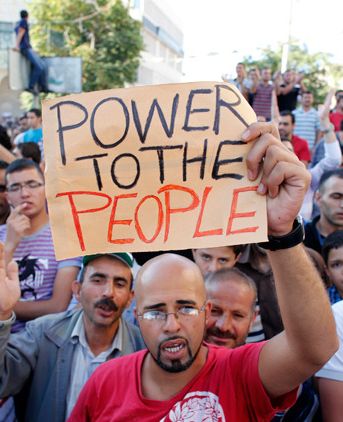
PowerBut most people immediately ask: if that government abuses its power and rules unjustly, is it then appropriate for a Christian to rebel to change that government?  Usually Christians will say they will obey the government insofar as the government commands that are not contrary to God’s commands.  I can hear many former students asking about life under an oppressive government that does not allow personal freedom or abuses citizens.  What if the government restricts my personal freedom?  What if the government wants to take my guns away?  What if the government permits same-sex marriage, abortion, or the use of marijuana?  What if the government were to be controlled by Islam and Sharia law is imposed on us?  Should we rebel and against the government then?

I think it is critically important to realize that in the first century, no member of Paul’s congregation would have ever asked this question.  No one would have plotted the fall of the Roman empire, nor would a Roman Guy Fawkes attempt to blow up the Senate.  Rome really did bring peace to the world and Rome did really provide services which raised the social and economic fortunes of everyone.  No one would have considered joining the Occupy Wall Street movement to protest the outrageous economic practices of the Roman Empire, nor (in the interest of being fair and balanced), would anyone dream of complaining about their taxes and joined the Tea Party.  Those categories simply do not exist in the first century, and if they did, Rome would have silenced them with extreme prejudice!  The young lady with the sign in this picture needs to realize that protesters did not burn Rome, Nero did!

Big-BrotherConsider what the Roman empire was like in the mid-first century.  They did oppress people, the enslaved millions, they promoted the worship of every god imaginable, and they imposed their religious laws on everyone.  Infanticide was practiced and homosexual relationships were permitted (although nothing like gay marriage really existed).  Paul does not add any sort of condition to the command to obey the established government, despite the fact that the Roman government was one of the most oppressive regimes in history!

I do not read anything in Romans 13 or in Paul’s relationship with Rome that sounds anything like a protest against the government.   Paul’s method for dealing with social ills was far more subtle than mass protests – and much more effective.  He told the church to fix the problems themselves by caring for the poor, the widow, the orphan.  There is nothing here in Romans 13 which would support the overthrow of Rome, either in the first century or the twenty-first.

Colin Kruse, Paul’s Letter to the Romans (PNTC)

Colin G. Kruse, Paul’s Letter to the Romans. PNTC. Grand Rapids, Mich.: Eerdmans, 2012., xlii + 627 pp., HB; $52.00.  Link to Eerdmans

Colin G. Kruse is senior lecturer at Melbourne School of Theology and author of several other fine commentaries, including the Letters of John in the Pillar series and two short commentaries on 2 Corinthians and John in the Tyndale New Testament series. He wrote a monograph on Paul in 1997 (Paul, the Law, and Justification, Hendrickson, now reprinted by Wipf & Stock, 2006). Kruse is not a representative of the New Perspective (which would not be expected in a series edited by D. A. Carson), but he does not march lock-step with the traditional view of Paul either. This provides something of a fresh perspective on Romans. This fairly readable commentary is focused on the text of Romans without being overly distracted by the current scholarly debate on the relationship between Paul and Judaism.Kruse, RomansThis commentary replaces the 1988 Leon Morris volume in the Pillar series. While it might seem strange to replace a commentary after only 25 years, much has happened in the study of Paul since Morris’s work was completed. While E. P. Sanders wrote his Paul and Palestinian Judaism in 1979, there is nothing in Morris’s commentary that interacts with Sanders or his view on Judaism. In fact, Morris had a single paragraph in his introduction on the topic of Romans and Judaism, and he cites only J. Christiaan Beker, Paul the Apostle. Morris’s Romans commentary is still valuable, but it reads like a commentary produced in the seventies and does not address some of the questions more recent scholars have put to the book of Romans.

Since Morris’s commentary appeared, scholars associated with the New Perspective on Paul have developed many of Sanders’ ideas well beyond Paul and Palestinian Judaism.  Commentaries from James Dunn and N. T. Wright have brought the insights of the New Perspective to bear on the letter to the Romans. In contrast, others such as Schreiner and Moo have contributed major commentaries from a more traditional perspective. In addition, Robert Jewett’s excellent commentary on Romans appeared in the Hermenia series in 2006, providing yet another excellent and detailed study of Romans. It is, therefore, understandable that the Pillar Series would offer a new commentary on this important Pauline letter.

The Introduction. The thirty-three-page introduction covers the standard issues expected in a Romans commentary, and Kruse does not stray far from a traditional view of when the book was written. He understands the book’s primary purpose to be Paul’s attempt to minister via a letter to Christians in Rome for whom he had an apostolic responsibility. The Christians addressed are a mixed congregation of Jews and Gentiles, like Paul’s churches in Galatia and Corinth. Paul wants to “exercise ministry by letter” as a forerunner to his planned ministry in person (10). The secondary purpose is to prepare for a planned mission to Spain.

The longest section of the introduction (14-22) is devoted to the New Perspective on Paul and how that perspective has understood the Book of Romans. He primarily interacts with Wright and Dunn since they have adapted and extended Sanders’ initial insights, and both have written major commentaries on Romans. Kruse does not engage in strawman tactics by using early statements that have been revised and clarified. Rather he cites the most recent work by Dunn and Wright (Justification, 2009). Kruse makes several conclusions on the New Perspective, which guide his commentary.

First, he finds that the New Perspective has correctly pointed out Covenantal Nomism in some Second Temple Period literature, but legalism does appear in some texts (especially 4 Ezra). This seems to be the conclusion of many Pauline scholars who have read Sanders and attempted to work with the literature of the Second Temple Period. In many ways, the New Perspective is a helpful correction, but Sanders’ description of Second Temple Period Judaism is not the only form known from the sources (see the essays in Justification and Variegated Nomism, Baker, 2004).

Second, for Kruse, by the time Paul wrote Romans, the phrase “works of the law” referred to the “whole law,” not simply the “boundary markers” of circumcision, Sabbath, and food laws (176). After evaluating Wright and Dunn, Kruse concludes that when Paul says “no one is justified by works of the Law” (Romans 3:20), he means keeping the whole law, not simply the boundary markers. What I find missing here is any discussion of the phrase “works of the Law” in the Qumran literature, especially 4QMMT. Since he has a substantial excursus on the phrase “works of the law” (173-6), I would have expected some interaction with Qumran, especially since Wright emphasizes 4QMMT frequently. I think that this is implied by Kruse’s comment that the earlier use of the phrase primarily meant “boundary markers,” but the text is not referred to in the introduction or commentary.

Third, Paul was critical of ethnocentricism and exclusivism as well as the legalistic tendencies of Second Temple Period Judaism. While Sanders is famous for saying that Judaism was not a legalistic religion in the Second Temple Period, Kruse understands that at least some Jews were, in fact, legalistic. It is this legalism that Paul argues against in Romans.

Fourth, justification by faith “was articulated as part of his defense of the incorporation of Gentile believers into the people of God without having to submit to circumcision or take upon themselves the yoke of the Law” (21). This does not mean that Paul created “justification by faith” so that he could do Gentile ministry. Kruse cites Machen, “Paul was not devoted to the doctrine of justification by faith because of the gentile mission, he was devoted to gentile mission because of the doctrine of justification by faith” (20).

Fifth, Paul’s law-free gospel did not imply a denigration of the law. Rather, Paul argues that the Law functions as a great privilege for Israel, which ultimately increases sin and awareness of sin (29). Believers are free from the Law, but they are not free to live sinful lives. While they live under grace, the Law can have a “educative role for believers,” a guidance for godly living (29).

Last, with respect to the controversial topic of justification, Kruse states that his understanding of Paul is that justification is “God’s declaration in favor of the believer” (22). Justification is forensic, referring to “God’s decision as a judge to justify sinners (27). This sounds very much like the traditional view of Paul, although Kruse does admit that justification is not itself the whole gospel message. Wright frequently quips that his critics use the word justification to mean “total salvation,” Kruse seems to agree with this critique.

The Commentary. The commentary proper moves through Romans pericope by pericope. Each section begins with a brief introduction, and text of the NIV 2011 is provided. The body of the section then moves verse by verse, commenting on the English text of Romans (in italics). All references to Greek are transliterated and, for the most part, appear in the footnotes of the commentary. In addition, Kruse often interacts with subtle exegetical points in the notes, which may not interest the general reader. This makes the body of the commentary more readable and useful for a pastor or teacher preparing to preach a text in Romans.

Kruse interacts with a broad range of scholarship, including both classic commentaries as well major recent contributions. He makes frequent references to Cranfield (ICC, 1975, 1979), but also to Dunn (WBC 1988), Fitzmyer (AB, 1993), Byrne (1996, Sacra Pagina), Moo (NICNT, 1996), Wright (NIB, 2002), and Jewett (2006, Hermenia). I especially appreciate Kruse’s style of listing several options (usually with Roman numerals) and clearly identifying his view. This respectful weighing of options makes it easy to wade through what might be an otherwise daunting array of opinions.

Like most of the commentaries in the Pillar series, Kruse deals with details that go beyond the text in a series of excursus or “additional notes.” These are sometimes aspects of the New Perspective, such as “Justification” or “Works of the Law.” A few of these sections deal with troubling exegetical problems, such as “All Israel will be Saved” (448-9) or the “Identity of the ‘I’ in 7:7-25.” Kruse often develops an element of Pauline theology, such as “Natural Theology” or “Eternal Life in the Pauline Corpus.” These sections are usually brief and could be skipped, but they connect to larger issues of Pauline theology. These brief notes form a sort of mini-dictionary of Pauline Theology.  I would have appreciated seeing a list of them in the index sorted by topic, but they appear in the table of contents.

Conclusion. Kruse has contributed an important commentary on what most consider Paul’s most important book. While it is not as lengthy or detailed as some, it is an excellent commentary for teaching and preaching the book of Romans. Kruse is a careful scholar who has written a commentary that will serve the church for years to come.


Other volumes reviewed in this series:

James R. Edwards, The Gospel according to Luke

Colin Kruse, The Letter to the Romans

Mark A. Seifrid, The Second Letter to the Corinthians

Constantine R. Campbell, The Letter to the Ephesians

Robert W. Yarbrough, The Letters to Timothy and Titus

Peter T. O’Brien, The Letter to the Hebrews (No longer available from the publisher)

Sigurd Grindheim, The Letter to the Hebrews

Colin G. Kruse, The Letters of John (PNTC; Second Edition)

NB: Thanks to Eerdmans for providing a copy of this book for review