The transformed life ought to affect one’s relationship with the government. This is based on the common idea from the Hebrew Bible that God ordains the rulers and the nations. Since Paul is speaking about the Roman empire, it must mean that the Christians ought to obey even an evil government. Paul uses the same verb here in Romans 13 as he did in Romans 8:7 concerning submitting to the will of God.
Paul, therefore, means the transformed believer must obey the government because it is God’s appointed authority. By extension, when you obey the government, you obey God.
But most people immediately ask: if that government abuses its power and rules unjustly, is it then appropriate for a Christian to rebel to change that government? Usually, Christians will say they will obey the government insofar as the government commands that do not contradict God’s commands.
What if the government restricts my personal freedom? What if the government wants to take my guns away? What if the government permits same-sex marriage, abortion, or the use of marijuana? What if the government were to be controlled by Islam and Sharia law is imposed on us? Should we rebel against the government then?
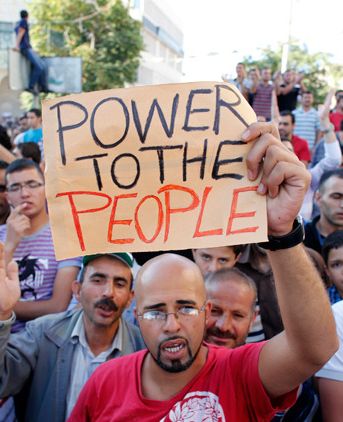
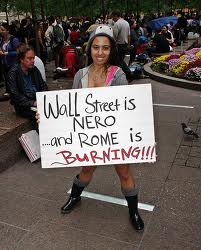
I think it is critically important to realize that in the first century, no member of Paul’s congregation would have ever asked this question. No one would have plotted the fall of the Roman empire, nor would a Roman Guy Fawkes attempt to blow up the Roman Senate. (Except for Spartacus, but the circumstances are different.) Rome did bring peace to the world, and Rome did provide services that raised the social and economic fortunes of everyone. No one would have considered joining the “Occupy Appian Way” movement to protest the outrageous economic practices of the Roman Empire, nor (in the interest of being fair and balanced), would anyone dream of complaining about their taxes and joined the Tea Party.
Should Christians Submit to the Government? Those categories did not exist in the first century; if they did, Rome would have silenced them with extreme prejudice! Members of Paul’s churches couldn’t protest their emperor or hold up “Impeach Nero” signs in public.
Consider what the Roman Empire was like in the mid-first century. They oppressed people, enslaved millions, promoted the worship of every god imaginable, and imposed their religious laws on everyone. Infanticide was practiced, and homosexual relationships were permitted (although nothing like gay marriage existed then). Paul does not add any condition to the command to obey the established government, even though the Roman government was one of the most oppressive regimes in history!
I do not read anything in Romans 13 or in Paul’s relationship with Rome that sounds anything like a protest against the government. Paul’s method for dealing with social ills was far more subtle than mass protests – and much more effective. He told the church to fix the problems by caring for the poor, the widows, and the orphans. Nothing in Romans 13 would support the overthrow of Rome, either in the first century or the twenty-first.