Just when you though the Logos Free Book of the Month promotion could not get any better, they offer Brevard Childs’ commentary on Isaiah in the in OTL series for free through the month of April. This 576 page commentary on on Isaiah was published by Westminster John Knox Press in 2000. Childs is a one of the major voices in the development of what has become known as “canonical criticism” as early has his OTL Commentary on Exodus (1974) and his Biblical Theology of the Old and New Testaments. Canonical Criticism means the exegete attempts to read the final form of the text of Isaiah a whole in order to develop theological themes, often listening to how those theological themes resonate in later historical Christian and Jewish interpretations. While the commentary is often not as nuanced in lexical or syntactical issues as some reviewers would have liked, Childs is an excellent expositor of the text and has a broad understanding of Jewish and Christian interpretations of Isaiah. Childs has continued to write on Isaiah, his The Struggle to Understand Isaiah as Christian Scripture was published by Eerdmans in 2004.
In addition to the Free Book of the Month, Logos is offering Leslie Allen’s 2008 Jeremiah commentary in the OTL series for only 99 cents. Allen contributed the Ezekiel (1990, 1994) and the Psalms 101-150 (2002)in the Word Biblical Commentary and a Minor Prophets commentary ( NICOT series from Eerdmans). This 656-page commentary replaced Robert Carroll’s OTL commentary in the series and was very well-received in the academic community.
This is perhaps the best giveaway from Logos to date and I can think of no better use of 99 cents than adding these two resources to your Logos library.
Childs, Brevard S. The Struggle to Understand Isaiah as Christian Scripture. Grand Rapids, Mich.: Eerdmans, 2004. 332 pp. $35, hdbk. $19.25, Kindle.
When Brevard Childs finished his commentary on Isaiah in 2001, he had some unfinished business. In the Introduction to The Struggle to Understand Isaiah, he explains that writing a commentary does not permit serious reflection on the way Isaiah has been read by past interpreters or the hermenutical assumptions made by these interpreters over the long history of reading Isaiah as Scripture.
Childs summarizes the problem he wants to address in this way: “I am very conscious of the great confusion in the church generated by an endless number of conflicting approaches for reading the Bible. Not only has the subject been heavily politicized both by the right and the left, but the field has become awash with a parade of fads, each promising major advances in personal and communal enlightenment” (x.)
Every generation has sought to read and interpret Scripture as God’s word, and apply that Scripture to the “present day.” And every generation has created a “method” which is believed to be the proper way to read Scripture. While some of the allegorical interpretations of the medieval church are laughable today, it was at one time the “assured results of scholarship.” In the same way, reading a serious scholarly commentary from the late nineteenth-century is usually an exercise in futility since the method used to read and interpret scripture has been completely rejected.
Does this mean that the church was hopelessly confused about the meaning of Scripture for the better part of two millennia until we wise moderns came along to sort things out? Or does this mean that Scripture has no real meaning until enlightened imaginations encounter it and create meaning? Neither option is attractive to Childs. He therefore wants to read a wide selection of commentaries on Isaiah in order to discover any consistency over the centuries of interpretation. My first reaction is “I cannot learn anything from Origen!” But this is not true; as Childs shows there is some consistency from the earliest Christian readings of Isaiah to the present.
Despite the fact that it is pre-Christian, Childs begins with the Septuagint as the earliest interpretation of Isaiah. This is an important step since it shows that Jewish readers in the second century B.C. were already struggling to read Isaiah and apply it to their own situation. After observing how the translators of the Septuagint struggle to read Isaiah, Childs surveys examples of commentaries on Isaiah from the earliest Christians (Justin Martyr, Irenaeus, Clement of Alexandria, Origen) through the great thinkers of the Church (Jerome, John Chrysostom, Thomas Aquinas) and the Reformation (Luther and Calvin). He treats the seventeenth and eighteenth centuries, nineteenth and twentieth centuries, and postmodern interpretations in single chapters.
By moving through such a large number of representative commentaries, Childs then concludes by looking for what he calls “family resemblances” between these various Christian voices. He finds seven basic characteristics of Christian interpretation of scripture based on his historical survey of Isaiah commentaries.
Authority of Scripture.
Literal and Spiritual Sense of Scripture.
Scripture’s Two Testaments.
The Divine and Human Authorship of Scripture
The Christological Content of the Bible.
The Dialectical Nature of History.
History and the Final Form of the Text.
In the end, I think that Childs has collected the basic consistencies in this wide variety of literature. At least the first five of his points (and probably the seventh) would be true for any commentary I have read and found useful for teaching and preaching. I would also hope that my own reading of the Bible is consistent these points as well.
I do have some reservations, however. I do not think that every passage from the Hebrew Bible must be read Christologically. Certainly Isaiah 7:14 must be, since there is warrant in the New Testament for this topological reading. But what about Hezekiah’s illness in Isa 39? Must I read Christ into that account? It seems to me that the text has nothing specific to say about Christ and a great deal to say about how God is dealing with his people at that time and place in history. To find a Christological principle in Isaiah 39 seems to rob the text of the original meaning.
Childs provides an excellent overview of how thoughtful Christians have read Isaiah in the past. This alone makes the book a valuable contribution. His conclusions show that there is much consistency between the various Christian voices which have struggled to read Isaiah. Whether this is a platform for developing a “Christian Hermenutic” remains unclear, but Childs certainly shows that one cannot read Scripture as a Christian unless Scripture is central.
 Just when you though the Logos Free Book of the Month promotion could not get any better, they offer Brevard Childs’ commentary on Isaiah in the in OTL series for free through the month of April. This 576 page commentary on on Isaiah was published by Westminster John Knox Press in 2000. Childs is a one of the major voices in the development of what has become known as “canonical criticism” as early has his OTL Commentary on Exodus (1974) and his Biblical Theology of the Old and New Testaments. Canonical Criticism means the exegete attempts to read the final form of the text of Isaiah a whole in order to develop theological themes, often listening to how those theological themes resonate in later historical Christian and Jewish interpretations. While the commentary is often not as nuanced in lexical or syntactical issues as some reviewers would have liked, Childs is an excellent expositor of the text and has a broad understanding of Jewish and Christian interpretations of Isaiah. Childs has continued to write on Isaiah, his The Struggle to Understand Isaiah as Christian Scripture was published by Eerdmans in 2004.
 In addition to the Free Book of the Month, Logos is offering Leslie Allen’s 2008 Jeremiah commentary in the OTL series for only 99 cents. Allen contributed the Ezekiel (1990, 1994) and the Psalms 101-150 (2002)in the Word Biblical Commentary and a Minor Prophets commentary ( NICOT series from Eerdmans). This 656-page commentary replaced Robert Carroll’s OTL commentary in the series and was very well-received in the academic community.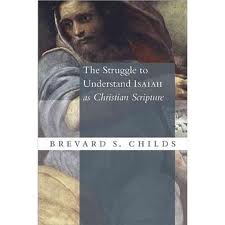
You must be logged in to post a comment.