The latest Journal for the Study of Paul and His Letters (Spring 2013) arrived today. There is no “theme” for this issue, but there is a response to Steven Enderlein’s article on Romans 3:23 from a 2011 JSPL issue. Stanley Porter and Wally Cirafesi. In that earlier article Enderlein argued that the verb ὑστερέω, traditionally translated as “fall short” in Romans 3:23 ought to be translated as “lack.” The verse would then read “all have sinned and lack the glory of God.” He goes on to argue that this leads to a subjective reading of πίστις Χριστοῦ. Porter and Cirafesi agree with his translation of ὑστερέω, but do not agree that this forces a subjective (as opposed to an objective) genitive of πίστις Χριστοῦ. (For those who missed the 9000 articles on pistis christoi, if the genitive is subjective, then Paul is focused on the “Jesus’ faithfulness” rather than “faith in Jesus.”) Enderlein finds the subjective reading more coherent in the context of Romans 3-4. He has in mind “Adam allusions” throughout Rom 1-7, especially in 3:21-26 and 5:12-21.
I enjoyed David Starling’s article on “The Children of the Barren Woman: Galatians 4:27 and the Hermenutics of Justification.” He reads the somewhat odd allusion to Isa 54:1 in the context of the story of Israel, which is the context of the middle section of Galatians. In fact, Starling points out that Paul’s use of Isa 54:1 is without parallel in the Second Temple Period. Isaiah 54 was written to Israel while the nation is still in exile in a Gentile nation (still under the curse), and for Paul, Israel is still in this typological exile. Everyone is under the power of sin and must “come of out of the exile” in the same way, by means of God’s grace and not Torah observance.
There is also a long article my Mark Nanos on “Paul’s Polemic in Philippians 3.” I browsed a few pages, looks like it is well-worth the read. There are a number of other articles in this number of the Journal, including Nijay Gupta’s review of Christ Tilling’s Divine Christ in Paul.
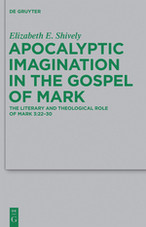
Shively, Elizabeth E. Apocalyptic Imagination in the Gospel of Mark: The Literary and Theological Role of Mark 3:22- 30. BNZW 189. Berlin: Walter de Gruyter, 2012. 295 p. $140.00 Link.
Elizabeth Shively is a lecturer in New Testament at University of St Andrews. Her book Apocalyptic Imagination in the Gospel of Mark is a light revision of her 2009 Ph.D. Emory University dissertation written under the guidance of Luke Timothy Johnson.
The basic thesis of the study is that Mark 3:22-30 functions as a programmatic statement for the Gospel of Mark. Three short parables and logion are placed together in order to construct the symbolic world which shapes the Gospel of Mark on both a literary and theological level. Shively understands parables of the Kingdom / House Divided and the Strong Man as apocalyptic discourse which is used to answer the question of the source of Jesus’ authority to cast out demons, but also to interpret Jesus for a new community of believers who are suffering. For Shively, Mark 3:22-30 is “cluster of apocalyptic topoi” that Mark expands to “reveal a word of cosmic conflict manifest in Jesus’ ministry” (p. 5).
Shively points out that most scholars who work on parables do not work with these three short sayings, despite the fact that Mark specifically calls them parables in 3:23. The reason for this is that most monographs on parables have defined the genre in a way which rules out these sayings. By taking this pericope as a programmatic statement for the gospel of Mark, Shively hopes to read Mark as a coherent, unified narrative within its own symbolic world. That world is “Jewish apocalyptic thought” as expressed in parabolic forms. By constructing this paragraph has he has, Mark is “describing Jesus’ ministry as ‘more than a rescue operation,’” Jesus is beginning the “reconstructive work of the Kingdom of God” (p. 82).
While the Gospel of Mark is obviously not apocalyptic in terms of genre, Mark is an “apocalyptic thinker.” Following Luke Timothy Johnson’s definition of symbolic worlds, she points out that symbols are “social structures in which people live” (p. 29). Clusters of symbols help people to understand the world and communicate that understanding to others who share these symbols. Like most modern scholars who work on symbols and metaphors, she stands on the foundation of Lakoff and Johnson Metaphors We Live By, applying their insights to the apocalyptic worldview of first century Judaism. Figurative language appears in this pericope to “stage a cosmic drama” (p.81).
Shively explains that apocalyptic symbols have two dimensions. There is a vertical dimension to this literate in which cosmic forces are involved in earth. This may take the form of angels and demons active in the world, for example. The horizontal dimension is a movement toward an imminent eschatological salvation. The righteous are undergoing persecution and look forward to God breaking into history to liberate them from their oppressors. This description of apocalyptic thinking is clear from texts that are considered apocalyptic by genre; Shively argues in this book that Mark reflects that thinking in his Gospel and uses it to shape his theological interpretation of Jesus’ ministry.
By way of method, Shively reads Mark 3:22-30 both “inner-textually” and intertextually. By inner-textually she means the “story world of Mark.” This means that she will pay attention to the Gospel of Mark as a whole, examining the rhetoric, plot, and characters of the book in order to trace the author’s interests. The second chapter of this book places this pericope in the overall context of the gospel by examining how it functions rhetorically at the beginning of the Gospel, and her fifth chapter examines the larger context of the Gospel, primarily the Gerasene Demoniac (5:1-20) and the apocalyptic speech (13:5-37).
By intertextual, she intends to read the Gospel of Mark in the light of textual traditions outside of the Gospel. Following on Richard Hays, she proposes to hear echoes of the Hebrew Bible in Mark 3:22-30. She acknowledges that intertextual elements do not only exist in quotes of allusions, but also in the form of metaphors and symbols in Jewish apocalyptic thought (p. 36). She says that “we cannot understand Mark’s intertextuality simply by looking at discrete OT citations and allusions” because Mark is “weaving citations, allusions and themes” in order to “awaken the reader’s memory” (261). (I made this point in my own dissertation on Jesus’s use of eschatological banquet traditions from the Hebrew Bible.) Since Mark wrote as an “apocalyptic thinker” he does not have to consciously cite a text from the Hebrew Bible. He may use a well-known metaphor from apocalyptic literature without having a specific text in mind. On the other hand, he may have a cluster of texts in mind rather than a single context.
I find this to be very helpful and interesting, but in practice there is not much which can be described as intertextual with respect to the Hebrew Bible in Mark 3:22-30. She does comment on the potential allusion to Isaiah 49:24-26 in Mark 3:27. Several commentaries have noticed this allusion, although there are only a few words shared by both texts. In LXX Isa 49:24 the strong one is a “giant” (γίγαντος), and he is captured (αἰχμαλωτεύω), not bound (δέω) and plundered (διαρπάζω) as in Mark 3:27. The word λαμβάνω is repeated in Isa 49:24-26 several times but does not appear in Mark 3:27. At best, this is an “echo” of Isa 49:24-26 and might be better described as an allusion to the tradition that the Lord is the ultimate Strong One who rescues his people from their enemies.
The key word in Mark 3:27 for Shively is ἰσχυρός. In Isa 49:26 it is the Lord who is the “strong one” who will end the exile for Judah by destroying the strong nations. In Mark 3:27, Jesus is stronger than the “strong man” (Satan) and is presently binding him in order to inaugurate the Kingdom. Mark “recontextualizes Israel’s captivity and rescue using apocalyptic topoi” (p. 74).
A second stage of the intertextual method in this book is a comparison to other Jewish apocalyptic literature. This is the subject of chapter 3. She begins by offering a brief orientation to seven apocalyptic texts she has chosen to compare to Mark 3: 1 Enoch, Jubilees, Testament of the Twelve Patriarchs, The War Scroll (1QM), Melchizedek (11QMelch), and Testament of Solomon. Shively then uses Daniel as a “template” for apocalyptic thinking and develops three themes from the book: persecution of the righteous, the activity of heavenly beings, and God’s protection through a future judgment. These three themes are key elements of apocalyptic thinking in Daniel and Shively demonstrates that they are found in each of the apocalyptic books chosen for comparison. This section is well-documented and the she makes the case that apocalyptic thinking from Daniel onward does in fact include these three areas.
I like how this chapter is designed, but I wonder if the results would differ if she had chosen another set of examples from Jewish apocalyptic literature. For example, she does not use her template on 4 Ezra or 2 Baruch, two books written after the fall of Jerusalem, perhaps only two decades after Mark was written. It is likely that the three elements of her template are present there, although the “coming judgment” may look different than Mark’s Kingdom of God. I am thinking specifically about 4 Ezra 9:22 where the “rescue” at the time of judgment concerns only a very tiny remnant which survives the final judgment. By broadening the database, perhaps the template would look different.
When she applies her observations to Mark 3:22-30, Shively finds that there is a “shared symbolic world” (p. 147-52). In Jesus’ ministry there is a persecution (by the human scribes or the demons), and Jesus is actively opposing these demonic forces by casting them out. Finally, he announces that the strong man has been bound and that those who oppose him will be judged guilty in the coming judgment (Mark 3:28-29).
Shively applies the findings of the study to Mark’s Gospel. Chapter 5 examines two examples of “power” in Mark’s apocalyptic thinking in the context of a story and a speech. The story Shively selects is Mark 5:1-20, the Gerasene Demon. In this exorcism story, Mark “engages in apocalyptic discourse directly reminiscent of Mark 3:22-30” (p. 183). An evil spirit is oppressing a human and Jesus appears to judge that demon. The result of this demonstration of the power of God is that the man proclaims what God has done throughout the Gentile region. Later in the book Shively suggests that the response of the man “becomes Mark’s Great commission” (p.250). The Olivet Discourse (Mark 13:5-37) concludes with a parable of a householder, reminiscent of the Strong Man parable in Mark 3:27. Shively states that the Mark’s apocalyptic discourse is “persuasive rhetoric” which seeks to persuade the followers of Jesus that righteous suffering is God’s will, they ought to act self-sacrificially (like Jesus) in anticipation of a final judgment on the world (p. 218). God’s power is acting through Jesus to overcome the strong man already, but Mark’s audience is told to look forward to the decisive return of the Son of Man.
The nature of the power which overcomes the strong man is developed in chapter 6. Shively examines Mark 8:27-10:45 as a unit, beginning with the confession of Peter and ending with the “ransom for many” logion. In this section Jesus subverts expectations by describing the “things of God” as his coming suffering. Jesus demonstrates the power of God which overcomes the strongman by suffering. Those who suffer manifest the power of God, even in death. This is the point of the empty tomb account (Mark 16:1-8). Through the resurrection Jesus asserts his power over the strong man.
Conclusion. Elizabeth Shively has made a significant contribution to the study of Mark’s gospel by suggesting Mark 3:22-30 as a programmatic statement which reflects Mark’s apocalyptic thinking. While not an apocalyptic writer, Mark reflects the sort of thinking which was common in the first century in order to communicate his interpretation of the life and ministry of Jesus as the “stronger man” who overcomes the power of Satan and enables his followers to understand their own struggle against the powers of darkness as they look forward to the return of the Son of Man to render final judgment.
Thanks to de Gruyter for kindly providing me with a review copy of this book. This did not influence my thoughts regarding the work.
Two new recent Journals are available for free to online readers.
The latest issue of Themelois has been posted to the Gospel Coalition website, Issue 38.1 features an excellent article by Eric Ortland “The Pastoral Implications of Wise and Foolish Speech in the Book of Proverbs.” This issue has a large number of book reviews, including my review of Jonathan T. Pennington, Reading the Gospels Wisely: A Narrative and Theological Introduction (Grand Rapids: Baker, 2012). The Gospel Coalition allows you to download a PDF of Themelios or you can read it online. An interesting feature for the online reader is the ability to make comments directly on the article as if the journal were a blog.
The Journal for the Evangelical Study of the Old Testament 2.1 (2013) has several interesting articles, including Andrew E. Steinmann on the Song of Solomon (“Gazelles, Does, and Flames: (De)Limiting Love in Song of Songs”), John G. Ferch, “The Story of Torah: The Role of Narrative in Leviticus’s Legal Discourse” and Spencer L. Allen, “An Examination of Northwest Semitic Divine Names and the Bet-locative.” There are 23 book reviews, including my own review of Pentateuchal Traditions in the Late Second Temple Period: Proceedings of the International Workshop in Tokyo, August 28–31, 2007, edited by Akio Moruya and Gohei Hata (Leiden: Brill, 2012). The journal is available for free in PDF format. You can download it or read it online, but there is no feedback option for online readers. Printed copies will be available through Wipf & Stock.
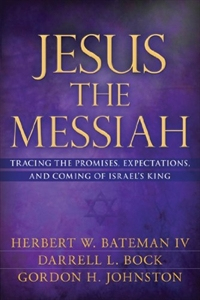
Herbert W. Bateman IV, Darrell L. Bock and Gordon H. Johnston. Jesus the Messiah: Tracing the Promises, Expectations, and Coming of Israel’s King. Grand Rapids, Mich. Kregel, 2012. 527 pp. Hb; $36.99. Link.
This book has three distinct sections, one on the Old Testament, the second on the development of messianic prophecy in the intertestamental period, and the third on the New Testament’s use of these prophecies to explain who Jesus was (the Messiah). Since the three authors are all pre-millennialists, it is no surprise that texts describing a messianic age are understood as describing a future kingdom. But this book is not the kind of popular dispensationalism of the mid twentieth century. There is little in the book that is “eschatological” nor does the book even approach the issue of the future return of Jesus. As sub-title indicates, this book is interested in the prophecies found in the Old Testament which formed Jewish expectations in the first century. The goal here is illuminating the claim that Jesus is the Messiah rather than speculating about what a future Messiah might be like. As such, this book is a biblical theology of the Messiah.
Herb Bateman contributes a 19 pages introduction which explains the plan of the book. He is adamant that the method of the book is reading the whole Bible canonically. This means that the Old Testament provides the foundation for understanding the New Testament. But Bateman is also interested in how others read the Old Testament before the time of Jesus. These Second Temple “eschatological reflections” are non-revelatory and are human interpretations of the texts surveyed in the first section of the book. I suspect that this explanation needs to be clearly stated since the published and authors are on the conservative side of Christianity. Some might protest if Bateman were reading the literature of the Second Temple as if it were on a par with Scripture. He most certainly does not do this, but he is careful not to give that impression.
Gordon H. Johnston provides seven chapters tracing “messianic trajectories” in various sections of the Old Testament. This is the longest section of the book (at 173 pages), covering trajectories in Genesis and Numbers (ch. 1), The Covenant to David (ch. 2), The Royal Psalms (ch. 3), Amos, Hosea and Micah (ch. 4), Isaiah (ch. 5), Jeremiah, Ezekiel, Daniel (ch. 6) and Zechariah (ch. 7). Johnston’s method is simple. He basically provides a catalog of messianic promises in each particular section, explains the text briefly (a “contextual reading”) then suggests a “canonical reading” for the text. The second is the more interesting to me since he calls this an “inner-biblical development” of a given text. Early texts may be expanded by later writers, including “interim developments that temporarily take the original language and motifs in new directions” (51). This means that royal texts are not static, but are subject to this inner-biblical development. This is how a text describing a literal king or a literal enthronement can “develop” into a prophecy of the ultimate fulfillment in the eschatological Messiah.
In some cases the text examined refers back and an earlier prophecy and uses to look ahead to the future. This is especially true of the Branch texts in Zechariah. The prophet uses motifs from Jeremiah and interprets them in the light of his current situation in order to make some prediction for the future. This sort of inner-biblical reading sometimes can be faulted because the dates of some of the Old Testament books are uncertain, although this is not a problem for the generally conservative Johnston.
Most inner-biblical developments are found in the New Testament texts; there is less inner-Hebrew Bible developments that I would have expected. While Johnston’s method is clear in practice, I would have appreciated even a brief chapter describing and defending it, as well as a final summary chapter which could look back over the material as a whole and draw some conclusions.
Bateman’s section of the book includes four chapters treating messianic expectations in the Second Temple Period Judaism. This section of the book is rich in details from the literature of the period, despite the fact that one of the problems Bateman identifies is limited resources for the period. While this is undoubtedly true for the Persian period, there is a wealth of material from the later Greek period. He describes most of the intertestamental period as a time of messianic dormancy. It is not until reactions to the Hasmonean dynasty and the rise of Rome that messianic texts “evoked and inflamed” (237).
Bateman surveys royal and messianic texts in the Dead Sea Scrolls in chapter 9, beginning with the Cairo Damascus Document (CD) and the Rule of the Congregation (1QS). Chapter 10 covers “Anticipations of the One Called Branch and Prince” in the same literature. The messianic title “prince of the congregation” appears often in the Dead Sea Scrolls. In chapter 11, Bateman catalogs references to a coming “son.” Many of these texts in the Qumran literature are developments from Psalm 2. Batman also provides a good summary of the phrase in the Psalms of Solomon, 1 Enoch, and 4 Ezra. The Psalms of Solomon are important for New Testament studies because they appear to come from the Pharisees and date perhaps fifty years before Christ. Psalm 17 is particularly important for tracing messianic developments. Fourth Ezra post-dates most of the New Testament, probably written in the mid-90’s A.D.
Darrell Bock’s contribution to this book is four chapters covering the New Testament, although he attempts to do so in a non-canonical order. Bock argues that starting with Revelation and the Catholic Epistles and moving to Paul then the Gospels, he can start with the least controversial texts and make fewer assumptions as he proceeds (333). In addition, Bock observes that the earliest church (represented by the earliest documents in the New Testament) already confessed Jesus as Messiah. By working backwards, Bock hopes to arrive in the world of the Historical Jesus and find that the source for the claim that Jesus is the Messiah is Jesus himself. Beginning in Revelation, Bock confines himself to confessions of Jesus as the Christ. This in effect limits his comments to the first five chapters of Revelation. (Christ also appears in Rev 20, although this is only mentioned in passing). At a mere three pages, this is a very short look at Revelation, given the topic of the book! By limiting the study to explicit confessions of Jesus as Messiah, the rich uses of eschatological and messianic texts drawn from the Hebrew Bible are not included.
Bock covers the idea of Messiah in the Pauline letters in his second chapter. He observes that about 72% of all the New Testament references to Jesus as Christ appear in the Pauline letters. He approaches the letters of Paul chronologically and includes all the letters (Ephesians and the Pastorals are often omitted as post-Pauline). Connections to past texts are not as clear in Paul, although some allusion to Psalm 110 and the Suffering Servant texts are present. For Paul, the messiah was “not a military power, but a spiritual gifting and a rule from Heaven among those allied to the raised Messiah” (403). What is remarkable is the lack of explicit hermeneutical texts from Judaism. For Bock, this points toward Jesus as the source for messianic claims.
When Bock turns his attention to the proclamation of the messiah, he begins in Acts (still working backwards chronologically). Bock argues that Acts works more explicitly with texts, especially the Suffering Servant passages. Peter’s speeches in Acts 2 and 3 are examples of a synthetic reading of messianic texts “drawing on a wide array of older promises” (417). In the Gospels the claim that Jesus is the Messiah is “veiled, then proclaimed” by the gospel writers. Jesus reveals himself as messiah by what he does more than by what he says (438). This leads to Bock’s final chapter on the Historical Jesus. He examines Jesus’ preaching, Peter’s Christological confession and the triumphal entry in detail. In each case there is a clear messianic claim, although Jesus is clear that his role as the Messiah was to suffer. This use of the Servant Songs in Isaiah 52:13-53:12 is unique in the Second Temple Period. “Jesus unified the (messianic) pieces and showed there was far more” than a single military deliverer (455).
Conclusion. This book seems to be designed as a textbook for use in a classroom. There are many charts, graphs and maps to illustrate the text. Some of these sidebars are quite helpful (lists of the Apocrypha and Pseudepigrapha), others strike me as filler. For example, I am not sure the book is enhanced by the chart on Major Transitions in Paul’s Life (358) or some of the maps (for example, the Persian Empire, p. 224). Both are informative, but they are not particular “on topic.”
Overall I find this a stimulating read, although there is little here that is new. I find it encouraging that conservative scholars are doing this kind of “biblical theology” and attempting to understand the messianic claims of Jesus and the early church by understanding first the Hebrew Bible and second by reading the literature of the period. Student and non-scholars will learn a great deal by reading this book.
Thanks to Kregel for kindly providing me with a review copy of this book. This did not influence my thoughts regarding the work.
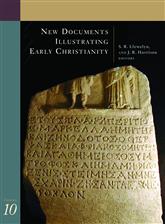
S. R. Llewelyn and J. R. Harrison, with E. J. Bridge, ed. New Documents Illustrating Early Christianity Volume 10. Grand Rapids, Mich.: Eerdmans, 2013, 269 pp., paperback, $40.00. Link
This is the second part of my review of New Documents Volume 10.Here is the first part, which includes an overview of the book up to the first two sections.
J. R. Harrison has four articles under the heading “Cult and Oracle,” including a papyri describing how Artemis overcame an evil sorcerer. The inscription is from a white marble slab from Ephesus, dated to A.D. 165. The article interacts with Clint Arnold’s Magic in Ephesus, which tends to describe Artemis as a demonic goddess, and R. Strelan’s Paul, Artemis, and the Jews of Ephesus, which argues Artemis is associated with salvation from evil spirits. On the whole, this long article favors Strelan (summarizing his arguments concisely). The inscription says that the temple of Artemis was a place of much gladness and that the goddess rescued the city from an evil magician who brought down a plague on the city.
There are two sections on Public life in the Greco-Roman world. Entry 11 describes a marble inscription in Latin and Greek honoring Augustus for sponsoring the paving of a street in Ephesus 22/21 B.C. While the inscription itself was discovered in 1958, an article appeared in 1991 which used this inscription to illustrate benefaction in the Roman world. Twice in this brief inscription the gift which Augustus made to the city of Ephesus is described as χάρις, a “gift.” The source of the gift is the Empire and the “sacred revenue” of the Temple. As Harrison points out, Augustus became “an iconic example of beneficence” and a model for other benefactors to follow. Later, Tiberius would be called “the benefactor of the world.” Since the Emperor and Empire was a source for huge sums of money, provincial elites in Ephesus found ways to exploit their patronage and line their own pockets. Harrison cites an edict dated A.D. 44 which indicates that selling the office of priest of Artemis was a lucrative trade. Harrison suggests that this benefaction (and corruption of the system) illustrates Paul’s use of grace-language in Ephesians as well as his frequent used of wealth metaphors in the book. “Paul’s language of ‘wealth’ in Ephesians could also be profitably looked at against the background of the wealth of the Artemis cult” (61).
Four articles comprise the section entitled “Household.” D. C. Barker describes an Egyptian divorce agreement dated A. D. 177, on papyri. Among the fascinating details is the fact that the wife Aphrodisia is 21 years younger than her husband, Ptolemaios. From census records Barker points out that 83% of men were older than their wives, from one to thirty years older. One of the more fascinating articles in this section is entitled “Every Dog Has Its Day.” The text is from a limestone sarcophagus from Termessos (Psidia). This is a eulogy for pet dog, Stephanos, written by the owner Aurelia Rodope. She “wept for the dog and buried him as a man.” Harrison discusses the popularity of pet dogs in the Roman world, stating that some “Mediterranean peoples were besotted by the small white long-coated Melitaen” (127). There are many examples from Gerco-Roman literature as well as inscriptional evidence that dogs were often fed from the table. This devotion to dogs as pets seems to stand in contrast to Jesus’ attitude toward the Syro-Phoenician in Mark 7:26. It is customary to emphasize more negative the Jewish attitude toward Gentiles; they are “dogs.” But Harrison points out that the image of a dog could be taken as positive, indicating that after the children are fed (the Jews) it is appropriate for the dogs (the Gentiles) to receive food.
Five articles are collected under the heading “Judaica,” including a pay slip for a Roman soldier at Masada and comments on two well-known items, the Temple Warning and the Babatha Archive. The Babatha archive is a collection of documents found at Nahal Hever (near En-Gedi). The documents are her important legal papers” and date to about A.D. 125. The documents were stored before the Bar Kokhba revolt, perhaps hinting that she participated in the revolt. The burden of this article is to compare the documents to Roman Law, especially with respect to marriage, divorce, polygamy, and guardianship. Babatha was a “second wife” to her husband Judah, leading G. Rowling to suggest that polygamy was not only practiced by the upper echelons of society, but may have been practiced in traditional rural areas as well (151).
Finally, three articles comprise the section on Christianity. Two of these are fourth century papyri letters from Oxyrynchus and illustrate early Christianity. Item 28 is a “Difficult Request (?) to ‘Beloved Father’ Diogenes.” It is clearly Christian because the words for Lord and God are abbreviated as Nomina sacra. The letter was written by Barys to Diogenes. Barys describes himself as a “brother” and Diogenes as “father.” Such language for social or religious relationships is common in the Greco-Roman and Jewish world, as it is in the New Testament. In addition, Barys refers to Diogenes as “lord” (κύριε), perhaps indicating that Diogenes has a higher status than Barys. Bridge points out the use of κύριε for a religious leader in Matt 9:28, 17:15, etc.) The letter would perhaps shed light on Paul’s letter to Philemon, especially since Barys uses the word λιτουργία (spelled λειτουργία in the NT). While the word can refer to public service, Paul used it in Phil 2:17, 25, 30 for service within the church, and in 2 Cor 9:12 for Christian giving. In the end, Bridge concludes that this letter is “two Christians in communication, one of whom has authority over the other, on the ‘secular matter’ of public service.”
Conclusion. Virtually every section of New Documents Volume 10 is worthy of attention. The entries make for fascinating reading and they all contribute to our understanding of the world of the New Testament and early Christianity. I highly recommend this volume to students and scholars. Every serious library should own all ten volumes of this important series. I look forward to additional volumes in the series, although my preference is that the next volume arrives sooner than ten years from now.
Thanks to Eerdmans for kindly providing me with a review copy of this book. This did not influence my thoughts regarding the work.
 The latest Journal for the Study of Paul and His Letters (Spring 2013) arrived today. There is no “theme” for this issue, but there is a response to Steven Enderlein’s article on Romans 3:23 from a 2011 JSPL issue. Stanley Porter and Wally Cirafesi. In that earlier article Enderlein argued that the verb ὑστερέω, traditionally translated as “fall short” in Romans 3:23 ought to be translated as “lack.” The verse would then read “all have sinned and lack the glory of God.” He goes on to argue that this leads to a subjective reading of πίστις Χριστοῦ. Porter and Cirafesi agree with his translation of ὑστερέω, but do not agree that this forces a subjective (as opposed to an objective) genitive of πίστις Χριστοῦ. (For those who missed the 9000 articles on pistis christoi, if the genitive is subjective, then Paul is focused on the “Jesus’ faithfulness” rather than “faith in Jesus.”) Enderlein finds the subjective reading more coherent in the context of Romans 3-4. He has in mind “Adam allusions” throughout Rom 1-7, especially in 3:21-26 and 5:12-21.