Was Paul “Predisposed to Conversion”?

Like most who write on the conversion of Paul, John Polhill asks if Paul was “predisposed” to conversion (Paul and His Letters, 55).  To what extent did was Paul “prepared” for his encounter on the road to Damascus?  Certainly Paul thought that God had prepared him to preach the grace of God (Gal 1:15), but this question usually is more interested in Paul’s psychological state of mind when he met Jesus.
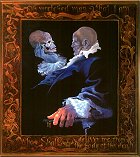
The Wretched Man

Like the discussion of Paul’s conversion, the New Perspective on Paul has had quite a bit to say here.  In fact, I recently summarized the NPP’s thinking about Paul’s conversion in this post.  Traditionally, Paul is described as struggling to keep the Law perfectly and was in despair over his inability to do “the whole of the Law.”  Usually Romans 7 is the key text here.  Paul himself is the “wretched man” who must be delivered from his body of death (Rom 7:25).  He has been “kicking against the goads” for some time, according to Acts 26:14.  Paul knew that he was unable to live up to God’s righteous standards and lived in a state of perpetual wretchedness.  His encounter with Jesus on the Road to Damascus freed him from the weight of his sin and guilt and he became the apostle of the Grace of God.

But this reconstruction has been questioned by the New Perspective, especially by E. P. Sanders, following Krister Stendahl.  Sanders challenged what he saw as the Lutheran domination of Pauline studies on justification.  In the twentieth century (primarily Lutheran) scholars have made justification by faith the “center” Pauline theology. This leads to the unfortunate result of anti-Judaism – Jews become proto-Pelagians, Paul is Luther bashing the RCC’s.  Judaism is thought to be the antithesis of Paul’s Christianity and Paul’s theology develops out of a struggle against Judaism.  Sanders changed the debate by arguing that the questions posed by the protestant / RCC debate have nothing at all to do with Judaism of the Second Temple period.   For Sanders, this totally obscures what was actually happening in the first century and how Christianity developed out of Judaism.  In addition, Sanders points out that the protestant Paul was never recognized by Jewish scholars (Sandmel, for example), he was incoherent or inconsistent.

According to Sanders, Paul was not a guilt-ridden sinner trying to justify himself through the good works of the Law.  In fact, it was Luther who was a guilt-ridden sinner trying to justify himself, not Paul!  Paul was therefore not converted on the road to Damascus.  Obviously this has huge implications, since the theological edifice of the reformation is guilt on Luther’s understanding of Paul, and there have been some fairly strenuous arguments against Sanders and the other more recent New Perspective writers.

Is Polhill is correct in the end when he states that Paul’ encounter on the road to Damascus was a radical event for which he was totally unprepared (55)?


Basics of the New Perspective: Works of Righteousness

By the second century B.C., Jews were becoming increasingly Hellenistic.  Some even turned their back on the most basic of Jewish distinctives such as circumcision and food traditions.  The literature of this period are not evangelistic tracts, they are aimed at the Jewish considering further Hellenization.  A text like the Letter of Aristeas is aimed at keeping the young men from leaving their ancestral faith altogether!  It is for this reason that characters from the Hebrew Bible like Joshua, Phineas, Levi and Simeon become popular – they fought back against assimilation with violence!

A major factor in the development of Second Temple Period Judaism was the failure of Deuteronomic Theology.  The Law seems to promise that if one keeps the covenant, then blessings will follow.  The ultimate blessing is the hope for Jerusalem found in the Hebrew Bible, that it would truly become the center of the world and gentiles would flock to Mount Zion to worship the God of the Jews.  If the Jews are keeping the law properly, why is it that their role is shrinking on the world stage?  One reaction is to drop the cultural boundary markers, or downplay them considerably.  The opposite reaction is to increase the commitment to these markers, to really and truly do the Law as it was meant to be done, and the few who do will be “saved” (i.e., the Qumran community and the author of 4 Ezra.)

To survive the exile, the Jews re-emphasized their religious traditions as embodied in the Torah.  John Collins emphasized the following four key elements:  Monotheism, Revelation, Election, and Covenant.  Monotheism and Revelation are not good boundary markers (you have a God who reveals himself to you, so does everyone else!)  All of the Jewish literature of this period clearly accepts as foundational God is One and the Torah is his revelation.

Election and Covenant can be boundary markers.  You can adequately define who was elected to participate in the covenant, who is “in” and who is “out” of the covenant.  Most of the literature of this period asks this sort of question – in 1 Maccabees it is Sabbath, Circumcision and dietary Laws which are clear boundaries.  In Jubilees, 1 Enoch and Qumran literature proper calendar is included as a boundary marker.  In Sirach it is a life of wisdom that marks out the elect.  E. P. Sanders’ conception of Second Temple period Judaism under the rubric of “covenantal nomism” is an application of these last two emphases.  Election is what gets one into the Covenant, if you are Israel then you are “in.” What is it that maintains that relationship with God is the performance of the boundary markers: circumcision, Sabbath and food laws.

How does this impact Pauline theology?  When Paul says “works of righteous,” the New Perspective on Paul hears “boundary markers,” not Torah.  The traditional view would hear “The Whole Law.”  Dunn uses Galatians 3:10-14 as a “test case” (“‘Works of the Law’ and the ‘Curse of the Law,’” pages in 215-36, Jesus, Paul and the Law).  A traditional reading of this text would understand the statement “everyone under the Law is under a curse” in the light of the book of Deuteronomy and the curses and blessings.  Not so, says Dunn, the “works of the Law” here ought to be read in the context of Galatians, circumcision and food traditions.  These are the very things that make up the “boundary markers” of Second Temple Judaism.

Rather than a polemic against the whole Law, Paul is stating that Gentiles who are “in Christ” cannot take on the boundary markers of Judaism.  Does this mean that the New Perspective sees Paul as embracing the Law for Christians?  Not really, it would seem strange to say that Paul was rejecting the boundary markers as unnecessary and dangerous, but embracing keeping the Torah. These things are not Pharisaical traditions added to the Law (the types of things that Jesus reacted against, for example). They are at the heart of what it means to be a Jew in the Second Temple period.  New Perspective writers are emphasizing what Paul emphasized, that one’s status in Christ is what matters, not keeping traditional signs of separation.

Basics of the New Perspective: Judaism as a Religion of Grace

There are a few battleground ideas and texts on which the New Perspective differs from the traditional view.  First and foremost is the nature of Judaism in the first century.  From the traditional perspective, Judaism was a legalistic religion which required works for salvation.  This was often stated but rarely proven, especially in popular presentations.  The Pharisees are often described as hand-wringing legalists who sought to burden others with onerous laws which made little sense.  Perhaps there is an undercurrent of anti-Semiticsim here, but more often than not this mis-characterization is simply the result of ignorance of what Jews actually believed in the Second Temple period.

Sanders turned the assumption that Judaism was a legalistic religion on its head – Judaism was in fact a religion centered on God’s grace, as demonstrated in his election of Israel as his people and his gracious gift of the covenant.  Of critical importance is the election of Israel as God’s people and the covenant He made with them.  Philo states: “Yet out of the whole human race He chose as of special merit and judged worthy of pre-eminence over all, those who are in a true sense men, and called them to the service of Himself, the perennial fountain of things excellent” (Spec. Laws 1.303).  Similar statements of Israel’s election are common in nearly all the literature of the second temple.  Equally common are statements about the covenant God sought to initiate with the people he had chosen.  Sanders cites Pseudo-Philo: “I will give my light to the world and illume their dwelling places and establish my covenant with the sons of men and glorify my people above all the nations” (Bibl. Antiq. 11.1f, JBP, 264).

Israel’s election is confirmed by God’s gift of the Law and his requirement of obedience to that law. Everything we know about Judaism in the Second Temple Period is predicated on the fact that God gave the law and he required his people to obey.   Because Israel is chosen and given a Law and the responsibility of obedience, she is liable for both rewards and punishment; to experience both God’s justice and mercy.  God cannot let an evil-doer escape.  He is all-knowing and punishment is certain (Antiq. 1.14; 3.321, 4.286).

Perhaps the most controversial point in Sanders’  view of common Jewish theology is that Judaism was a religion of grace.  As noted above, the Christians often describe Judaism as  a works-salvation in contrast to Paul’s salvation by grace alone.  Everything in Jewish religion seems to point to the grace of God in this life.  Whatever one has, whatever one is, it is only by the grace of God.  One did not do the various “works of righteousness” (circumcision, food traditions, but also shema, prayer, wearing tefillin, etc.) in order to receive grace, rather one did them in response to the grace already received.

If this is a correct understanding of Judaism, then it seems to me that it is rather a” Pauline” way of expressing ethical obligations.  Or maybe Paul is rather still Jewish in his ethical teaching!   Paul never says one can be right with God on the basis of good works, it is only by God’s sovereign choice to adopt the believer as a member of his family that we can be saved: by grace through faith.  But it is well know that Paul also gives many ethical and moral commands which he expects from his churches.  These are not requirements to be saved, but the natural response of those who are “in Christ.”

To summarize this point for Sanders: Election is what placed the Jews “into” the covenant; obedience is what “keeps them in.” There are a number of mechanisms which are used to deal with disobedience, all of which are expressions of God’s grace. There is nothing Israel did to merit this election.  Israel is given every help possible by God’s grace to assist them in the “keeping in” element.

Is this a wrong view of Second Temple Judaism?  Perhaps Sanders has overstated his case in come respects (Matt 23 makes the Pharisees out to be legalists) and Paul seems to be arguing against some form of legalism in Galatians.  There is a certain attraction to legalism since it defines the steps one must take in order to be right with God.

But on the whole, I think Sanders is correct.  A major cornerstone of the theology of the Hebrew Bible is the gracious loving-kindness of God, his hesed.  Nowhere in the Bible do we read of someone who claims to be burdened down by the impossibly heavy load the Law.  Rather, keeping the law is the proper response to a gracious God. The big difference between Paul and Second Temple Judaism is his view of Gentiles keeping the Law.  More on that later.

Paul’s Conversion and the New Perspective

The second question Polhill asks in his discussion of Paul’s conversion concerns Paul’s predisposition to conversion.  To what extent did was Paul “prepared” for his encounter on the road to Damascus?  Certainly Paul thought that God had prepared him to preach the grace of God (Gal 1:15), but this question usually is more interested in Paul’s psychological state of mind when he met Jesus.

Like the discussion of Paul’s conversion, the New Perspective on Paul has had quite a bit to say here.  Typically Paul has been viewed as struggling to keep the Law, perhaps in despair over his inability to do “the whole of the Law.”  Usually Romans 7 is cited here; Paul is the “wretched man” who must be delivered from his body of death (Ro 7:25).  He has been “kicking against the goads” for some time, according to Acts 26:14.

But this reconstruction has been questioned by the New Perspective, especially by E. P. Sanders, following Krister Stendahl (who is cited by Polhill).  Sanders challenged what he saw as the Lutheran domination of Pauline studies on justification.  In the twentieth century (primarily Lutheran) scholars have made justification by faith the “center” Pauline theology. This leads to the unfortunate result of anti-Judaism – Jews become proto-Pelagians, Paul is Luther bashing the RCC’s.  Judaism is thought to be the antithesis of Paul’s Christianity and Paul’s theology develops out of a struggle against Judaism.  Sanders changed the debate by arguing that the questions posed by the protestant / RCC debate have nothing at all to do with Judaism of the Second Temple period.   For Sanders, this totally obscures what was actually happening in the first century and how Christianity developed out of Judaism.  In addition, Sanders points out that the protestant Paul was never recognized by Jewish scholars (Sandmel, for example), he was incoherent or inconsistent.

So, according to Sanders, Paul was not a guilt-ridden sinner trying to justify himself through the good works of the Law.  In fact, that was Luther. He was the guilt-ridden sinner trying to justify himself, and he read all that angst back into Paul.  Paul was therefore not converted on the road to Damascus.  Obviously this has huge implications, since the theological edifice of the reformation is guilt on Luther’s understanding of Paul, and there have been some fairly strenuous arguments against Sanders and the other more recent New Perspective writers.

Polhill is correct in the end when he states that Paul’ encounter on the road to Damascus was a radical event for which he was totally unprepared (page55).  By appearing to Paul in his resurrection glory, Jesus radically changed Paul’s thinking in a way which cannot really be described as “conversion” in the contemporary sense.  It was a prophetic call like Isaiah or Ezekiel which resulted in a transformation of Paul’s thinking about who Jesus is.

The next question is the extent to which Paul’s theology was transformed by that encounter.  Was there a total revision of Paul’s Judaism, or did Paul remain a faithful Jew who also believed Jesus was the Messiah?