When a problem comes along….WWJD?


When a problem comes along….WWJD?
In the so-called temple-cleansing, we have, apparently, prophetic demonstration or, one could say, provocation, in which it was not a matter of driving out all those who sold and the money changers – for such an action would not be possible without a large contingent of troops and a corresponding general riot, and would inevitably have led to intervention on the part of the temple guard and the Romans. We are dealing, rather, with a demonstrative condemnation of their trade, a condemnation which was directed at the same time against the ruling temple aristocracy, which derived profit from it…. Such an episode did not call forth further intervention on the part of the occupation forces, but it did make the hierarchy the deadly foes of Jesus. Martin Hengel, Was Jesus a Revolutionist?, 17-18.
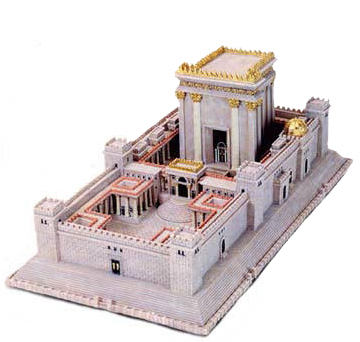
In Mark, this event is framed by the curse of the Fig Tree and provides the clues we need to fully interpret that parabolic action. In fact, this action is also symbolic. Jesus arrives at the Temple as the messiah, inspects the Temple and finds it corrupt. Therefore begins that judgment by causing a disruption in the area used for selling sacrificial animals.
Note that the Temple area is huge, 450 meters by 300. Craig Evans (WBC) thinks that it is unlikely that Jesus completely disrupted all commerce in the area, most people were not even aware Jesus was making a demonstration in one area of the Temple. The action is symbolic. By overturning tables and causing the chaos that he does, he challenges the religious authorities to be obedient to scripture by making the Temple a house of prayer and not a den of thieves.
Is this an attack on a corrupt priesthood? Were the priests corrupt? The Qumran Community thought so, referring to the high priest as the Wicked Priest (1QpHab 1:13, 8:9. 9:9, 11:4). The high priest has gotten wealthy off the temple and defiled the sanctuary of God (1QpHab 12:8-9). Testament of Moses 7:6-10 is another condemnation of the first century priesthood. The Testament of Moses was probably written about A.D. 30, and the Habakkuk scroll from Qumran dates more than 100 years prior to that. Josephus accuses the priests of bribery (Antiq. 20.9.4) and violence (Antiq. 20.8.8).
 Jesus is functioning here as a classic prophet from the Hebrew Bible. Criticism of the temple has a grand tradition in the prophets, especially in Jeremiah (7:14, 34; 12:7; 22:5; 22:5; 26:9). There seems to be a real parallel between Jeremiah 7:11 and Mark 11:17. As with Jeremiah, this confrontation with the temple authority can lead only to physical danger and arrest, but at this point the authorities cannot take Jesus for fear of the crowd.
Jesus’ criticism of the temple does not end here, the conflict with the Pharisees is entirely concerned with problems of the temple:
The “Temple Action” is therefore a public sign of Jesus’ authority as a prophet of God. He stands in the tradition of Jeremiah and Ezekiel who condemned the priesthood and Temple authority for their half-hearted worship of God. Jesus is challenging the worshipers in the Temple to become True Israel, but is he proposing separation from the Temple? Does Jesus preform a symbolic action (like Jeremiah) which calls for the reformation of the Temple?

1873 Wood Engraving
Southern Temple Excavations. There is a great deal of archaeological activity around the southern end of the Temple. Since the first two examples I used concern the Old Testament, I will focus on the importance of these excavations for New Testament studies. There are few who would deny the Western Wall represents the walls built by King Herod to expand the Temple Mount.
In 1838 E. Robinson, one of the first archaeological explorers of Jerusalem, discovered the remains of an arch on the southwest corner of the Temple Mount. Photographs show that this arch was only a few feet above ground level at the turn of the twentieth century, and even in 1968 it was near ground level with a vegetable patch growing beneath. Today, visitors to the archaeological park can see the arch some twenty feet from the ground level. Archaeologists have excavated to the level of the first century streets. The arch is part of a stairwell from ground level to the Temple Mount.

Photo Taken May, 2009
One of the most spectacular finds in this area was the “trumpeting stone” from the corner of the wall. On the inside of the parapet is an incomplete inscription saying “to the place of trumpeting.” The stone was 138 feet above the street level! It appears that a priest or Levite would sound a shofar (Josephus, JW 4.582, b. Sukk. 5:5).On the southern end of the Temple Mount a stairway goes up from the street level to a double gate and triple gate. It is likely that there was a plaza at the base of the steps, and there are several public ritual baths near the steps. The double gate is built in the Herodian style, although it was filled in by the Crusaders and a building was added by the Umayyads, nearly covering the entrances. Since the other since of the gate is now part of the Al Aska Mosque, detailed investigation is impossible. Ritmeyer suggests that this may be the Beautiful Gate mentioned in Acts 3, although it is impossible to know for certain. These gates opened up into the Royal Stoa, a huge area on the south end of the Temple Mount.

Trumpeting Stone
In summary, the southern Temple excavations demonstrate what Jerusalem looked like during the ministry of Jesus and the Apostles. The archaeology of the Southern Temple area gives the physical context of last week of Jesus life and the early part of the book of Acts. Let me suggest one application of this physical context to the book of Acts. As is well known, on the day of Pentecost 3000 people respond to the preaching of the apostles and were baptized. In Acts 4:4 and additional 5000 believe. How is it possible to baptize such large crowds in the Temple area? The only real possibility are the many mikvoth around the Temple area, including the pools of Siloam and Bethesda. I think that the baptism of Acts 2 and 3 is a self-baptism in one of the many ritual pools around Jerusalem. In this case, the archaeological context helps explain a detail of the text.
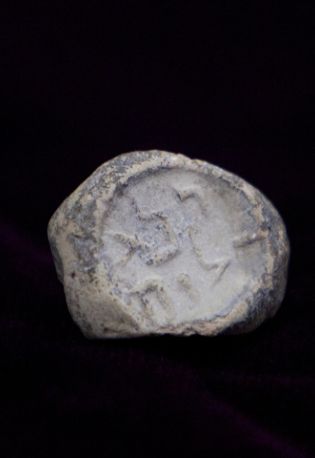 Back in October I posted a short note on the money changers in the Temple. Money needed to be changed to an acceptable currency before it could be given to the Temple. Popular preaching usually states with confidence this is because Roman coins were blasphemous, so they were exchanged for Tyrian shekels. The usual explanation for Jesus’ anger with the money changers is that they were gouging the “tourists” with an exorbitant exchange rate. This overlooks the fact that the Tyrian shekel had an image of Melkart / Heracles as well as an eagle. The reason the Tyrian shekel was required was that it was the most pure silver coin available. Nevertheless, some sort of coin exchange was required before a worshiper entered the Temple.
An odd seal or “token” was recently discovered in Jerusalem with the words “pure to Yahweh.” Ronny Reich described as a seal placed on an object which was dedicated to the Lord. This would explain why it is a bullae, a clay seal impression. On the other hand, George Athas suggests on his blog that this seal is a kind of exchange token for use in the Temple. This would ensure than the worshiper had an accurate exchange rate with the proper coinage and that the coinage was “acceptable” for use in the Temple.
I like Athas’ suggestion, but I am not sure a clay seal could be used for a handful of coins which would be immediately taken into the Temple and “spent” as a tithe or offering almost immediately. A more durable chit would be more likely in that case.
The seal strikes me as not unlike the common l’melek seal. This impression is found on jar-handles indicating that the contents of the jar are reserved for the king, perhaps as a tithe / tax. Perhaps this seal was placed on an item being given to the Temple as an offering. People may have given all sorts of things to the Lord through the Temple aside from money (food, wine, etc.), these items could be marked as set-aside to the Lord with this sort of seal.
Why were there money changers in the Temple?
Pastors often declare these people were making an outrageous profit by selling sacrifices in the Temple, on the analogy of the vendors at an airport or sports arena. Since they had a captive market, they were free to price-gouge. However, “There is no evidence the animal merchants and money-changers or the priestly authorities who allowed them to use the outer court were corrupt companions in graft” (Carson, John, 179). While Jesus calls the Temple a “den of thieves” in the Synoptic gospels (Matt 21:12-13, Mark 11:15-17, Luke 19:45-46), that is not the charge here. Jesus cites Scripture to condemn the merchants in the Temple courts, but it is not because of excessive profiteering.
The term used in John 2:14-15 is ἱερόν and refers to the whole Temple complex, while the word used in John 2:19 is ναός, referring to the Temple building. The sellers are not “in the Temple” since they would have no access beyond the Court of the Men. Selling was restricted to the court of the Gentiles, a much larger area. Köstenberger therefore suggests the main point of Jesus’s attack is that the sellers were taking up the only area of the Temple where the Gentiles could worship (Köstenberger, John, 106). I am not sure how many Gentiles came to Passover to worship and not is certain the sellers took up the entire area, The Court of the Gentiles was 300×450 meters (slightly less than 1000×1500 feet for the American reader); larger than the size of four football fields. Was the whole area one gigantic flea-market? This seems unlikely, although at Passover the area would have been extremely crowded.
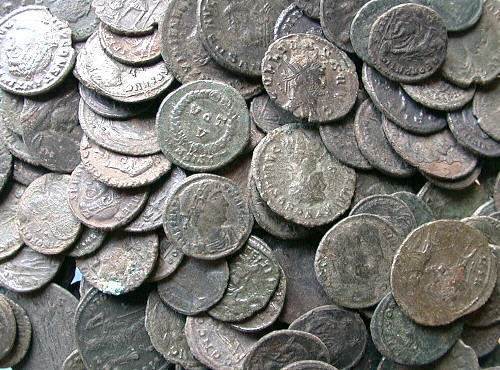 Jesus disrupts the sellers by overturning tables and driving animals away. He “pours out” the coins, using the verb ἐκχέω, normally associated with the pouring out of blood during a sacrifice (in the LXX, Exod 25:6, for example). In Rom 3:15, for example, Christ’s blood is poured out for us, but in Acts 2:17-18, 33 and Titus 3:16 the Holy Spirit is “poured out” on God’s people.
He makes a whip and drives animals out of the court. Since the Temple authorities did not permit weapons in the Temple courts, this is an improvised whip. Jesus used the whip to drive animals, not the merchants. Raymond Brown suggested Jesus made the whip from rushes used for bedding animals.
To explain his actions, Jesus alludes to several texts from the Hebrew Bible in his condemnation of the sellers in the Temple (Zech 14:21, Mal 3:1, 3, Psa 69:9). Jesus quotes Psalm 69:9, “zeal for the house of the Lord” in order to explain his violent response and the defilement. (See this post on the meaning of zeal in the New Testament.)
The allusion to Zech 14:21 is more subtle. In the coming eschatological age, the Temple will be either rebuilt or purified and there will be no need for “merchants.” Several observations are important for understanding Jesus’s allusion to this text. First, Zechariah has the future restored Temple in mind, not the present “second Temple.” All the nations will come to Jerusalem to worship the Lord. Second, word translated “merchants” in Zechariah 14:21 could be translated as “Canaanites” (as in the NIV 2011, but not the ESV). The name Canaanite means something like merchant and in the verse’s context it seems likely the original point was there will be no need to sell sacrificial animals since every pot in Jerusalem and Judah will be equally pure as the Temple Mount. Third, this is the final line of the prophecy of Zechariah, it is the “finale” of his prophecy of the coming ideal age. Canonically, Malachi 3:1-3 is not far removed from this text in the Hebrew Bible.
By alluding to these verses, Jesus is announcing the beginning of the new age of the Messiah. The vendors must leave the Temple since the time is coming when they will not be needed. Jesus’ action at (a coming) Passover will solve the problem of sin and render these sacrifices superfluous.
Jesus is not condemning the Temple or the sacrificial system in this protest, he was looking forward to a coming time when the Temple will be ultimately purified, when all of Jerusalem and Judah are “holy to the Lord. The object of this action in the Temple authority which condoned (and perhaps profited) from economic activity in the Temple courts.
If I am right here, then Jesus’s actions are similar Jeremiah 7. The prophet protests against a dangerous misunderstanding of the Temple. And like Jeremiah, the Temple aristocracy will pay close attention to Jesus as a threat to the central symbol of Jewish faith in the first century.
But is there an economic edge to this protest? Beyond the theological symbolism, does Jesus have something to say about the use and abuse of money at the Temple? What are some contemporary ramifications of Jesus’s condemnation of the money changers in the Temple?
You must be logged in to post a comment.