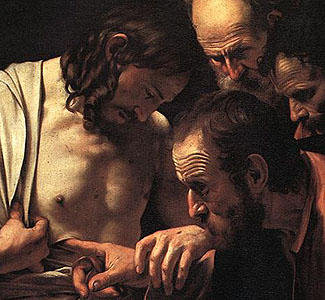
In 1 Corinthians 15, Paul comes to the final issue Paul raised by the Corinthian church, the Resurrection of Jesus. It appears someone in the Corinthian church denied that Jesus rose from the dead. In 15:12 he says, “if it is preached that Christ has not been raised,” implying a teacher in Corinth has made that claim. Why would a Christian deny that Christ was raised from the dead?

It is possible the objection to the Resurrection of Jesus came from a Jewish Christian teacher. In that case, the objection may be based on Jewish messianic expectations. Although many Second Temple Jews were looking forward to a messiah, no one expected that messiah to die and rise again. The claim of the earliest Christians is that Jesus was the Messiah, but also that he was crucified by the Temple aristocracy. But God raised him to life, proving he was in fact the Messiah. Although some might object to using the book of Acts as illustrating early church preaching, Peter makes this very point when he is questioned in Acts 5:29-32.
On the other hand, the claim that the Christ has not been raised from the dead may come from a Gentile Christian, reflecting a Greek view of resurrection. N. T. Wright many examples of Greek writers denying the resurrection of the dead. For example, in Aeschylus’s play Eumenides: “Once a man has died, and the dust has soaked up his blood, there is no resurrection.” Wright concludes: Christianity was born into a world where its central claim was k own to be false. Outside of Judaism, nobody believed in resurrection” (Resurrection of the Son of God, 35). Dead people go off into some other, dark world from which they can never return. So there was a life after death, but not a return to this life after death.
Gordon Fee points out the vocabulary of the resurrection of the dead (νεκρός) may have been part of the problem. A native Greek speaker would hear “corpses” and find the whole discussion repugnant (Fee, 1 Corinthians 794, note 5). Imagine if a Christian pastor referred to Jesus as a zombie, a reanimated corpse rather than a body transformed into a new kind of life. Fee’s observation explains some of Paul’s language later in the chapter about how a seed dies and rises to a new kind of life (15:35-40).
Paul will argue that Jesus’s resurrection is not only an assured fact of history, but the basis of the future resurrection of the believer. For a Greek, there was no real idea of a future resurrection. As Ben Witherington notes, Greek religion was practiced for present benefits not future, heavenly blessings (Conflict and Community in Corinth, 293). Remember Paul’s sermon in Athens. When he mentioned the resurrection of the dead, some of the philosophically informed audience sneered at him (Acts 17:32). A Jewish audience would understand something about a future resurrection Paul describes in this chapter, but most Gentiles would find this difficult.
Although there may be some combination of these two possibilities, every other issue Paul addresses in the letter is the result of Gentile Christians following their Greek worldview rather than transforming their way of thinking through the lens of Christ. I see that as the main problem here. It may be the case some faction in the Corinthian church tried to blend Christian practice or ethics and Greek philosophy. Just as the message of the cross is foolishness to the Greeks, so too the resurrection of the dead is a strange teaching that might even have offended the philosophically educated in Corinth.
That Paul answers this objection at length at the end of the letter may imply Paul thought this was the most important issue in the Corinthian church. Although most modern Christians are shocked by some of the moral and ethical problems in Corinth, Paul sees the denial of the resurrection as an attack on the foundation of the Gospel itself. He therefore begins by reminding his readers that the Gospel he preached was based on the authentic resurrection of Jesus from the dead (15:1-11) and then making the remarkable claim that if Christ is not raised, people are fools to become Christians (15:12-28).
This is an important point for contemporary Christianity. Almost all Christians profess both the crucifixion and the resurrection of Jesus. Easter is a central celebration in virtually all forms of Christianity. Yet Jesus’s resurrection from the dead has always caused people to discard Christianity as a remnant of the medieval past. Modern thinkers know that people cannot return from the dead! Memester theologians mock “zombie Jesus” and others deny the resurrection on historical grounds.
Yet in 1 Corinthians 15, Paul puts the whole of Christianity on the Resurrection of Jesus.