In John 8:12, Jesus makes the remarkable claim that he is the “Light of the World.” This phrase is very common in Christian worship today. Our familiarity with these words may obscure what Jesus meant by them when he spoke them during the Feast of Dedication in Jerusalem.
As readers of John’s Gospel, we have known this fact since the prologue. But now Jesus declares to crowds gathered to celebrate the Feast of Dedication that he is the True Light.
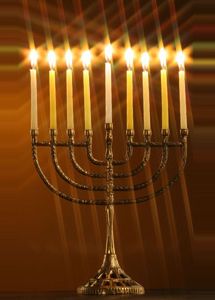
Jesus makes this statement at the Feast of Dedication, or Hanukkah, a festival celebrating the rededication of the Temple after the Maccabean Revolt in 165 B.C. After Antiochus desecrated the Temple, the Jews fought a war to re-capture Jerusalem. The altar was replaced when the Temple was secured so sacrifices could begin again. There was not enough oil consecrated to light the menorah, and it would take seven more days to consecrate more oil. They used what oil they had, and it lasted for eight days. This is the miracle remembered during the feast by lighting menorahs in homes and in the Temple.
First-century Jewish historian Josephus described the feast as the “festival of lights,” although some scholars doubt this description is accurate. The story of the miraculous light is not found in 1 Maccabees, so the origin of the “light” aspect of Hanukkah is not clear (ABD, “Dedication, Feast of,” 2:124). Since this saying takes place in the public courts, Jesus may very well be contrasting himself with the lights of the festival. As people celebrate their liberation from their oppressors by lighting the menorah in the Temple, Jesus stands up and declares that he is the true light of the world!
By declaring he is the Light of the World, Jesus is alluding to several texts from the Hebrew Bible. There are a number of texts that describe God as light (Ps 27:1, 36:9) or the Law as light (Ps 119:105, Prov 6:23). I think it is likely that Jesus’s allusion is to the light of the Torah in this saying. The Torah is God’s word, and it is by God’s word that the world came into being. This resonates with the prologue in John 1 as well, since the Word was with God in the beginning, and through the Word, all things have been created. For a Jewish teacher to declare that they are the “light of the world” is to claim something that goes beyond what might be expected. He is claiming to be God.
Since Jesus says everyone who follows this light has life, it is possible this is also an allusion to Israel in the Wilderness. This was obvious in John 6 when Jesus provided food in the wilderness. When Israel was in the wilderness, the light was the pillar of fire that led Israel when they traveled in the wilderness.
In either case, that Jesus is the light of the world is a major theme in John’s gospel. Those who follow Jesus walk in the light. Those who reject Jesus walk in the darkness. Light exposes what is hidden in the darkness. Light is always associated with truth and lies with darkness. By the end of this chapter, Jesus makes it clear that to reject him is to choose to remain in the darkness willingly. Those who follow Jesus are walking in the light.
If Jesus is alluding to the light of the Torah or the light provided by the glory of God in the wilderness, how does that help the reader of John’s Gospel to understand who Jesus is? What is John claiming about Jesus in this well-known saying?
You must be logged in to post a comment.