Top Five Matthew Commentaries

Introduction. Matthew Commentaries necessarily must deal with the synoptic problem. For the most part, virtually every modern commentary accepts Mark as the first gospel written, Matthew used Mark as a foundation for his later work, usually supplemented by a sayings source (Q). Very few commentaries written in the last 50 years have attempted to argue Matthew was written first. The synoptic problem is always looming in the background of Matthew commentaries, some will dwell on it more than others. To me, over-interest in redactional issues distracts from the usefulness of a commentary.

W. D. Davies and Dale Allison, Jr. A Critical and Exegetical Commentary on the Gospel According to Saint Matthew (ICC; Edinburgh: T&T Clark, 1988, 1991, 1997). This 3 volume commentary is the best modern scholarly commentary written on Matthew. In fact, I am tempted to say it is the best commentary ever written on Matthew. Davies and Allison certainly set a high standard for detailed commentaries on the Greek text of the Gospels. There is careful exegesis of the Greek text, but also a sensitivity to the Jewish background to Jesus’ teaching. The recent volumes in the ICC series are all excellent, but priced for libraries only. I personally am frustrated by the girth of the final volume, it is too thick for convenient reading; perhaps dividing it into two sections would have been wise. Allison published a “shorter” commentary on Matthew based on this larger work (T&T Clark, 2004), intended for “readers who find the larger commentary too involved or too complicated.”

John Nolland, The Gospel of Matthew (NIGTC; Grand Rapids, Mich.: Eerdmans, 2005). This commentary is on the Greek text of Matthew and is another magisterial commentary. For Nolland, Matthew is based on Mark and Q and was composed before the fall of Jerusalem in A.D. 70, although he does not think that the apostle Matthew is the author of the final form of the book. The body of the commentary includes brief bibliographies for pericopes, comments on text critical issues, and phrase-by-phrase comments. Greek is normally translated so that a reader without Greek can use the commentary without too much difficulty. It is the style of the NIGTC commentary series to use a smaller type for detailed which may be less important, although I find these sections excellent. Nolland does an excellent job setting the words of Jesus into a Second Temple Period background, his footnotes contain copious references to the literature of the first century.

Craig Blomberg, Matthew (NAC; Nashville: Broadman & Holman, 1992). I have always enjoyed reading Blomberg, his work on the parables is one of my favorites. His commentary on Matthew is the most brief of the five I have listed here (432 pages), but Blomberg has a knack for unpacking a text with brevity without sacrificing depth. His footnotes interact with a wide variety of scholarship. He argues for apostolic authority and an early date (A.D. 58-69) for the gospel. He is certain that there is some literary relationship between Matthew and Luke, but is not dogmatic on the synoptic problem.

Craig Keener, The Gospel of Matthew: A Socio-Rhetorical Commentary (Grand Rapids, Mich.: Eerdmans, 2009). This is the most recent of the commentaries I have chosen and is part of a series published by Eerdmans which attempts to read the biblical books against both a social and rhetorical background. What this means is that the commentary works hard to place Jesus in a proper context (Second Temple Period Judaism) but also to place Matthew as an author in his (later) context. In fact, Keener is “more inclined to accept the possibility of Matthean authorship” than in his earlier work on the Gospel (p. 40). The gospel was written in Syro-Palestine in the wake of the Jewish War, and “within the range of” develop rabbinic influence. Keener therefore reads Matthew as a Jewish Christian voice responding to the tragedy of A.D. 70. One of the advantages of the Socio-Rhetorical series is the use of Excursus to treat issues which are outside of the normal scope of a commentary. For example, Keener has more than 3 pages on demons and exorcism in the Greco-Roman word, a section dense with primary sources. These excursuses are the highlight of the commentary.

Donald Hagner, Matthew (WBC; Dallas: Word, 1993, 1995). Hagner’s contribution to the Word Biblical series follows the pattern of the whole series. Each pericope begins with a detailed bibliography, followed by a translation with textual notes and a form / structure section. It is in this section that Hagner treats synoptic issues, leaving the commentary to a detailed examination of the Greek text of Matthew. Greek is not transliterated or translated, making the commentary less accessible for those without Greek. Hagner uses the literature of the Second Temple Period as the context for Jesus as a teacher. The Word series concludes each pericope with an “explanation,” usually brief reflections on the contribution of the section to the overall theological themes of Matthew’s gospel. My suspicion is that most pastors will skip over the details and read only the commentary and explanation sections. Perhaps Hagner’s introduction to the gospel the best of the commentaries surveyed here.

Conclusion.  After writing this essay, I realize now how difficult it is to limit myself to five commentaries, not to mention trying to summarize a thousand word commentary in 150 words.  I can think of another five which are work of a “top commentary” list and there are several classic commentaries which it pained me to omit.   So tell me, what commentaries have you found useful (and why)?  Who has been (criminally) omitted from this list?  What classic commentary on Matthew should be read by all students of the Gospels?

Index for the Top Five Commentary Series


Introduction to Series on Commentaries

On Using Commentaries 

Matthew        Mark        Luke        John        Acts
Romans        1 Corinthians         2 Corinthians
Galatians         Ephesians        Philippians        Colossians
1-2 Thessalonians        Pastoral Epistles         Philemon
Hebrews        James         1 Peter         2 Peter & Jude 
Letters of John         Revelation

Conclusion:  Last Thoughts on New Testament Commentaries

On Using Commentaries

Before launching into this new series on the Top Commentaries for New Testament Studies, I want to make a few observations about commentaries in general. First and foremost, a commentary ought never take the place of reading the text of the Bible. I study should begin by reading the passage to be studied several times through, in context, with a pencil in hand. Make your own observations before opening a commentary. Preferably this reading should be in the original language, but if that is not possible, read through in several different English translations.

When I use commentaries for preparing for a class, sermon or Bible study, I usually have a commentary which is “first off the shelf.” This is usually from a well-known author, someone I know and respect. I like the way the commentary is laid out and I can usually find what I need quickly and easily.

For serious research, there are also commentaries which are “classics.” These are so important that it is hard to write anything serious without at least consulting this book, whether you are in complete agreement with the author or now. It is strange to me that in virtually every commentary on John, Bultmann is constantly cited (if only to argue with him). Perhaps the “classic” for you will be a favorite from your denomination. Whatever this case, this book is something you simply return to are re-read because it is a joy to read.

As I mentioned in the previous post, I tend to buy a new commentary (or three) as I start a new series or begin to teach a new class. It is a sad thing for me to hear a sermon from a pastor who obviously has not read anything new since their college or seminary days. If I read a journal article and there is no awareness of what has been written on the topic in the last ten years, I am suspicious of the article. This is not to say “old is bad, new is good,” but often new commentaries provide insight based on advancements in scholarship. By reading the “latest” on a particular biblical book, you are likely to learn something new.

Once you read one or two commentary sections on your passage, it is easy to read five more. Some of the smaller commentaries may take only a few minutes to consult and will often yield an observation about the text other commentaries have missed. Do not think that a thick commentary is necessarily better than a small one!

One final comment.  I am fully aware that commentaries cost a great deal of money and that not every pastor or Bible student can afford to invest $50 in a single book.  On the one hand, I see the purchase of a good commentary as an investment in a tool which will be used to do your work properly.  If an auto mechanic objected to the price of quality tools, I would  wonder about the quality of their work.  If my doctor tried to get away with medical equipment he picked up at a yard sale, I would quickly find another doctor.  In the same way, a Bible Student (pastor or scholar) ought to be willing to invest in some good tools so that they can do the very best they can in preaching the Word of God.

On the other hand, it is possible to use local libraries as a resource.  I happen to live in an excellent area for theological studies, there are four or five serious Bible College or Seminary libraries within driving distance to me.  You may not need purchase every commentary you want, if there is a library nearby.

Appendix:  Here are a few useful abbreviations for commentary series used in the Society of Biblical Literature style guide.  I will be using these abbreviations frequently in the posts which follow.

BECNT    Baker Exegetical Commentary for the New Testament (Baker)

ECC         Eerdmans Critical Commentary (Eerdmans)

ICC          International Critical Commentary (T&T Clark)

NAC         New American Commentary(Broadman & Holman)

NCB         New Century Bible (Eerdmans)

NICNT     New International Biblical Commentary on the New Testament(Eerdmans)

NIGTC     New International Greek Testament Commentary(Eerdmans)

TNTC     Tyndale New Testament Commentary (InterVarsity)

PNTC     Pillar New Testament Commentary (Eerdmans)

WBC        Word Biblical Commentary (Word)

Index for the Top Five Commentary Series


Introduction to Series on Commentaries

On Using Commentaries 

Matthew        Mark        Luke        John        Acts
Romans        1 Corinthians         2 Corinthians
Galatians         Ephesians        Philippians        Colossians
1-2 Thessalonians        Pastoral Epistles         Philemon
Hebrews        James         1 Peter         2 Peter & Jude 
Letters of John         Revelation
Conclusion:  Last Thoughts on New Testament Commentaries

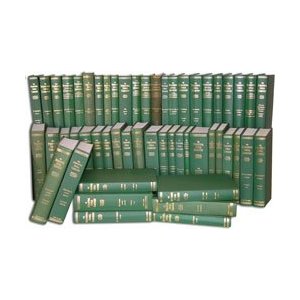
More Free Books: The International Critical Commentary (ICC)

The International Critical Commentary (ICC) is one of the most important commentary series of the twentieth century. I was quite pleased to find volumes which have gone out of copyright are available through Google Books for free. When I was in college I used to be able to buy volumes of the ICC for about $10, so most of these I own. Several are very nice, well preserved books which I treasure. I will always opt for the “real book” whenever possible, but thanks to Google these excellent commentaries are free to download. The ICC is one of the truly great commentary series, preserving some of the best scholarship over the last 125 years. Even thought many of the volumes have been replaced by more recent scholars, the original commentaries are worth having.

Many of the early volumes are still available used, although they are not particularly cheap. W. R. Harper on Amos and Hosea is listed on Amazon in Hardback for $49.50, the “inexpensive” paperback reprint is available new for $43. This reprint is printed on-demand from the same scan which appears on Google books at no cost. Some of the less popular volumes can be found used for less that $20, but many are becoming quite rare.

There are several volumes which are essential commentaries to own. Alfred Plummer on Luke is classic commentary everyone should have on their shelf (virtual or otherwise). Volume one of R. H. Charles’ classic two-volume commentary on Revelation is available, although I cannot find volume two. Sanday and Hendlam on Romans is another excellent commentary, although the author is listed as S. R. Driver, the editor of the series Ernest Burton on Galatians is still consulted by anyone working in Galatians.

A few of the volumes are interesting, although after 100 years, they are not particularly cutting edge. Most commentary series have some volumes which are not as good as others, the ICC is no exception. Toy on Ecclesiastes and Paton on Esther are worth reading, but they represent scholarly opinion which has in many ways been abandoned. Likewise, while Driver’s commentaries on Genesis and Deuteronomy are pillars of the Documentary Hypothesis, they may very well boggle the mind today. Yet, in my opinion, every volume in the series is worth owning (especially since they are free through Google Books).

There are some drawbacks to Google Books, however. Even though there are four pages of books listed under International Critical Commentary, many are repeats with incorrect names. For example, J. Skinner is listed as the author of the International Critical Commentary, but when you examine the book, it is actually Plummer’s Luke commentary. Skinner did write the Genesis commentary in the ICC, and for some reason he is listed as the author on about a dozen volumes. Because of the nature of the scans, these volumes cannot be searched, nor can you cut and paste text from the books. The books are page scans, so you are viewing a graphic of the page, not text. If you need search capabilities, Logos sells the entire collection in their searchable, indexed format. This collection includes more recent volumes which are still under copyright.

Copies of the ICC can also be found at the Internet Archive in a variety of formats, but not all are very useful. For example, I downloaded T. K. Abbott’s Commentary on Ephesians and Colossians in the Kindle / mobi format, and frankly the conversion was terrible. Greek characters are not recognized and unreadable, many English characters are mis-read. I tried the epub version, using Stanza on my iPad and found the text to be the same unreadable mess. I was able to download the PDF file and read the scans, and the Internet Archive’s online reader displays the pages correctly.

One of the best ways to mange your e-book collection is Calibre, an open source reader for Windows and Mac. Not only will Calibre read many different formats, the software creates a database to help you sort through the mass of PDF and epub books you download from Google Books or  Archive.org. I have used the Windows version of this program for years and have just started using the Mac version. Sadly, there is no iOS version. I would love to have Calibre on my iPad to read books stored in Dropbox or other cloud servers.

I would recommend downloading all volumes of the ICC from Google Books, there is a wealth of scholarship waiting for you to use.