The May 2013 Biblical Studies Carnival will be hosted by Jeff Carter over at That Jeff Carter Was Here. This is a “call for links” to blogs of interest published in May 2013. Email the links to Jeff (thatjeffcarterwashere at hotmail.com) or leave a comment with a link.
I find May to be a slow month for my blog (I blame the end of semester blues). But there were many excellent blog posts this month in the world of biblical studies – what are the blogs you read this month which contributed to the discussion of biblical literature theology, and culture? What posts made you think more deeply? Send the links to Jeff and look for his Carnival around the first of June.
I am also looking for more volunteers for the 2013 Carnival Season, August through the end of the year are open. Andrew King at The Blog of the Twelve is up for the June Carnival (due July 1), but the rest of the year is more or less open. Please email me (plong42 at gmail.com) and pick your month! Carnivals are a great way to attract attention to your site if you are new blogger, but more importantly it gives you a chance to highlight the best and the brightest in the world of bibliblogs.
The March 2013 Biblical Studies Carnival will be hosted by Jacob Cerone at ἐνθύμησις.
This is a “call for links” to blogs of interest published in April 2013. Email the links to Jacob (jacobncerone at gmail.com) or leave a comment with a link. What are the blogs you read this month which contributed to the discussion of biblical literature theology, and culture? What posts made you think more deeply? Send the links to Jacob and look for his Carnival around the first of May.
I am also looking for more volunteers for the 2013 Carnival Season, August through the end of the year are open. Jeff Carter is up for May (due June 1) at his blog, ThatJeffCarter Was Here. Please email me (plong42 at gmail.com) and pick your month! Carnivals are a great way to attract attention to your site if you are new blogger, but more importantly it gives you a chance to highlight the best and the brightest in the world of bibliblogs.
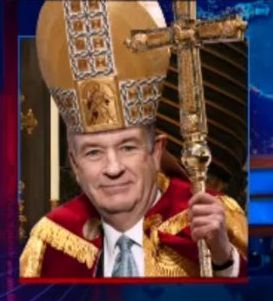
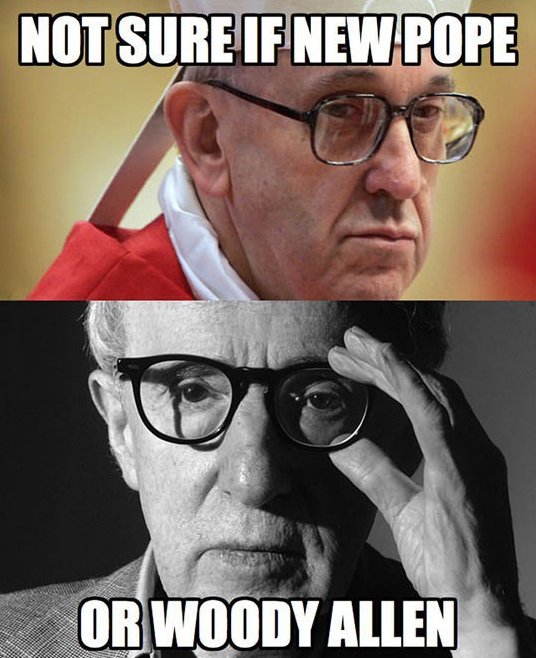
Introduction. There really was a great deal going on this month…new popes, gay marriage and some kind of basketball tournament. I thought about combining them for a “theme” for this month’s carnival, but gay Catholics playing basketball seemed a bit too easy.
Hebrew Bible
Christopher Rollston’s “Nebuchadnezzar’s Destruction of Jerusalem, The Cyrus Cylinder, and the Building of the Second Temple” is an extremely valuable article on the alleged religious freedoms sometimes found in the Decree of Cyrus. “…although Cyrus allowed the various people-groups to return to their homelands, these people would certainly remain under Persian hegemony, and fealty to Persia would be demanded (including tribute). In short, there were some strings attached, big strings.” Here is a link to a BBC article on the Cyrus Cylinder and another in the Payvand Iran News which demonstrates Thomas Jefferson read Cyropedia “sentence by sentence and had made many notes on the margins.” (HT to James Davilla for the links).
Deane Galbraith (Remnant of Giants) challenged Michael’s Heiser’s view that the etymology of “Nephilim” has the sense of “giants”, in his post “Michael Heiser’s (Mis)interpretation of “Nephilim” as “Giants” not “Fallen Ones.”” Michael (Naked Bible) replies and Deane responds in turn.
Jack Collins (Worthless Mysteries) notes that he posted his SECSOR paper, “Culture Heroes and Angelic Instruction in the Book of the Watchers: A Comparative Study.”
Tom Verenna offers some helpful insights into the mysterious make man in Mark by reading that text alongside of 2 Cor 5 (The Young Man in Mark 14.52 and 16.5 Through the Lens of 2 Corinthians 5). I would like to see this brief blog post developed into a serious paper. At this point I am not convinced, but with some development, I think I could be!
Tim Gombis has an excellent three–part essay on Evangelicals and the Bible. I agree with his main point that young, conservative Christian students are among the most biblically illiterate. In fact, they sometimes get upset when you point out what the Bible actually says (or worse, does not say!) As Gombis says, “What strikes me as odd is that the very thing I have come to associate with studying the Bible—the excitement of discovery—is the very thing that somehow frustrates the evangelicals I’ve been teaching.”
Peter Enns started the month on a high note, with a blog entitled “Why I do not believe in God anymore.” With a title like that, he is guaranteed to generate interest. “‘Believing in God’ doesn’t get you to that place Jesus is describing here. Belief leaves room for worry. Trust explodes it. What a way to live. The older I get, the less interested I am in believing and the more I am in trusting. That takes a lot of practice. In my experience, God seems more than willing to provide plenty of opportunities.”
Robin Schumacher @ The Confident Christian posted “Jesus and the Spiderman Fallacy.” According to the Urban Dictionary, the Spiderman Fallacy runs like this: “Archaeologists 1,000 years from now unearth a collection of Spiderman comics. From the background art, they can tell it takes place in New York City. NYC is an actual place, as confirmed by archaeology However, this does not mean that Spider-Man existed.” He agrees with Richard Burridge and his work What are the Gospels – A Comparison with Graeco-Roman Biography. Tom Verenna responds in Spider-Man and the Gospel Genres – the so-called Spider-Man fallacy. “how completely logically flawed it is to associate the Gospels with Greco-Roman biography.”
Brice Jones has an excellent review of Bart D. Ehrman and Michael W. Holmes (eds.). The Text of the New Testament in Contemporary Research: Essays on the Status Quaestionis. 2nd ed. NTTSD 42. Leiden: Brill, 2013. xii + 884. This is a major work from Brill, and at $314 most of us will only encounter it in libraries. Jones thinks that the book is an extremely important contribution: “This book is one of the most important books on textual criticism that has been published in years. Together with the recently printed volume The Early Text of the New Testament (Oxford, 2012), this book will be the go-to book for myriad issues concerning the text of the New Testament, versions, text-critical methodologies, and much more.”
Larry Hurtado has a brief excerpt from his longer review of Textual Criticism, the New Testament, and the Qur’an. “Small repeatedly notes that the Qur’an manuscripts exhibit a remarkable stability in the text across many centuries…” Hurtado finds several “comparisions and contrasts with the textual history of the New Testament.” Hurtado also has a nice summary of an article, “Early New Testament Manuscripts and Their Dates: A Critique of Theological Palaeography” by Pasquale Orsini & Willy Clarysse.
Roland Boer (There is Power in the Blog) provides a book outline for his forthcoming book, The Sacred Economy. “The main purpose of the book is to offer a new reconstruction of the economies of the ancient Near East, within which ‘Israel’ must be located.”
Rachel Held Evans comments on the Personal Promise Bible. This “Bible” changes some 7000 promises to your name, making the Bible more “personal.” I really cannot think of a worse idea, since (my guess) is that 90% of those promise have nothing to do with you at all. As Evans says, “I hate to break it to the creators of the Personal Promise Bible, but the Bible just isn’t that into you.” (A comment on Rachels’ blog should win some sort of a prize for inviting us all to sing “You’re so vain, You prob’ly think the Bible’s about you…”
Victoria Gaile Laidler reviewed Roger Haight, “Comparative Ecclesiology.” The Routledge Companion to the Christian Church. ed. Gerard Mannion and Lewis S. Mudge. New York: Routledge. 2008. 387-401.
Reactions to The Bible. Mark Burnett and Roma Downey stirred things up a bit with their miniseries retelling stories from the Bible. The best coverage from BiblioBloggers is Mark Goodacre, who has written quite a bit on the series. His comments are balanced and generally helpful, pointing out the good and the bad. I also appreciate his connecting actors to Doctor Who. Jim West didn’t really like it much. Tom Verenna comments on Obama’s cameo as Satan. The producers stated that Satan was portrayed by Mehdi Ouzaani, “a highly acclaimed Moroccan actor. I expect to hear that Glen Beck is demanding to see Barack Obama’s birth certificate to prove he was born in Morocco. Scotteriology collects some reactions to the novel based on The Bible miniseries. Will there be a Happy Meal tie in as well?
Gay Marriage. Unless you were living on Mars this month, you have heard that the United States Supreme Court heard arguments on the constitutionality of the Defense of Marriage Act. Americas responded by changing their Facebook cover pictures to either support gay marriage, or not support gay marriage. While I cannot imagine little red equal signs (or variations thereof) swaying any of the Judges, it was interesting to watch something like that develop over a few days. Of course the blogs had a great deal to say about the issue, both pro and con. Even Rob Bell came out in favor of Gay Marriage. Meanwhile, Jim West posted a lengthy piece on “Ursinus, on Q87 of the Heidelberg Catechism, and the 16th Century Reformers Attitudes Towards Homosexuality.” While I doubt this would sway any Supreme Court justices either, it is fascinating reading.
Education. John Byron has a very interesting article on the future of education. As a college professor, preserving the value of education is something that is extremely important to me, but that often takes place against innovations which save the institution money. With the popularity of MOOCs and online classes, the traditional college experience has changed radically.
Bruce Ashford wonders if the “Lecture is Dead.” He begins by summarizing an article by Richard Gunderman in The Atlantic, then concludes by encouraging us: “May teachers everywhere, and especially professors of theology, lecture as if their hair were on fire. May they tell the Great Story passionately, personally, and reflectively, and in so doing inform, energize, and inspire their students.”
Bibliblog News
On March 24, Jim Davila celebrated ten years of blogging at PaleoJudaica. I am not sure how long that is in dog years, but ten years of blogging is incredible. Here is a link to the 8th year anniversary post for a few more of the best blogs. Congratulations to Jim on this milestone!
As most people know, the BiblioBlog Library is offline, although the message posted at that URL promises to return. Like the return of Jesus, this might take some time, and there may be seven years of tribulation preceding the reboot of the system. I also notice that Steve Caruso has not updated the BiblioBlog Top 50 in a long time, the last “top fifty” was in November of 2012, Steve’s last message was from December 6. I would love to hear from Steve, even in a comment, letting people know how he is and if the Bibliblog Top Fifty will be coming back at some point in the future.
Here are a couple of alternative for those who need some ego-stroking. After considering “over 400 Christian Blogs,” Jared Moore listed The Top 250 Christian Blogs as of March 22, 2013. (Reading Acts is #54, so consider me stroked). Church Relevance lists Top 200 Ministry Blogs March 5, 2013. This list is a bit more complicated, attempting to balance a number of factors: Traffic – Alexa Rank (AR) and Compete Visitors (CV); Google PageRank (PR); Google Reader Subscribers (GR); Buzz Depth – Open Site Explorer Homepage Authority (HA) and Open Site Explorer Linking Root Domains (RD). For comparison, reading Acts was ranked #171 on this list.
Next Carnival: Jacob Cerone is hosting the April 2013 Biblical Studies Carnival (Due May 1) ἐνθύμησις. Be sure to contact him early and often with nominations for the Bibliblog Carnival.
I am looking for more volunteers for the 2013 Carnival Season. I have a few set up but most of the year is clear, email me and pick your month! Carnivals are a great way to attract attention to your site if you are new blogger, but more importantly it gives you a chance to highlight the best and the brightest in the world of bibliblogs. If you would like to host a Carnival in 2013, send me an email (plong42 at gmail dot com), or a comment on this post and I can contact you.
The March 2013 Biblical Studies Carnival will be hosted right here at Reading Acts. Consider this your official encouragement to send me links to blogs of interest publishing in March. Email the links to me (plong42 at gmail.com) or leave a comment with a link. What are the blogs you read this month which contributed to the discussion of biblical literature theology, and culture? What posts made you think more deeply?
I am also looking for more volunteers for the 2013 Carnival Season. I have a few set up but most of the year is clear, email me and pick your month! Carnivals are a great way to attract attention to your site if you are new blogger, but more importantly it gives you a chance to highlight the best and the brightest in the world of bibliblogs. If you would like to host a Carnival in 2013, send me an email (plong42 at gmail dot com), or a comment on this post and I can contact you.
The February 2013 Biblical Studies Carnival will be hosted by Drewe at Delving into the Scripture. You can help Drewe out by sending nominations his way (piston9 at gmail.com). What are the blogs you read this month which contributed to the discussion of biblical literature theology, and culture? What posts made you think more deeply? Challenged you?
I am looking for more volunteers for the 2013 Carnival Season. I have a few set up but most of the year is clear, email me and pick your month! Carnivals are a great way to attract attention to your site if you are new blogger, but more importantly it gives you a chance to highlight the best and the brightest in the world of bibliblogs. If you would like to host a Carnival in 2013, send me an email (plong42 at gmail dot com), or a comment on this post and I can contact you.
 The May 2013 Biblical Studies Carnival will be hosted by Jeff Carter over at That Jeff Carter Was Here. This is a “call for links” to blogs of interest published in May 2013. Email the links to Jeff (thatjeffcarterwashere at hotmail.com) or leave a comment with a link.