Book Review: Matthieu Richelle, The Bible and Archaeology

Richelle, Matthieu. The Bible and Archaeology. Peabody, Mass.: Hendrickson, 2018. 132 pages + 16 pages of color plates; Pb; $14.95.  Link to Hendrickson

This new publication from Hendrickson is a translation of Richelle’s La Bible et l’archéologie (Excelsis, 2012). This edition has been significantly revised, updated, and enlarged. Alan Millard contributed a forward and the book concludes with thirty-two color photographs (eight pages). As the title implies, this book is focuses the archaeology which would interest a reader of the Bible, although the concerns only the archaeology of ancient Israel. There is little in this book on the archaeology of Asia Minor or other sites in the ancient Near East.

The first three chapters of the book attempt to lower the expectations most people have for archaeology and the Bible. Unfortunately the only experience most people have with archaeology is watching the Indiana Jones movies. Although there have been some spectacular finds in the history of archaeology, most of the work of archaeology deals with far less exciting details. The evidence is always fragmentary and provisional (107). The first chapter describes what archaeologists actually discover, beginning with ancient cities. Richelle outlines the problems associated with even identifying an ancient location and the types of civic architecture associated with most sites.

Perhaps the most exciting discoveries archaeologist make are texts. The second chapter of the book is devoted to what kinds of texts are usually discovered, from royal stelae to clay tablets and ostraca. Richelle also discusses papyri and scrolls, including the Dead Sea Scrolls. Finding an inscription is only half the job. Richelle discusses the problems facing epigraphers as they decipher and interpret these written documents. He briefly mentions the extremely vexing problem of forgeries.

In the third chapter Richelle describes the limits faced by archaeologists as they try to interpret the data. For example, it is often extremely difficult to identify ancient sites and date finds accurately. Ultimately, archaeologists offer interpretations of data and all interpretations must be tentative. Excavations are always partial and often archaeologists fail to publish full reports for scholars to examine. As is often observed, real archaeologist love to dig, but hate to write.

The final three chapters deal with the relationship between the Bible and archaeology. This chapter begins with a summary of the often bitter debate over the role of the Bible in doing archaeology in Israel. Some of the earliest archaeologists went out with a spade in one hand and a Bible in the other. These so-called biblical maximalists accepted the Bible first and found what they expected to find in the archaeological record. On the other end of the spectrum, the so-called minimalists only use physical evidence from archaeology and have little interest in the Bible as source of historical information. Richelle argues for a balance view which makes judicious use of the Bible in archaeology. Since both sources are fragmentary, it is important to use one to illustrate the other. The Bible is “a precious source at the level of historical interpretation, but it must not prescribe in advance what should be discovered during excavations” (108).

To illustrate this problem, Richelle offers a case study using recent challenges to the traditional view of David and Solomon (chapter 5). The traditional view is that David and Solomon existed and biblical archaeology would point to several Iron Age sites as evidence for a central authority in Israel (the city gates at Megiddo and Gezer, for example). In Jerusalem the stepped structure at the City of David and evidence from the Ophel imply an Iron Age expansion of Jerusalem. However, all this evidence can be interpreted differently by re-dating sites (a “low chronology”).

The final chapter of the book extends this discussion to the lack of inscriptions from the time of David and Solomon. If there was a kingdom of David and Solomon in the tenth and ninth centuries B.C.E. with an extensive administration center in Jerusalem, where are the inscriptions? It is a fact there are very few examples of writing from the period, far less than in other areas explored by archaeologists (Egypt, for example). Richelle argues the absence literary texts in the archaeological record does not necessarily correlate with the development of a culture.  But he also outlines the development of a scribal tradition in ancient Israel.

Conclusion. This short book is a good introduction to the problematic nature of the Bible and Archaeology. It is perhaps too brief; since the book uses endnotes, there are only 108 pages of actual text. The Hendrickson website claims the book has 168 pages, but that is not the case.


NB: Thanks to Hendrickson for kindly providing me with a review copy of this book. This did not influence my thoughts regarding the work.

GBC – Israel Tour 2015

At Jaffa Gate 2013

At Jaffa Gate 2013

I am leaving today to lead a tour in Israel and Jordan.  This is my seventh trip to Israel since 2005 and I am looking forward to this one a great deal.  I have 24 students along with me on this trip and they are all ready for an adventure.  We arrive in Tel Aviv and begin with a walk through the Old City, the Rampart Walk, Western Wall and Davidson Archaeological Park.

We have a couple of days in Galilee, visiting all the “Jesus sites” as well as Tel Dan.  We will cross into Jordan at Tiberius, see Jerash and Mount Nebo on the way to Petra.  Finally, after crossing back into Israel at Eilat, we get a few days in the Negev, visiting Arad, Masada, En Gedi, Qumran and a few other sites.

Ten Dan, 2011

Ten Dan, 2011

I am particularly looking forward to the Southern Temple and City of David excavations, there are always and exciting things to be seen there.

I plan on walking down the Mount of Olives and across the Kidron Valley, then up the other side to the City of David excavations. While it is a long walking say, I think it will be an education on just how far people walked in and around Jerusalem in the first century.

Here is the basic itinerary, days 1-2 are travel and arriving in Jerusalem.

  • Day 3: (Wednesday-April 29) Jerusalem. Jaffa Gate and Old City of Jerusalem. We will pass the Citadel of David and begin the “Rampart Walk.” We continue to walk through the Old City market to the Western Wall, including parts of the Via Dolorosa and visit the Church of the Holy Sepulcher.
  • Day 4: (Thursday April 30) Jerusalem. We will spend the morning at the Yad VaShem Museum and Israel Museum (Dead Sea Scrolls, Jerusalem Model, and the Archaeology wing of the Museum).
  • Day 5: (Friday-May 1) Jerusalem. The day begins on the Mount of Olives, looking across the Kidron Valley. Walking down the Mount we will visit Domiunis Flevit (where Jesus wept over Jerusalem), the Garden of Gethsemane and the Church of All Nations. We will walk across the Kidron Valley past Absalom’s tomb and up to the City of David and Hezekiah’s tunnel and the pool of Siloam. Finally we visit the Davidson Archaeology Park on the Southern wall of the Temple.

    At En Gedi, 2009

    At En Gedi, 2009

  • Day 6: (Saturday-May 2) Galilee. We will begin the day by driving from Jerusalem to Caesarea, through Nazareth to Beit Shean, and finally arrive at Maagan Holiday Village in the late afternoon.
  • Day 7: (Sunday-May 3) Galilee. We will begin this day by visiting Mount Arbel, the Mount of Beatitudes, Capernaum, Caesarea Philippi and/or Tel Dan, Kursi.
  • Day 8: (Monday- May 4) Jordan, Jeresh, Mt. Nebo, Amman. We will leave the Galilee early and prepare to cross into Jordan at the King Hussein Bridge and transfer busses in Jordan. We will stop at Jeresh for a tour of this spectacular Roman city.
  • Day 9: (Tuesday-May 5) Petra. We start out for Petra early, walking the Suq to the famous Al Khazneh or Treasury at Petra. We will ahve a full day to explore this fantastic site!
  • Day 10: (Wednesday-May 6) Aqaba, Eilot, Tamar. We will head south to the Red Sea, crossing the border back into Israel at Eilat. After some time swimming in the Red Sea we will arrive at Biblical Tamar Park.
  • Day 11: (Thursday-May 7) Mamshit Tel Arad, Masada, the Dead Sea, Tamar. We will be on the bus early to explore several sites in the desert. Our first stop will be Mamshit, a Nabatean trading village which has been beautifully restored by the Israeli Park service. Then we will visit Arad, an ancient Canaanite city captured by Joshua. We will visit the Israelite citadel and travel to Masada, the famed fortress built by King Herod 2,000 years ago.

    08 Mount of Olives 04 Group

    Mount of Olives, 2013

  • Day 12: (Friday-May 8) Ein Gedi, Qumran, The Dead Sea. We will hike to the waterfall in Ein Gedi where David hid from King Saul, then visit Qumran, the location where the Dead Sea Scrolls were found. We end this day with a float in the Dead Sea.
  • Day 13: (Saturday-May 9). We will depart Tamar Park and visit a few sites on the way to Jerusalem to spend our last few hours in the Old City for shopping.

One of the highlights of my tours is spending a few days at Tamar, an archaeological site south of the Dead Sea.  The site is small but unique, with remains from the Iron Age (include a small Solomonic Gate and a four-room house), an Edomite shrine, a Roman bath and store rooms, a Turkish water system, a building once used as a jail during the British mandate, and an Israeli bomb shelter.

Look for frequent updates from Israel and Jordan over the next two weeks!

Tel Dan 2007

Tel Dan 2007

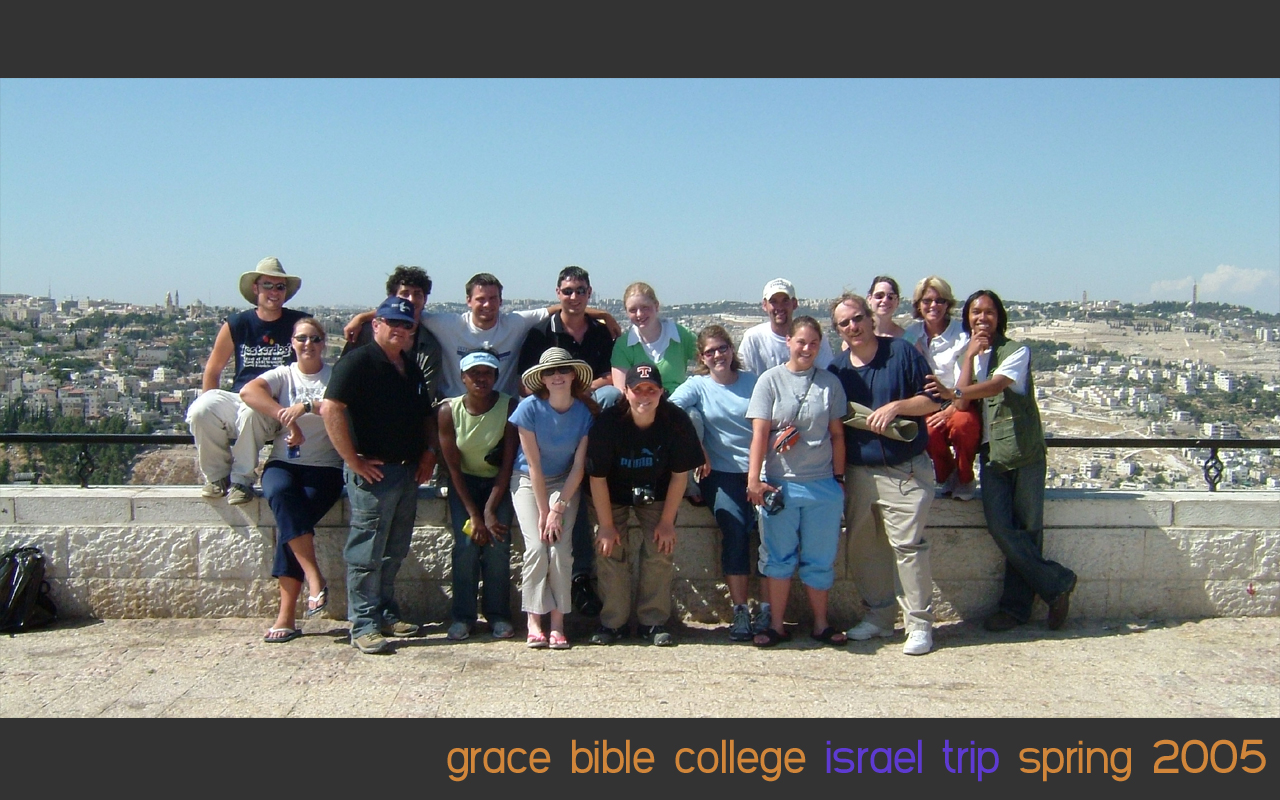
GBC Israel 2005

Free eBook from Biblical Archaeology Review

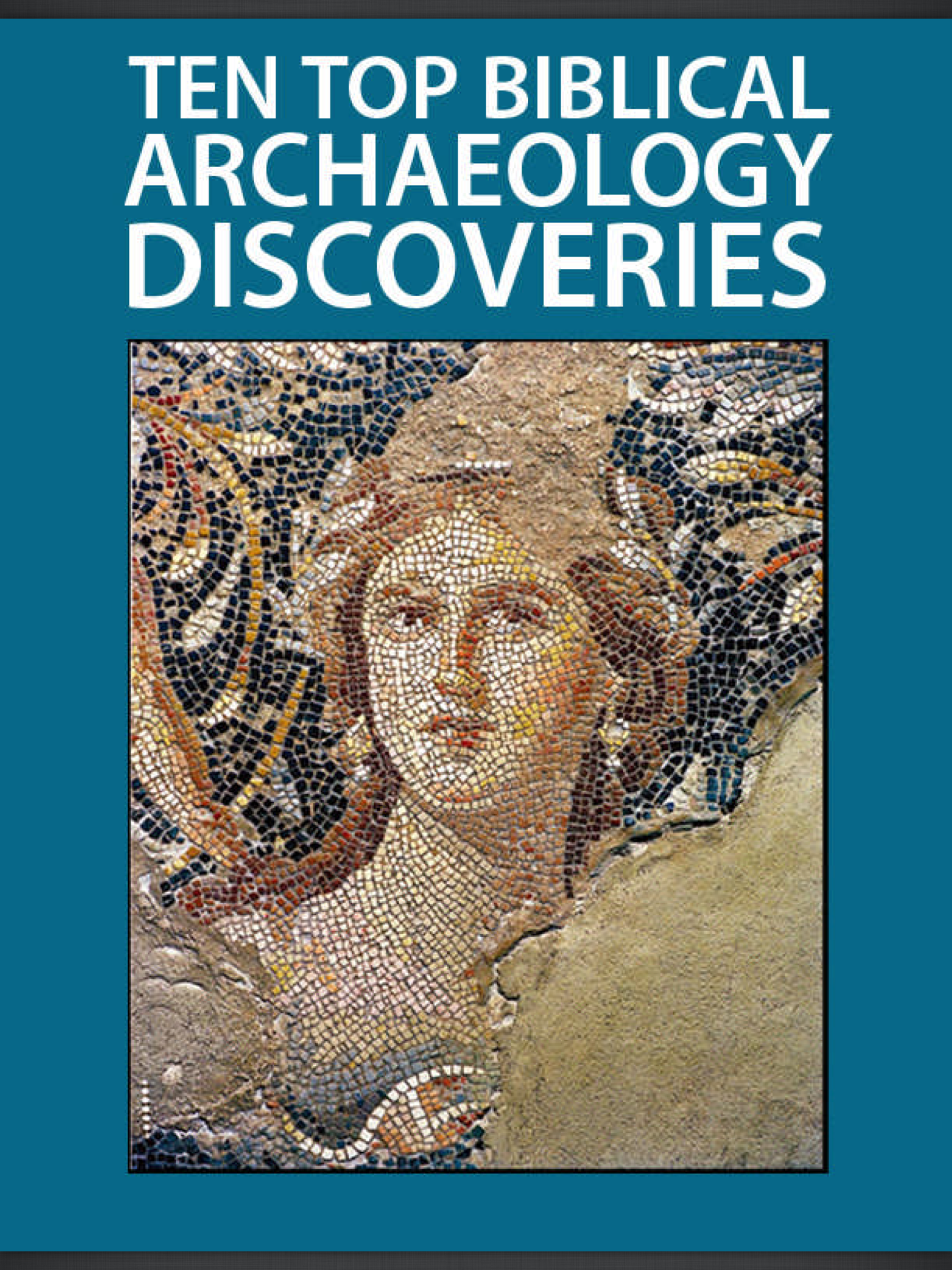
BARBiblical Archaeology Review is giving away a copy of their ‘Top Ten Archaeological Discoveries in exchange for your email address. Follow the link and sign up for the BAR daily emails and you will get a link to the book in PDF format, easily read on any platform.  I saved the file right to my Dropbox and opened it on my iPad and opened it with the Kindle Reader, although it will open with many other PDF readers.

The “top ten” articles are drawn from past issues of BAR and are accompanied by a number of illustrations (both B&W and color).  Some of these illustrations are better than others, I presume that the better photographs are from more recent articles (such as the Tel  Dan inscription).  The book is 148 pages, each article is 10-12 pages long. In a few cases, the original sidebars are also included.  Since the articles are from the BAR magazine, they are written for the non-specialist. (This book looks alot like the older “Best of BAR” series.)

As for the list of Top Ten archaeological discoveries, it is mixed list.  The Nag Hammadi library is first on the list, a worthy inclusion. But the book omits the Dead Sea Scrolls.  At first I thought this was because the discoveries were all after 1974 (when the Biblical Archaeological Society was founded), but the Nag Hammadi library was discovered in 1945, the same time as the Dead Sea Scrolls.  I think that the mosaic from Sepphoris on the cover of the book is beautiful, but I am not sure it rates the top ten.

For the cost of your email address, this is good book to download.  Everyone will disagree with about any “top ten” list, at least this one is free.

GBC – Israel Tour 2013

I am leaving today to lead a tour in Israel and Jordan.  This is my sixth  trip to Israel since 2005 and I am looking forward to this one a great deal.  I have 14 students on this trip and they are all ready for an adventure.  We arrive in Tel Aviv and begin with a walk through the Old City, the Rampart Walk, Western Wall and Davidson Archaeological Park.  We have a couple of days in Galilee, visiting all the “Jesus sites” as well as Tel Dan.  We will cross into Jordan at Tiberius, see Jerash and Mount Nebo on the way to Petra.  Finally, after crossing back into Israel at Eilat, we get a few days in the Negev, visiting Arad, Masada, En Gedi, Qumran and a few other sites.

Ten Dan, 2011

Ten Dan, 2011

I am particularly looking forward to the Southern Temple and City of David excavations, there are always and exciting things to be seen there.  One of the highlights of my tours is spending a few days at Tamar, an archaeological part south of the Dead Sea.  The site is small but unique, with remains from the Iron Age (include a small Solomonic Gate and a four-room house), an Edomite shrine, a Roman bath and store rooms, a Turkish water system, a building once used as a jail during the British mandate, and an Israeli bomb shelter.

Look for frequent updates from Israel and Jordan over the next two weeks!

Dome of the Rock, 2009

Dome of the Rock, 2009

Tel Dan 2007

Tel Dan 2007

GBC Israel 2005

Examples of the Value of Archaeology (Part 3)

1873 Wood Engraving

Southern Temple Excavations. There is a great deal of archaeological activity around the southern end of the Temple. Since the first two examples I used concern the Old Testament, I will focus on the importance of these excavations for New Testament studies. There are few who would deny the Western Wall represents the walls built by King Herod to expand the Temple Mount.

In 1838 E. Robinson, one of the first archaeological explorers of Jerusalem, discovered the remains of an arch on the southwest corner of the Temple Mount. Photographs show that this arch was only a few feet above ground level at the turn of the twentieth century, and even in 1968 it was near ground level with a vegetable patch growing beneath. Today, visitors to the archaeological park can see the arch some twenty feet from the ground level. Archaeologists have excavated to the level of the first century streets. The arch is part of a stairwell from ground level to the Temple Mount.

Photo Taken May, 2009

One of the most spectacular finds in this area was the “trumpeting stone” from the corner of the wall. On the inside of the parapet is an incomplete inscription saying “to the place of trumpeting.” The stone was 138 feet above the street level! It appears that a priest or Levite would sound a shofar (Josephus, JW 4.582, b. Sukk. 5:5).On the southern end of the Temple Mount a stairway goes up from the street level to a double gate and triple gate. It is likely that there was a plaza at the base of the steps, and there are several public ritual baths near the steps. The double gate is built in the Herodian style, although it was filled in by the Crusaders and a building was added by the Umayyads, nearly covering the entrances. Since the other since of the gate is now part of the Al Aska Mosque, detailed investigation is impossible. Ritmeyer suggests that this may be the Beautiful Gate mentioned in Acts 3, although it is impossible to know for certain. These gates opened up into the Royal Stoa, a huge area on the south end of the Temple Mount.

Trumpeting Stone

In summary, the southern Temple excavations demonstrate what Jerusalem looked like during the ministry of Jesus and the Apostles. The archaeology of the Southern Temple area gives the physical context of last week of Jesus life and the early part of the book of Acts. Let me suggest one application of this physical context to the book of Acts. As is well known, on the day of Pentecost 3000 people respond to the preaching of the apostles and were baptized. In Acts 4:4 and additional 5000 believe. How is it possible to baptize such large crowds in the Temple area? The only real possibility are the many mikvoth around the Temple area, including the pools of Siloam and Bethesda. I think that the baptism of Acts 2 and 3 is a self-baptism in one of the many ritual pools around Jerusalem. In this case, the archaeological context helps explain a detail of the text.