Philippians 2:13 – Working for the Pleasure of God’s Will

In Phil 2:12, Paul said believers ought to “work out” their salvation in fear and trembling. I suggested in a previous post that Paul’s point in this very difficult verse is something like “cultivate your salvation in order to bear fruit on the Day of Christ.” God saves by grace through faith, adopts us into his family, and then creates an environment for his children so they are able to bear the kind of fruit that pleases their Father in heaven.

This work or fruit is for God’s “good pleasure,” not ours. The noun (εὐδοκία) has the sense of being pleased with someone, perhaps as a parent is pleased with their child’s successes. I have attended several piano recitals and honestly, no one plays as well as my kid. All the others are really bad. Since I am a typical parent, I am “well pleased” when my child plays, whether she is the best or not!

If the believer is to “work out their salvation in fear and trembling” and whatever work they do is for God’s pleasure (not theirs), does this mean God is going to command us to do things that are unpleasant to us? Something dangerous? Something harmful? Too many Christians dread service to God because they think God is out to torture them with some horrid and embarrassing task.

In the context, Paul has just finished describing the humility of Jesus as he was obedient even to death on the cross. In verse 17, Paul himself is obedient even to the point of imprisonment and death. So yes, God might very well expect you to be obedient to him in a dangerous situation. But looking ahead to two more examples in the letter, Timothy and Epaphroditus are both examples of humble service and obedience to God’s will. Both were willing to do what was required to fulfill their calling.
In the context of first-century Philippi, the fact that the believers are separate from the world may mean they are facing opposition. Perhaps they are suspected of disloyalty, for not being good being good members of the Empire, or at the very least, they are really quite weird! Different was dangerous in the Roman world, so to serve a God that did not have a temple or priesthood, to reject the gods of one’s father or the gods of the community, was to put yourself in danger!

Obedience to God does not necessarily mean he is going to send you to die in Africa. Humble service is the way the child of God ought to live their lives all of the time. That might mean living a life that challenges the assumptions of a prevailing culture, but it usually means living a life dedicated to God regardless of the situation (Phil 4:10-13 will make this even more clear). In fact, it in the comfortable Western church, it is easy to say you are willing to be a martyr since it is highly unlikely you will ever have to give your life for Christ.

Honestly, which is harder, saying you are willing to give your life in the service of the Gospel, or being kind to your neighbor? Treating someone with a significantly sinful lifestyle with respect and love? Humbling serving someone who is completely undeserving of respect and completely unaware of your sacrifice on their behalf?

Lazy American Christian

Philippians 2:12 -13 – Work Out Your Own Salvation

Paul’s command to “work out our salvation” might come as a surprise (v. 12). Paul is so adamant elsewhere that we are not saved by works, but rather grace through faith. In fact, this verse has been the source of a great deal of post-Reformation theological discussion. But Paul does is not talking about working for your salvation, or working to keep your salvation, but rather to continue obeying God, as the members of the church at Philippi are already doing. Paul assumes the church is already obedient to God’s commands and they are already following the model for obedience is Jesus (vv. 5-11) and Paul (v. 17).

God At WorkTo “work out” (κατεργάζομαι) often refers to producing something agriculturally, perhaps “cultivate” fruit is a possible source for this metaphor (LXX Deut 28:39, Ezek 34:3, 36:9, Odes 1:17). That is the point of the word in Romans 7:17-18, sin is like a seed that produces an evil behavior. People talk about “cultivating a relationship” in business. This means making contacts and doing little things that will eventually result in a sale. The goal is a sale, but there are dozens of smaller contacts along the way that build up to closing the deal.

Salvation is a completed fact when someone accepts Christ as their savior, they are “justified” before God, but (obviously) they are not yet sinless nor have they arrived in Heaven yet. “Working out one’s salvation” can be understood as cultivating what God has already done so that it yields fruit at the appoint time.

The believer is to cultivate their salvation with “fear and trembling.” Paul used this phrase in Ephesians 6:5 (“slaves, obey your masters with fear and trembling”) and 2 Cor 7:15, referring to how that church received Titus. In both cases there is a real fear of punishment for wrongdoing. The Old Testament occasionally describes salvation and service of the Lord in terms of fear (Psalm 2:11, for example). There are a number of examples, however, of dread falling in the nations when they encounter God (Exod 15:16, Isa 19:16).

Paul has already mentioned the church’s fear of oppression from the culture in 1:28, it is possible this fear and trembling refers to the dread the members of the church have as they face ridicule and pressure to conform to Roman culture.

Even though Paul says we are to “work out” our salvation, it is God who is doing the work in the life of the believer (v. 13). The believer is not left to their own to cultivate their salvation, it is in fact God who “wills and works” in us. God is the one who is at work in the life of the believer, enabling the believer to grow spiritually. While he does not mention the Holy Spirit in this verse, this is exactly the same sort of thing we read in Galatians or Romans, that one is enabled by the Holy Spirit to do the will of God (Rom 12:1-2, for example).

Remember the junior high science fair? I know a Middle School principal who called the Science Fair “parent’s projects” since most of the winning projects were largely the result of dads with power tools and too much time on their hands. A parent could do all the work, but they should not be proud of the child for winning the award, and the child will not develop the maturity and skills needed to succeed in life. But if a parent helps the child and provide them what they need to succeed, then the parent can be legitimately proud when their child wins the award and the child will grow from the experience (even if they lose to the kid whose parents cheated).

In a very similar way, God provides the believer with all they need to succeed in their spiritual life, to “cultivate their salvation” and produce real fruit that will make God proud when he judges our works at the resurrection. We are more mature for the struggles we endured during that cultivation.


Philippians 2:9-11 – Exalted to the Highest Place

Jesus humbled himself by taking on the nature of a human. While humility is often seen as a virtue in modern culture, people did not “humble themselves” in the Greco-Roman world. Someone who was humble was lowly and weak, even servile. That man should humble or belittle himself is rejected. To suffer misfortune and humble oneself “is quite unnecessary, vain and irrational”  (Plutatch De exilio, 1 (II, 599b). In the Hebrew Bible, to “be humbled” is associated with punishment. God humbles the proud (1 Sam 2:7).  The word appears in LXX Isa 53:8, describing the humiliation of the suffering servant.

Not only did Jesus become a slave, he was a slave who was executed by crucifixion, the most shocking horror in the Roman world. Jesus therefore goes from the highest place imaginable, equality with God, to the lowest, death on the cross.

Because he was obedient and suffered innocently, God vindicated Jesus exalting him to the highest place imaginable. The verb Paul uses for “exalted” (ὑπερυψόω) is not the usual one in the New Testament, it only appears here, but it also in Ps 96.9 (the verb is repeated many times in Odes 8:52-88). It is possible Paul has this verse in mind in Phil 2:9-11, the Most High  ὁ ὕψιστος of that verse is God himself, and he is exalted above the earth and far above all other gods. This exaltation refers to the resurrection (cf. 1 Cor 15), but also the ascension in Acts 1 and Rev 4-5.

Because he was obedient and suffered innocently, God gave to Jesus the highest name imaginable. In the Roman world the name of the emperor was venerated as divine on coins and inscriptions. Yet Jesus has been given a name that is above every name, including the Roman emperor! And because he was obedient and suffered innocently, God will put everything under the Lordship of Jesus. Heaven, earth, and under the earth all will acknowledge that Jesus is Lord.

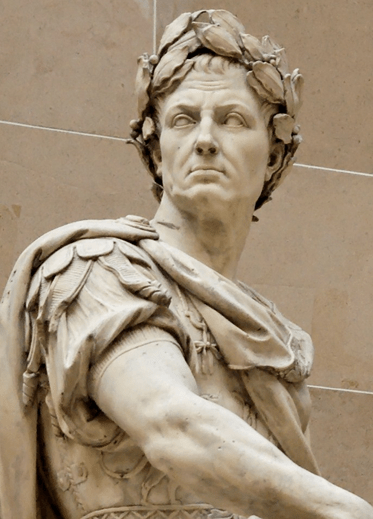
CaesarAll this implies that Caesar is not the true lord of this world.  Paul was not anti-Rome, although his gospel did subvert the social order by advocating Jesus as the Lord.  As I read Paul, I think Hellerman (Embracing Shared Ministry, 168) is right that Paul is not consciously anti-Imperial, he in no way was advocating some sort of rebellion against the Empire. But the Gospel was so radical that it would erode the Empire if that Gospel practiced consistently. Perhaps the sad story of Church history is that by the time Christianity was the majority religion, it had become thoroughly Roman with respect to honor and status.

Jesus is therefore the true Lord of this world and all of creation ought to recognize that lordship. It is quite remarkable that Paul never suggested the Christians openly rebel against Rome. That would have been a futile effort since there were so few Christians. What he did tell the Philippian church is that they ought to have the same attitude as Jesus. This sort of humility was counter to the Greco-Roman world and slowly brought down the Empire.

More important, this sort of humility is counter to Western/American culture, even in the church. If Paul says “Jesus is Lord, Caesar is not,” should we also say, “Jesus is Lord, America is not”?

Philippians 2:7–8 – He Made Himself Nothing

It seems every word in Philippians 2:5-11 is theologically important . That Jesus “emptied himself” is one of the most discussed since it is not immediately clear what it means to become empty when one is “the form of God.”

The meaning of “emptied” is important here. The verb (κενόω) refers to setting the status described in verse 6 in order to be obedient.  While there is a great deal of theological weight placed on this word, it usually focuses on how Jesus (as God) could set aside certain attributes of God while he lived as a human.  I do not want to downplay those discussions, but they do distract from what Paul’s main point is in the cultural context of the Roman world of the first century.

Roman TogaThe phrase is better understood in terms Roman status, especially in the practice of wearing the toga by Roman elite. Jesus set aside his honor and prestige as “form of God” when he became the “form of a servant.” Perhaps the use of the toga in the Roman world illustrates what Paul may have had in mind.  The toga was a sign of elite status in the Roman world. Hellerman makes the point that this would be equivalent to a Roman senator setting aside his toga (his mark of status) and taking on the rags of a slave (also a mark of status). Because of that humble obedience, Jesus is exalted to the highest status imaginable, even above the emperor of Rome! That Jesus is called Lord is counter to a Roman world where Caesar is Lord and worshiped as a god (Embracing Shared Ministry, 167).

So when he “he emptied himself.” Jesus “divested himself of his prestige or privileges” (BDAG). It is as if he voluntarily set aside his toga, the sign he was the highest ranking Lord in the universe.  Rather than divesting himself of divine attributes, the idea Paul has in mind the humility Jesus had in the incarnation, so much so that the God of the universe could set aside that status in order to serve others.

Rather than having the form of God, Jesus took on the form of a servant. The ESV translates this as servant, but it is the same word as “slave,” the lowest possible social class in the Roman world.

Dobby in ragsJesus therefore set aside the toga, and picked up the rags of a slave. By way of analogy, think of the Roman emperor stripping himself of the finest clothing available to a Roman citizen and putting on the stained and flea-infested rags of the lowliest slave. (Think of the the rags of Dobby the House-Elf!) Just as the status of a Roman citizen was evident by what they wore, so too the clothing of a slave signal his status. Even a slave with some social standing would not dress in a toga!

The social status of a servant was always viewed negatively in the Roman world.  In modern western culture, a person at a store might say something like “I am at your service” in order to indicate their willingness to help someone. In the Roman world, this would be a shameful expression; the social status of a servant was not worth considering. Yet Jesus was by nature God and he voluntarily took on the nature of a human.

This idea of a “leader as a servant” or “God as a servant” would be counter-cultural in the first century. A leader would not be humble  nor would they ever consider serving others of a lower social class. The modern church is used to hearing about “servant leadership” and Christians are continually encouraged to serve in their churches and communities. Like the church at Philippi, members of local churches still struggle to serve others with “the mind of Christ.”

Philippians 2:5-6 – Equal with God

It is hard to over-estimate the theological importance of Philippians 2:5-11. This hymn is foundational for Christian understanding of the nature of Jesus and the incarnation.There are more than a few major theological problems in these few verses, such was what it means that Jesus is God, yet he emptied himself.

But Paul’s original intention was not to create a theological statement, he is focused on Jesus as the ideal example of humble service. Paul is drawing out a practical implication for “living a life worthy of the Gospel” (1:27-2:4) from this important theological statement: serve one another with the same attitude of Christ Jesus.

Corporate Ladder

The noun Paul uses to describe Jesus’ outward appearance (μορφή) is used twice in the passage: Jesus goes from “form of God” to “form of servant.”  While the word refers simply to “what something looks like,” it is used to describe the outward appearance of a god. Philo used the word to describe Caligula as “dressed up as a god” (Leg. 110). Most cultures have some sort of system of social stratification that can be discerned from what people wear. Joe Hellerman describes well the Roman emphasis clothing as an external sign of one’s social standing (Embracing Shared Ministry, 142).  For the most part, one could tell social status by the clothes a person wore. A slave, for example, could not parade around in a toga, nor would a wealthy Senator and leading Citizen of Rome dress in rags like a slave.

Jesus was “equal with God.” This parallel phrase uses “equal” (ἴσος). While the word often is used for two things that are equal (for example, Luke 6:34), it appears in several theological important passages.  In John 5:18 Jesus is accused of making himself “equal with God,” something the Jewish religious authorities though worthy of death! Some Greek and Roman rulers claimed to be equal with God. In 2 Macc 9:12, Antiochus claims to be “equal with God” (ἰσόθεος), Appian described the honors Augustus gave to Julius Caesar as “equal with God” (BCiv. 2.148, cited by Hellerman, 143).

But his equality was not “a thing to be grasped.” A “thing to be grasped” (ἁρπαγμός) refers to asserting a title or putting forth a claim for something, or something to be exploited. Think of someone who “makes a claim” for a legal settlement, they think they are entitled to compensation so the “make a claim.” The King James Version had “did not think it robbery,” reflecting the idea of grabbing at something.  Maybe another way to think of this is a benefit that gives you an advantage over other people, maybe handicapped or expectant mother parking at the mall. This is a “status” that allows someone to take an advantage over others.

Paul describes Jesus in this verse as occupying the very highest rank imaginable by anyone in the ancient world, he was in fact God. Yet that position and rank was not something he insisted upon, as the Romans would have done. He set aside that rank in order to humble himself.  The Roman world was based on extreme social stratification. There was a rigid social order in the Roman world, from the extreme minority elites who had virtually all the power to the majority slaves who had absolutely no power.

This humble attitude of mutual submission, even to people of a lower social class, flies in the face of the Roman world, and as Hellerman points out, it flies in the face of power relations within the church (p. 99). Paul’s main point here is to encourage the believer to serve other believers without respect to their rank or position in society. This includes everyone in a local church, including the pastor!

The larger a church grows, the more need there is for power structures reminiscent of American corporate business models. A church could have a “CEO Pastor” who is paid (respected) like CEO in a major business. Perhaps they think of themselves as too busy “casting vision” to drive a van for the youth group, or play games with the elementary kids, or teach a small Bible study, or weed the church lawn on a work day.

The pastor worthy of respect is the one who sets aside his title, respect and power, and serves others, doing tasks that might be “beneath” their position. This understanding of what it means to serve one another in love as the potential to transform local churches, but it is completely counter cultural to the way many American pastors understand their role in the church. Is it wrong for a pastor or church leader to see themselves as “vision casters” or function more like the CEO of a large business?