The Name of the Beast (Part 1) – Revelation 13:17-18

W is the 6th Hebrew Letter

If there is a single element of the book of Revelation which is universally known in contemporary culture it is the mark of the Beast, 666. Virtually everyone in western culture thinks that 666 is the “devil’s number” or that the triple-six is a pernicious sign to be avoided. Several times I have bought something and the price came up $6.66, and the clerk wanted to know if I wanted to buy a pack of gum so I could avoid that particular price. I used to buy a particular combination of coffee and snack at one of my favorite coffee shops which always rang up to $6.66. (I referred to it as the “Devil’s breakfast” and tasty it was!)

But there is nothing in Revelation that says this number is the devil’s number, or Satan’s address in Hell. It is not an unlucky number nor is someone cursed if they somehow accidentally ring up $6.66 at the local Taco Bell. (Actually, you might be cursed if you eat the food at Taco Bell, but that is another issue altogether!) The number does not refer to Satan at all, verse 18 says that 6 is the “number of man,” presumably because man was created on the sixth day. 666 refers to the name of the beast, either a person (the anti-Christ) or the kingdom of the beast described in the rest chapter 13.

What does is mean to “calculate the name”? There are no numbers in many ancient languages, so letters sometimes substituted as numbers. A=1, B=2, etc. There is a bit of graffiti found in Pompeii that reads “I love her whose number is 545.” Potentially one might convert their name to numbers in Greek, Hebrew or Latin and come up with a number. That number could be used as a cipher, or perhaps one might have a “lucky” number for a name. For example, my “number” in Latin is 152 (using just the letters which have values in Roman numerals). In Greek, I get 908. Neither is particularly interesting, but I suppose if I paid money to a numerologist, they could come up with something profound.

John invites the reader to figure this out, in fact, he almost baits us into trying to figure it out! Knowing that the name adds up to 666, to what might the name refer? In the early church there were several suggested names, including a Greek word meaning “to deny”, meaning that the name of the Beast was denial of the Lord.  It is possible to use the initials of the Roman emperors from Julius to Vespasian one gets 666, but you have to skip the minor emperors to make this work. The full Latin title used on coins of Domitian, the emperor at the time of John, allegedly adds up to 666. The most common suggestion is that the number 666 refers to Nero Caesar, but in a the Hebrew spelling of the name. Some writers see the number more generally, showing that it is one short of the perfect number, three times. “Failure upon failure upon failure.”

It may be best to conclude that John and his readers knew the clue that unlocked the mystery of the number and who it referred to, and that we are unable to figure it out with any certainty today.  Despite this, people are still fascinated with the name of the beast and try to figure out who he might be.  I will have more to say about this in part two of this post.

What does the number prophesy? Whatever the mark is, it represents a final declaration of loyalty, whether for God or against him. By accepting this name, you are declaring your loyalty to the beast and the empire of the beast.

What Are the Two Beasts in Revelation 13?

Obama-is-the-AntChristG. R. Beasley-Murray commented that Revelation 13 is a kind of “satanic trinity” (Revelation, 207). Vern Poythress considers the language of Revelation 13 to be a “counterfeit” of the true Christ: “ kind of pseudo-incarnation of Satan, is a counterfeit unholy warrior opposed to Christ the holy warrior” (Poythress, 410). Greg Beale considers this a “Christological parody” (Revelation, 17). For Beale, the “war against the saints” is a “an ironic parody of the Son of man’s final triumph” and even the number 666 is a parody of the trinity (777) (Beale, Revelation 699).

This is a very common view, and one that is, I believe, an accurate assessment of Revelation 13. The Dragon is the father, who is the power behind an anti-Christ image (the beast from the sea). The beast from the earth is a kind of anti-holy spirit, preforming miracles which support the claims of the first beast.

The first beast has a counterfeit resurrection in the form of a mortal wound that was healed (Rev 13:3). The miraculous character of his healing creates astonishment and followers for him, just as the miracle of the resurrection creates followers of Christ. The beast has ten crowns (13:1), parallel to Christ’s many crowns (19:12).

The relationship between the dragon and the first beast is a parody of the relationship between the Father and the Son in the Gospel of John. While it is not fashionable to see Revelation and the Gospel of John as representing similar theology, it appears to me that Beasts of Revelation 13 relate to the dragon and each other in ways which resonate with the Gospel of John.

First, the dragon gives the beast “his power and his throne and great authority” (13:2). This is the same relationship which John describes in his Gospel between the Father and the Son. In John 5:22–27 the Father gives his authority to the Son in order that he execute judgment.

palin-anti-christ

Second, In addition, those who worship the beast are implicitly worshiping the dragon (Rev 13:4). Jesus states in John 5:23 that those who honor the Son, honor the Father. This is an extremely common theme in the Gospel of John.

Third, Both beasts speak with the voice of the dragon (13:11). So too in the Gospel of John, Jesus speaks only what he has heard from the Father (John 7:16-18). In John 5:19-24 the Son can only do what he has seen from the Father.

Fourth, the function of the second beast is to be exercise the authority of the first beast after the near-fatal wound (13:12-13). This beast is not worshiped itself, but does miracles in behalf of the first beast, causing people to worship the first beast. This is not unlike the activity of the Holy Spirit in John 16, who is sent after the resurrection in order to guide the followers of Jesus. The Advocate will not speak on his on authority, but of the one who sent him, the Father. It is perhaps significant that the second beast breathes fire to destroy, in John 20 Jesus breaths on the disciples, giving to them the Holy Spirit.

This list could be multiplied, but these few examples show that the “satanic trinity” is a parody of the relationship of the Father, Son, and Holy Spirit as presented in John’s gospel. While there is little in the way of exact verbal parallels, this not a serious problem since Revelation rarely quotes any text directly, even when it is certain that the writer is alluding to a previous text. While the writer, as a resident of Asia Minor, may have known John’s theology and incorporated it into his own book, it is also possible that this is a hint that the author behind the Gospel of John also produced Revelation.

Bibliography: Vern S. Poythress, “Counterfeiting In The Book Of Revelation As A Perspective On Non-Christian Culture” JETS 40 (1997): 411-18.

Why Does John Measure the Temple in Revelation 11:1-2?

In the first two verses of Revelation 11 John is commanded to measure the Temple of God, the altar and the people who worship there. This may seem unrelated to the rest of the chapter, but these verses serve as a transition between chapter 10 and 11. John ate a scroll representing the word of God at the end of chapter 10. This scroll is sweet but turns bitter in his mouth, a clear allusion to the call of the prophet Ezekiel at the beginning of his book (Ezek 1-3).

The end of book of Ezekiel is similar to Revelation 11:1-2. In Ezekiel 40 the prophet is taken to a high mountain from which he can observe events in Jerusalem. He meets an angel (a man with the appearance of bronze) with a measuring rod in his hands. The following chapters describe Ezekiel measuring the city and the temple area. After the measuring is complete, the glory of the Lord returns to the temple.

It is not coincidental both of these interludes between the sixth and seventh trumpet are related to Ezekiel, the first from the beginning of his ministry and the second at the conclusion. Ezekiel’s ministry was to describe the departure of the glory of the Lord from the temple at the time of the fall of Jerusalem in 586 B. C. and its return at the time of the establishment of the kingdom. Perhaps the patterning of these two sections after Ezekiel is to highlight the return of the glory of the Lord at the end of Revelation.

What does the act of measuring the Temple mean? There are parallels in the Old Testament implying both preservation (Zechariah 2:1-5) and destruction (Amos 7:7-9). In the context of Revelation 11:1-2, it appears the image describes preservation, since the outer court is not measured and is overrun by the Gentiles for 42 months. The Temple, the holy place, and the worshipers are all measured. It might sound odd to measure the worshipers, but the word (μετρέω) can mean measure, count, or mete out. David Aune suggests this is an example of the figure of speech known as zeugma, one verb with two direct objects, only one of which fits the verb.

Prior to A.D. 70, many Jews believed the temple area of Jerusalem would never fall to an enemy. During the Jewish War, zealots retreated into the Temple thinking they would be preserved because they were in the temple. Instead, 6000 died when the Romans destroyed the temple. Second Baruch 6:3-9 records a legend that an angel took all of the temple objects just before the fall of the city and buried them until the end times.
Second Baruch 6:3-9 And behold, suddenly a strong spirit lifted me and carried me above the wall of Jerusalem. 4 And I saw, and behold, there were standing four angels at the four corners of the city, each of them with a burning torch in his hands. 5 And another angel came down from heaven and said to them, “Hold your torches and do not light them before I say it to you. 6 Because I was sent first to speak a word to the earth and then to deposit in it what the Lord, the Most High, has commanded me.” 7And I saw that he descended in the Holy of Holies and that he took from there the veil, the holy ephod, the mercy seat, the two tables, the holy raiment of the priests, the altar of incense, the forty-eight precious stones with which the priests were clothed, and all the holy vessels of the tabernacle. 8And he said to the earth with a loud voice: Earth, earth, earth, hear the word of the mighty God, and receive the things which I commit to you, and guard them until the last times, so that you may restore them when you are ordered, so that strangers may not get possession of them. 9For the time has arrived when Jerusalem will also be delivered up for a time, until the moment that it will be said that it will be restored forever. And the earth opened its mouth and swallowed them up. (OTP 1:622–623)

Why 42 months? This is the thrice repeated number that is associated with the time of the tribulation. 42 months of 30 days each = 1260 days, and 42 months are exactly 3 and a half years (a time, times and half a time.) That the Gentiles are allowed to overrun the outer court for 42 months is an indication Jerusalem will not be a city of peace.


The Trumpets and the Plagues of Exodus – Revelation 8

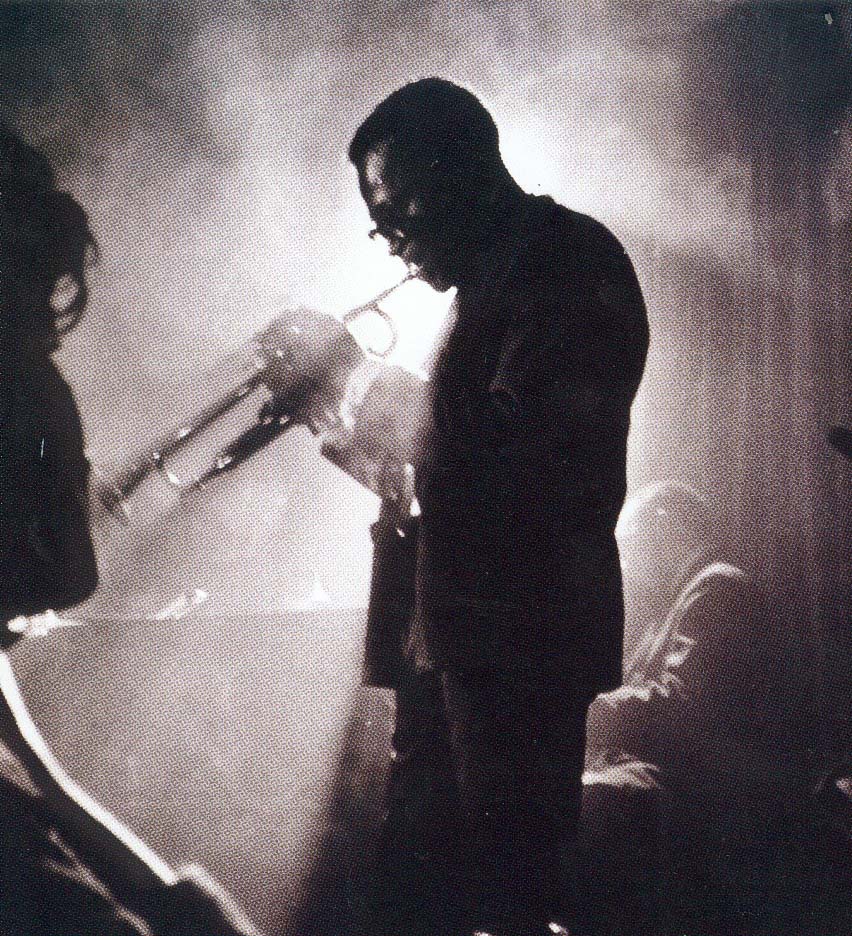
Miles DavisHow are the plagues from Exodus used in the book of Revelation?

There are a remarkable number of parallels between this series of judgments and the ten plagues in Exodus.  For example, trumpets are associated with the theophany at Sinai (Exod 19:13-19; 20:18).  The first trumpet judgment is similar to Exodus 9:13-25, hail and fire fell upon the Egyptians.  The third trumpet resembles the plague of the freshwater in Exodus 7:20, except that there the waters turned to blood. The locust in Rev 9:3 is an apocalyptic version of the eighth plague (Exod 10:12-20).

Richard Patterson traced Exodus Motif in the Prophets, showing that the Exodus was a significant source of imagery for the rest of the Old Testament. The reason for this is the common “Divine Warrior” and “Divine Redeemer” themes in the Prophets. In the Exodus events, God fought for this people in order to redeem them out of their slavery. The prophets pick up those twin themes and apply them to their current situation. Israel has persisted in their unbelief and is once again under oppression (the Exile). God will once again fight for them and redeem them from the nations in a New Exodus.

While Patterson’s article does not continue to follow his argument into the Second Temple Period, the New Exodus theme is present in this literature. But plague imagery is not as common in Jewish sources as we might have guessed. In his detailed survey of the imagery of the Exodus in later Jewish writings, David Aune only finds the plagues in an eschatological sense in the Apocalypse of Abraham. There are ten plagues, although they do not track with the original ten plagues or the seven trumpets from Revelation.

Apoc. Abr. 30:3-8  And he said to me, “I will explain to you the things you desired in your heart, for you have sought to know the ten plagues which I prepared against the heathen, and I prepared them beforehand in the passing of the twelve hours on earth. Hear what I tell you, it will be thus. The first: sorrow from much need. The second: fiery conflagrations for the cities. The third: destruction by pestilence among the cattle. The fourth: famine of the world, of their generation. The fifth: among the rulers, destruction by earthquake and the sword. The sixth: increase of hail and snow. The seventh: wild beasts will be their grave. The eighth: pestilence and hunger will change their destruction. The ninth: execution by the sword and flight in distress. The tenth: thunder, voices, and destroying earthquakes.” (Rubinkiewicz, OTP 1:704)

Nevertheless, Revelation seems to be re-using imagery from the Ten Plagues.  Since John is standing on the shoulders of the Hebrew Bible. This is not a surprise. But it is important to at least wonder why it is important that the Exodus Events were chosen as the main backdrop for John’s apocalyptic description in Revelation 8-9. The purpose of the original ten plagues was for God to show his power to Israel. The ten plagues were not “evangelistic,” hoping that the Egyptians would see them and somehow “convert” to being Jewish. The plagues prove to the people of God in Egypt that he is a God who acts on their behalf to redeem them out of their slavery. The children of Abraham need to be convinced that the God of their ancestors is active and that he cares for them.

This may also be the function of the judgments in Revelation.  By the time of the eschatological age, Israel will have been in a state of unbelief for a long time. Like the original Exodus, they certainly need a reminded of the righteous character of their God. Revelation is using the language of the Hebrew Bible, how God has worked in the past, to describe how he will work again in the future.


Bibliography: Richard D. Patterson, “Wonders in the Heavens and on the Earth: Apocalyptic Imagery in the Old Testament” JETS 43 (2000): 385-403.


Why are Dan and Ephraim Missing in Revelation 7?

The tribes of Dan and Ephraim had some significant problems in the history of Israel. While Dan himself does not commit any great sin in Genesis (as do the sons of Leah). The blessing of Jacob in Genesis 49 was not a condemnation, although Jacob describes Dan as a “serpent by the roadside, a viper along the path, that bites the horse’s heels so that its rider tumbles backward” (Gen 49:18). In the book of Judges, however, we find that the tribe of Dan was involved in idolatry. Samson was from the tribe of Dan, during his career as judge idolatry does not appear to have ceased. The tribe of Dan migrated north to a better territory. The worshiped a “calf” after the kingdom split (1 Kings 12:25).

But would Dan be omitted because of idolatry? All the tribes were, and any of the northern tribes would have been just as involved as Dan. It is in Judah that idols were established on the temple mount and the priesthood worshiped both Yahweh and Assyrian gods. It is possible that they were the first tribe to become idolatrous, but all tribes were involved at Sinai, the real beginning of idolatry in Israel. It was, however, a Jewish tradition that Dan was the most apostate tribe (Aune 2:462, citing Str-B 3:804-805).

A common explanation for this omission is that the Antichrist would come from the tribe of Dan. As Richard Bauckham points out, for John the Antichrist is imperial Rome is not a Jew from any particular tribe (101). This is a point which must be proven yet, but the observation is enough to make us wonder if the whole tribe is removed from the list because the Antichrist would come from it!

Dan is also missing from the genealogies in 1 Chronicles 1-9. This is a more significant observation for our problem in Revelation. Perhaps the tribe of Dan failed to return from captivity and therefore lost its place in the tribes. In many prophetic passages, Ephraim becomes synonymous with the entire northern kingdom, especially in its idolatrous forms. The book of Hosea in particular uses the tribe of Ephraim to describe the apostasy of the whole of the northern kingdom.

So once again Revelation generates questions which may be impossible to answer with certainty. Perhaps the solution is as simple as the need to delete two tribes because Levi and Joseph were included.