The writer describes his oppression as being desperate with thirst, longing for water. The opening line is a vivid metaphor for thirst, the writer’s soul thirsts after God “as a deer pants for water.” The verb is rare, only used here and in Joel 1:20, where it refers to animals panting for water after a fire has destroyed all water. But do not think of a dog panting, that is how the animal cools itself.

The verb has the sense of craving. When someone “craves” a food, they psychologically have to have whatever it is. The animal is dying for water in the midst of a drought. In this case, the animal is nearly dead and it is desperate for water. The verb in the second verse is usually associated with literal thirst, such as Israel in the wilderness (Exod 17:3). The craving for water here is to meet a basic need or the animal / psalmist will die.
But rather than being refreshed by God, the writer drinks his tears day and night (v. 3) The song does not describe why the writer is crying out, only that his tears on constant. The irony is that he has water to drink, but it is undrinkable tears.
Because of his desperation, his adversaries taught him, asking where his God is now? This is a common theme in the Psalms, the enemy of the songwriter mocks the writer because he has faith in God in spite of his suffering. There is a hint of the common view that God will reward the righteous and punish the sinner. This is not always the case, frequently in the Psalms the reverse is true, the wicked prosper If the song writer is suffering, it is possible that his enemies are using that as proof that God is punishing him.
 As with other Psalms of Korah, the writer remembers leading worship in the house of God. The writer is the leader of a procession, going into the Temple. At the very least he is a worship leader (as the sons of Korah were), although there could be a hint of David’s life since he did lead a festive crowd into Jerusalem when the ark was first brought to Jerusalem. If the song writer intends himself to stand for all of Israel, perhaps he is looking back to that kind of joy under David, in contrast to the “present” time of the exile. The “festival” could refer to Tabernacles, which is a feast associated with great joy, recalling Israel’s time in the wilderness, or even Passover, recalling the time of God’s salvation of Israel from their slavery in Egypt.
When the Psalmist Remembers the Lord, He Is Overwhelmed by Water (42:6-7). Is this water a positive or negative metaphor? It is possible that verses 6-7 refer to additional suffering. Being caught in raging water is often used as a metaphor for extreme suffering, and these lines are often taken as a reference to the underworld, as if the writer finds himself swept away by primordial chaos into the caverns of Sheol.
On the other hand, the writer began by describing his great need for water, and in these verses he recalls the supplies of water in the Land of Israel. At the moment of his greatest need, God overwhelms him with water!
The writer remembers his God by mentioning three specific locations:
The Land of Jordan. This is a reference to the Jordan River, the main river for most of the land, especially from the Sea of Galilee to the Dead Sea. While the river is quite dry today because most of the tributaries are dammed, in the ancient world the river flowed freely. Recall that Joshua was not able to cross the river at flood stage.
Mount Hermon. This mountain in the far north of the Land of Israel is nearly 10000 feet (in Lebanon and Syria today). But the reference here is likely not to the mountain itself, but to the foothills. The Hebrew word used here חֶרְמוֹנִים, the plural of Hermon, referring to the whole range of mountains )like “The Rockies”(. There are three sources for the Jordan which flow south into Galilee, eventually feeding the Jordan River. At Dan and Banias in Israel today there is a constant flow of water fed by snows on Mount Hermon. The area is extremely fertile and jungle-like.
Mount Mizar is an unknown location, although it is often identified with. The Hebrew word מִצְעָר means small, or “a few,” so it might refer to foothill near Hermon and the sources of the Jordan.
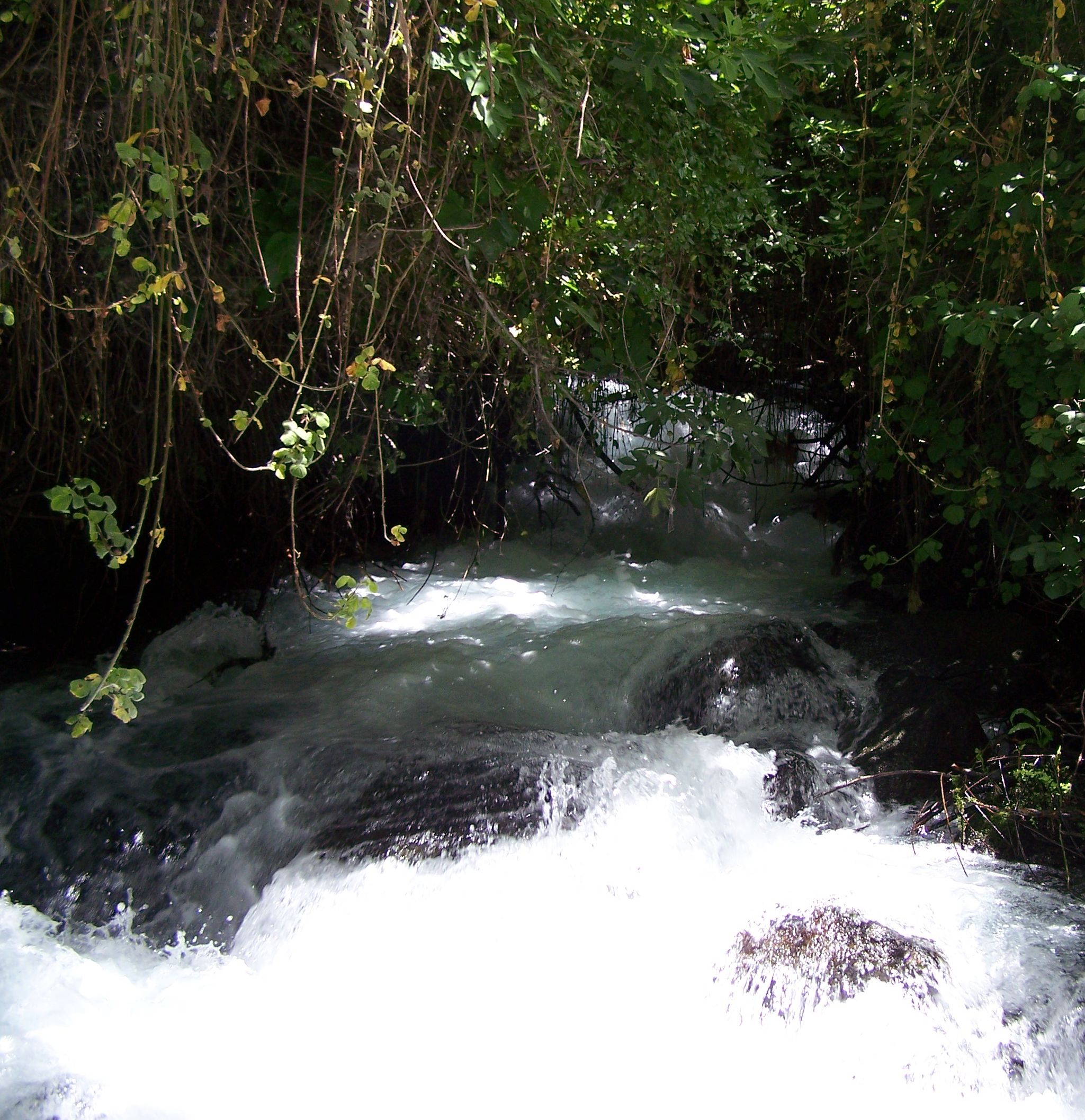 But the writer does not simply take a drink to satisfy his thirst, he is overwhelmed by water! When the Lord responds, it is as if he is standing in a roaring waterfall. The word is rare, only used here an in 2 Sam 5:8 (where the meaning is disputed). The Hebrew צִנּוֹר refers to gushing, flooding water, a fast flowing stream, etc. The “deep” is a word which usually refers to the deep sea, the abyss (תְּהוֹם). “Deep calling to Deep” gives the impression of a constant thunderous flow of water. The parallel line is a similar image, waves and breakers sweep over the writer. The first word is used literally for waves in Jon 2:4, and as a metaphor for disaster in Ps 88:8, 2 Sam 22:5, and for God’s strength in Ps 93:4, the second word is far more common and is frequently used to describe restless power.
God’s grace is often overwhelming; at the moment the writer felt he was about to die of thirst, he is overwhelmed with more water than he can imagine!
Reblogged this on Vanitas Vanitatum and commented:
Psalmul 42