Skepticism and the Gospels

Over the last 150 years there has been a rise in skepticism with regard to the historical validity of the New Testament record concerning Jesus. Originally confined to scholars and theologians, this skepticism is beginning to influence popular thinking. The Jesus Seminar, a highly critical group of scholars, has been featured in national news magazines.  The intention of this group is to popularize non-traditional views of Jesus and the Gospels, primarily that Jesus said and did only a small percentage of what the Gospels claim. They assume that the Gospels were not written by the traditional writers, nor do they record an accurate picture of Jesus.  According to the Jesus Seminar, the early church created stories about Jesus to meet their own needs.

How JesusBart Ehrman’s recent How Jesus Became God: The Exaltation of a Jewish Preacher from Galilee (Harper Collins, 2013) is another example of a skeptical approach to the Gospels. The thesis of this book is that Jesus was simply a teacher in Galilee who developed a bit of a following and was executed by the Romans. His followers had some sort of visionary experience after the crucifixion. They believed Jesus rose from the dead and therefore developed the idea he was something more than a good teacher. As they re-told the story of Jesus, they created stories to support this understanding. By the time the Gospels were written there was a belief that Jesus was God.  Christology “as we know it” did not really exist until the Council of Nicea (A.D. 325).

How GodIn March of 2014 Michael Bird edited a collection of responses to Ehrman, How God Became Jesus: The Real Origins of Belief in Jesus’ Divine Nature—A Response to Bart D. Ehrman (Zondervan 2014). The writers in his collection are not knee-jerk fundamentalists, yet they do not find Ehrman convincing. They read the evidence for the resurrection less skeptically and they see the development of Christology much earlier than Ehrman. Michael Bird calls is a “big bang” approach to Christology. Jesus himself is the source of a “high Christology.”

In the face of such skepticism, one might go to the other extreme and say they Christian just needs to “trust and obey.” We do not need to engage the skeptic, someone might say. This is a kind of “head in the sand” approach and is not very helpful.  Aside from the fact that publishers love this sort of controversy (everyone publishes books for and against the Jesus Seminar or Ehrman), dialogue with more skeptical approaches to the New Testament help to sharpen our minds and will create an environment where we are in fact seeking the truth.

There are issues in the Gospels that need to be clarified and objections need a good answer. Rather than avoid interpretation, we need to recognize that we are doing it and refine the tools and methods used for interpreting the Bible. In order to do this properly, we need to be familiar with the contributions and dangers of modern approaches to the New Testament, including those which may have assumptions diametrically opposed to that of Evangelical Christianity.

Should Evangelical Christians try to engage skeptics on the issue of Jesus and the origin of the Gospels? Are there any dangers inherent in using the tools of scholarship to answer skepticism?


The Genre of the Gospels

Scholars offer various explanations for literary genre of the four gospels. For most Christians, the gospels as biographies of Jesus. Although the Gospels have some biography-like elements, but they are not like biographies by the standards of the modern world. Only two Gospels refer to his birth and there is only one brief story before his public ministry. The majority of the content of the four Gospels  comes from the last week of Jesus’ life. In fact, most biographical questions are left unanswered.

A few scholars have suggested that the gospels are patterned after Greco-Roman Aretalogies. An Aretalogy is a sacred biography narrating the miraculous deeds of a god or hero. It is a “divine man” biography, like the biography of a god-like person, Julius Caesar, for example. The Greek word aretai means “mighty deeds.” An example from the second century is Philostratus’ Life of Apollonius of Tyana.  Apollonius was a teacher and miracle worker who died about AD 100, Philostratus wrote his biography in the mid-third century. Jewish writers sometimes wrote biographies that over-emphasize alleged miraculous nature of the subject. When Josephus describes Moses in Against Apion 2:154-158 he expands the praise beyond the biblical material. Philo of Alexandria also glorifies Moses as the greatest sage and lawgiver, a divine-man who is both priest and prophet (see David L. Tiede, “Aretalogy” in ABD 1:372-73).

What is the Gospel Genre?Based on Luke 1:1-4, many read the Gospels as historical documents. Luke claims he is writing history in the prologue to his Gospel and the prologue to Acts. That stories are not created by Luke is evident in his claim to have sought the eyewitnesses to the events. The tradition that Mark wrote his gospel based on the preaching of Peter indicates Mark was well-versed in the eyewitness testimony of Peter.  Mark appears to be used by both Matthew and Luke, Matthew also being an eye-witness. John supplements this material with his own eyewitness testimony, albeit from a theological angle at a much later date.

But even if the Gospels contain history, they must be considered theological documents. Consider John 20:30-31: the author of the fourth Gospel states  his purpose was to convince the readers of a theological fact, “Jesus is the Christ, the Son of God,” and that by believing this theology, the reader might “have life in his name.”

While John’s gospel is the most theological of the four, the other gospels are not simply historical and non-theological. Matthew, Mark and Luke have clear theological agendas. One cannot approach these documents without getting into the question of who Jesus is, who he claims to be, and how the gospel writers present him in their telling of the story. The Gospels are therefore best described as historical-theological documents.

The gospels are most similar to Greco-Roman biographies. The gospels are that dissimilar from the standards of biography or history writing for the time.  Luke especially follows some of the conventions for writing good history in the first century.

In The First Biography of Jesus, Helen K. Bond argues the Gospel of Mark is an ancient biography and as such, the author actively re-appropriated and reconfigured selected material in circulation at the time into a formal literary creation (p. 5). By imposing a biographical structure on this tradition, Mark extended the Christian gospel beyond the death and resurrection of Jesus, so it now included his ministry as well. She surveys ancient Greekand Roman bioi, focusing especially on the role in the educational system: biography was used to teach morality. “at the heart of biography was a concern with character or what Plutarch calls ‘the signs of the souls of men’ (Alexander 1.3)” (151). This is especially true for how a biography describes the character’s death. She surveys a wide range of ancient biographies which focuses on heroic “good deaths” of their characters. A good death is the crowning point of a virtuous life. A good death had a ripe old age may signal and endorsement of a philosopher’s way of life. However, there are a few philosophers who are remembered positively even though they met what an ancient reader might consider a “bad death” such as Socrates or Zeno. This is an obvious difference in Mark’s gospel. Mark does not describe Jesus’s death as noble or “conventionally honorable.” Rather, Mark portrays Jesus’s death as conforming to his countercultural teaching. Like a good philosopher, Jesus has a fitting death, which a fitting conclusion to his earlier way of life (250).

Craig Blomberg, Mark Strauss, and other evangelical writers conclude the genre of the Gospels is unique:  the Gospels are theological biographies. They contain historical data presented through a theological filter. Like all historical writers in the ancient world, the writers of the Gospels make selections from available material available. They record the events of Jesus life in order to make a theological points about him. For example, the Gospels present Jess as the Son of God, yet also fully human. They claim Jesus died as an atoning sacrifice for humanity. This makes historical, theological and literary study of the gospels legitimate, since all three of these genres combined in something of a unique fashion.

How does Blomberg’s description of the Gospels as “theological biographies” help us read the Gospels accurately? Is there anything missing this description that is important?


Bibliography.  The issue of the genre of the Gospels is covered by Craig Blomberg, Historical Reliability, 235-240; Klein, Blomberg, and Hubbard, Intro to Biblical Hermeneutics, 323-325, Willem S. Vorster, “Gospel Genre” in ABD 2:1077-1079; David Aune, “The Problem of the Genre of the Gospels: A Critique of C. H. Talbert’s What Is a Gospel?”  Gospel Perspectives: Studies of History and Tradition in the Four Gospels, Vol. 2, ed. R. T. France and D. Wenham (Sheffield: JSNT, 1981) 9–60.

Why Does the Genre of the Gospels Matter?

It is impossible to read a text without interpreting the text in some way. The very fact we are converting signs and symbols on a page into thoughts in our mind is an act of interpretation. Every time we read a sentence, we make many decisions about what words mean or how a metaphor is to be understood. Rarely do we step back and think about how we understand a text. This is why it is important to discuss the genre of the Gospels.

Gospels genre

The genre of the text matters. If a reader does not know Harry Potter is fiction rather than history, they will be very confused indeed! But it is possible to describe Harry Potter as fantasy. Fantasy has certain “rules” which hold the stories together in ways a crime novel does not. If you think Harry Potter and Dirty Harry should solve their problem in the same way, you have misunderstood the genre! A Harry Potter book can also be described as a “young adult” novel. The young adult genre also has some characteristics typical of these stories (young protagonists, usually in some sort of difficult home life, some teen-romance, etc.) If you confuse the genre Harry Potter and Fifty Shades of Grey (a completely different genre!) you will not fully understand the story. With respect to the four Gospels, we need to be very careful in understanding the genre of these books. They are not dispassionate histories in the modern sense of the word, attempting to set the record straight about what Jesus really did.

The intention of the author matters. In most cases writers create documents in order to be understood. A good writer has an idea they want to express, or a feeling they want to create. A historical writer might want to describe a particular time and place in the past, or prove a point about some important event. With the exception of some modern poetry (or student papers), writers do not simply string words together and allow the reader to create whatever meaning they want. When we read the Gospels we need to be very careful to hear the voice of the author and correctly read the gospel as it was intended.

The situation of the reader matters. I am not advocating for some sort of reader response criticism that allows the reader to ignore the author’s intention and make a text mean whatever the reader can imagine. By situation I mean a reader’s cultural context. For example, I am a white male living in a wealthy, industrialized country. I am going to read texts about agriculture or poverty differently than someone in the Congo. I often miss things my female students hear in a text. Historically, I read the text of the New Testament differently than someone in the sixteenth century, or in the fourth century. I am often perplexed by the things that got Luther and Augustine excited, because my cultural context is different.

Another situation of the reader that matters is a reader’s preconceptions. For example, when I read Harry Potter, I assume  magic does not exist, there are no magical people living in London, there is no Diagon Alley where I can buy an owl. In my opinion, people who “really believe” are deluded and hopefully grow out of that delusion by their thirteenth birthday (or when they do not get an invitation to attend Hogwarts). If a reader as a preconceived belief that the Gospels cannot contain any real history, then they will read the story of Jesus differently than a believer. If a person is a committed Catholic, they may read the stories of Peter (especially Matt 16) differently than a committed Protestant. A person with a Charismatic theology will read some of the stories in the gospels with different eyes than a non-Charismatic.

My point here is not to argue reading is so arbitrary that all readings are equally valid. I am saying we ought to understand the text as clearly as possible, beginning with the words, genre and authorial intention, and at least recognize our assumptions when we come to the text of the Gospels.

How will an awareness of genre, authorial intent and the reader’s situation change the way we approach the Gospels? Perhaps you have encountered someone who read a text considerably different because of their personal context – were they “wrong”?


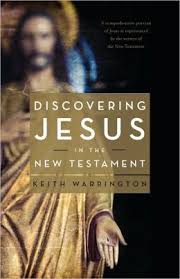
Book Review: Keith Warrington, Discovering the Jesus in the New Testament

Warrington, Keith. Discovering the Jesus in the New Testament. Peabody, Mass.: Hendrickson, 2009. 226 pages, pb. $24  Link to Hendrickson   Link to Logos

Keith Harrington is the Vice-Principal and Director of Doctoral Studies at Regents Theological College. This book is a follow up to his Discovering the Holy Spirit in the New Testament (Hendricksen, 2005) and follows the same pattern. His goal is to highlight common threads as well as unique contributions from each of the authors of the New Testament.

WarringtonNo New Testament writer said everything there is to be said about Jesus as a person or his mission. In fact, they rarely address theological questions such as Trinity or the Virgin Birth in a way that is theologically satisfying from a modern perspective. The writers of the NT had two main ambitions, according to Warrington’s. First, “they wanted to reveal who Jesus truly was and to explore his mission” and second, “they wanted to relate these facts to their audiences” (3). His method is text-driven, observing what each book says about Jesus. As such, he avoids historical Jesus questions as well as second order theological problems that trouble later readings of the New Testament. In addition, there is minimal interaction with other scholarship. Each section is rich with scripture references as Warrington pays close attention to the voice of the author.

The books of the NT are taken in canonical order, beginning with the Synoptic Gospels. The first chapter takes Matthew, Mark, and Luke as a whole, but does contain a brief section of the Christology of each author. Since John is next, follows by Romans, there is some chronological disorientation. Paul would be the earliest witness, the Synoptic Gospels. In fact, virtually every other book of the NT was written before John (Revelation is the only exception). I would have preferred the chapters to be laid out chronologically so that is trajectory of Christological development could be traced from the earliest books to the last. This method also separates Luke from Acts and John’s Gospel from his Epistles and Revelation. In the case on the Pauline letters, taking them chronologically may have yielded additional insights as the apostle’s view of Jesus develops over the years. (In fairness, there is a single, brief overview of Paul’s letters before his chapter on Romans.) But this criticism is on the order of “this is not the book I would have written”  and should not distract from Warrington’s otherwise fine presentation in this book.

In general, Warrington divides his chapters into units headed by Christological titles (Lord, messiah, foundation, etc.) or actives of Jesus (redeemer, savior, etc.) Some of these are often repeated in many chapters, since there is continuity throughout the New Testament.  Occasionally there are parts of chapters that do not strike me as on topic. For example, in Acts there is a short comment on the shipwreck in chapter 27 that seems extraneous. In Ephesians there is a short note on being sealed with the Spirit which does not strike me as an activity of Christ despite Warrington’s statement that “Jesus has authorized the sealing of believers with the Spirit” (119). That is not exactly what Eph 1:13 says.

Most of the chapters are brief; Titus and Philemon can be read in a few minutes. Again, in my view most of the Pauline letters could have been drawn together to create a more substantial overview of Paul’s understanding of Jesus.  An entire chapter on the Christology of James is ambitious at best! Some books, however, have a great deal more to say about Jesus, such as the Gospels, Hebrews and Revelation. In fact, Warrington’s chapter on Hebrews is one of the highlights of the book.

Conclusion.  This is a very easy to read introduction to what the New Testament says about Jesus. While there is a great deal of theology in the book, some more theologically minded readers may find the brevity of the book dissatisfying. The book is simply not intended to be a theologically nuanced Christology. Yet for the busy pastor or lay person, this book offers insights into how the New Testament presents Jesus.

NB: I read this book on my iPad using the Logos Bible Software app. The book is available as a part of the Baker Jesus Studies collection from Logos. (This book is one of the many Baker acquired from Hendrickson a few years ago.) The Logos version includes real page numbers and the reader can take advantage of the note-taking and highlighting tools in Logos.

NB: Thanks to Logos for kindly providing me with an electronic review copy of this book. This did not influence my thoughts regarding the work.

Book Review: Keith and Hurtado, Jesus among Friends and Enemies (Part 2)

Keith, Chris and Larry W. Hurtado. Jesus among Friends and Enemies: A Historical and Literary Introduction to Jesus in the Gospel. Grand Rapids, Mich.: Baker, 2011. 352 pages, pb. $27.00. Link to Baker  Link to Logos

[This is part two of my review of this book, part one (the “friends”) is here.]

Turning to the enemies of Jesus, Loren T. Stuckenbruck examines the greatest of enemies, “Satan and Demons.” This chapter is highly detailed and an excellent resource for the wide ranging and diverse opinions in the Jewish world of the second temple period on the origin and current status of evil and the Evil One. In fact, Satan is not a particularly common name for the Evil One in Jewish literature of the first century. Stuckenbruck surveys the various names used in the literature. In the Gospels, Satan or the devil are mentioned frequently as they oppose Jesus and his ministry. Stuckenbruck Includes a brief but fascinating discussion of demon possession in this chapter since this phenomenon appears regularly in the gospels. The chapter also includes a survey of apocalyptic literature that describes the origin and activities of demons.

Friends and EnemiesAnthony Le Donne describes the Jewish leaders who opposed Jesus: the Pharisees, Sadducees, and Scribes. Beginning with the Hasmonean dynasty, Le Donne gives a basic history of the Saducees and Pharisees as they developed in the aftermath of the Maccabean revolt. While these two groups are well-defined, “’Scribes’ is a category that overlaps with almost every aspect of the Jewish power matrix” although they were ultimately elite power brokers (204). Turning to the Gospel accounts, Le Donne points out that the Gospels are stories, and stories need some sort of villain to give contrast to the hero. In the Gospels it is often the case that the Pharisees who complain about the activities of Jesus, providing him an opportunity to teach on that topic (Sabbath, purity laws, etc.). The Pharisees are not always portrayed negatively; Luke occasionally describes Pharisees in a positive light. By the time of John’s Gospel, Nicodemus could be described as “ambiguous loyal,” not praiseworthy, but not an enemy. This chapter might have been improved with a brief note on potential anti-Semitism in the Gospels, and the Pharisees are so well-known that they merit a chapter by themselves.

Helen K. Bond contributes a chapter on the “Political Authorities” in the Gospels: The Herods, Caiaphas, and Pontius Pilate. As with the Pharisees in the previous chapter, the Herodians could fill an entire chapter (or monograph), and Bond herself has written monographs on Caiaphas and Pilate. She begins the chapter with a survey of the Hasmonean period leading up to the appointment of Herod the Great. The chapter extends to Herod Antipas since he ruled Galilee at the time of Jesus. The chapter does not offer too much detail on Herod’s building projects, although the continual building up of the Temple is in the background of Jesus’ ministry. Shoe gives an excellent sketch of the family of Caiaphas, including a brief mention of Caiaphas ossuary. For Pilate, Bond surveys material from Josephus and Philo and demonstrates that Pilate was a cruel and insensitive governor of Judea. After the historical material, she surveys the material in each gospel of each of her three topics, making for more than a dozen sections (the Herodians are sometimes treated separately). As is well known, the Jewish leaders are portrayed negatively in the gospels while Pilate fares well compared to his reputation in history.

Finally, Holly J. Carey discusses the chief “enemy” of Jesus, Judas Iscariot. As the betrayer of Jesus, most people would immediately think of Judas as an enemy of Jesus. Since there is no real historical material on Judas outside of the New Testament, Carey offers an interesting review of the various legends that developed about Judas in the early church, culminating in the Gospel of Judas. While most of the early fathers vilified Judas, this apocryphal text portrays Judas as a faithful disciple. Carey points out that this Gnostic book was known in the early church although a copy of it was not discovered until the 1970s and it was not published until 2006. (There was a great deal of hoopla when the National Geographic Society bought the text and published it as a lost manuscript, implying that it was suppressed by the church as heterodox.)  After her examination of the material on Judas in the Gospels, Carey offers two fascinating sections on Judas’s freewill (did he have a choice?) and his motivations for betraying Jesus.

Chris Keith and Larry W. Hurtado offer a concluding chapter on “Seeking the Historical Jesus among Friends and Enemies.” This chapter serves as a mini-introduction to the rise and fall of the criteria for authenticity. As is well known, there is a growing dissatisfaction with these mechanical methods made popular first by Jesus Seminar, primarily because they do not result in much. Rather, the method suggested by Dunn in his Jesus Remembered (Eerdmans, 2003) has gained traction in the last decade. The chapter does not really form a conclusion to the book, since the bulk of the book did not employ the criteria. Most of the friends and enemies in these essays are known from history and the ones that are not historical characters are not subject to the criteria (God and Satan, Angels and Demons, the Disciples and Judas).

Conclusion. One of these reasons this collection is valuable is that a few of the chapters cover characters that are not the usual fodder for a historical Jesus study. While there are a number of books on John the Baptist or Judas, there are few that are interested in Mary Magdalene, the Bethany Family, and the Beloved Disciple, Nicodemus and Joseph of Arimathea. Overall I find this a worthy collection that offers some detailed study of characters in the Gospels that are rarely examined closely.

NB: This book is available as a part of the Logos Jesus Studies collection. I offer my thanks to Logos for kindly providing me with a review copy of this book. This did not influence my thoughts regarding the work.