When I was in Seminary I took a class in Eccelsiology and at some point in the class I shared my thought that James was the “leader of the Jerusalem Church.” The professor looked at me rather strangely and dismissed my comment with “well, you have James all figured out, don’t you.” MA students are apparently not allowed to have those sorts radical of opinions, they are reserved only for PhD students.
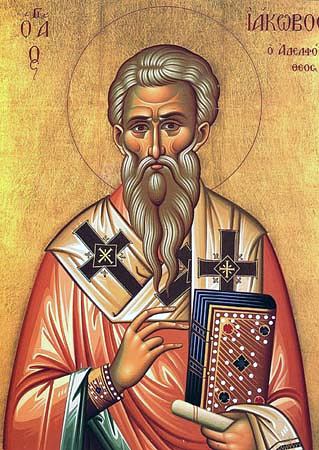 Since that slap-down, I have had an interest in Jewish Christianity in Jerusalem in general, and James in particular. Part of this interest is the belief that my comment in that particular class was on target, although it was probably came across arrogant (I was older back then, I am younger than that now). I am always pleased when I read things that more or less state that James was the leader in Jerusalem, such as James Dunn in Beginning in Jerusalem, especially chapter 36, although he says things like this throughout the book.
I think a fair reading of the book of Acts will show that Twelve fade from the scene quickly. James the Apostle is killed in Acts 12 and not replaced. Peter sends a message to James the “goes elsewhere.” Peter drops out of site at that point in the narrative, except for a brief report at the Jerusalem council. Luke introduces James as a significant player in in Acts 12 and the major force behind the Jerusalem conference in Acts 15. John, the only other apostle mentioned in Acts also disappears from the book after Acts 8 (and he was silent anytime he was in the story anyway!)
What is remarkable to me is that James appears as a leader at the level of Peter and Paul as early as 1 Corinthians. In 1 Cor 15:7 Paul passes along the tradition that he received concerning the resurrection. Only three names of individuals are included, Peter, James and Paul. These are the three men to whom the Lord appeared, and at least in Peter and Paul’s case, they are commissioned to a particular ministry.
James appears as a leader in Jerusalem quite early, a point that is often missed. Gal 1:19 describes Paul’s visit to Jerusalem after his conversion. He met with no one except Peter and James, the Lord’s brother. It is possible that James the apostle and James the Lord’s brother are confused in the later traditions, but there seems to be strong evidence that the family of Jesus did not believe he was the Messiah before the resurrection. Gal 1:19 therefore can be understood as saying that within three to four years after the resurrection James not only became a believer in Jesus as Messiah, but he had already risen to some sort of leadership position in Jerusalem.
The book of James is therefore a window into an early form of Christianity, one that was comfortable with Judaism and perhaps did not see Christianity as separate from Judaism in quite the same way Paul does later in Ephesians 2 or Romans 9-11. How would this observation change the way we read James?