Basics of the New Perspective: Responses to the NPP

The literature on the New Perspective on Paul is vast, to say the least.  There are volumes supporting and extending Sanders’ work, there are others critiquing his work.  Some are aimed at N. T. Wright as a particularly popular proponent of the New Perspective, others championing the classic Reformation view with a zeal worthy of Elijah.  This is far from a complete list of responses to the New Perspective, please feel free to suggest others in the comments.

Among the most valuable responses is the collected essays in Carson, O’Brien, and Seifrid,  Justification and Variegated Nomism:  Volume 1 – The Complexities of Second Temple Judaism (Tübingen: Mohr Siebeck; Grand Rapids, Mich.: Baker, 2001); Volume 2: The Paradoxes of Paul (Tübingen: Mohr Siebeck; Grand Rapids, Mich: Baker, 2004).  This material covers the same material as Sanders (and even more).  Each chapter takes a section of the literature and evaluates Sanders’ “covenantal nomism” in the light of that literature.  In most cases, there is something which can be used as support for Sanders’ view of Second Temple period Judaism, but the evidence is far from uniform.  Some Jewish writers may have thought of election and boundary markers as Sanders described, but others did not.  The situation is far more varied than Sanders allowed for in his Paul and Palestinian Judaism.

Mark Seifrid has been a strong voice in favor of a more or less traditional view of Paul.  His Christ, Our Righteousness: Paul’s Theology of Justification (Downers Grove: Intervarsity, 2000) is a brief treatment of the topic but among the very best and most accessible for the layman.  Seyoon Kim engages James Dunn in his Paul and the New Perspective: Second Thoughts on the Origin of Paul’s Gospel (Grand Rapids, Mich.: Eerdmans, 2002).  Stephen Westerholm’s Perspectives New and Old on Paul (Grand Rapids, Mich.: Eerdmans, 2004) surveys Augustine, Luther, Calvin and Wesley as well as the “Lutheran” interpreters of Paul in the twentieth century before turning to Paul’s view of the Law and Justification in the final third of the book.  This historical approach seems backwards to me, but it really does “work” in practice.  Francis Watson recently revised his Paul, Judaism and the Gentiles (Grand Rapids, Mich.: Eerdmans, 2007), attempting to break through the false dichotomy between either the Traditional “Lutheran” view and the New Perspective.  In many ways, Watson’s work draws the best from both views of Paul and attempts to build a biblical theology of Paul.

While studies challenging Sander’s position are not unique, they are almost always from the Calvinist side of the Reformation and are intent on defending the reformation view of justification by faith in Paul.  Chris Vanlandingham has charted a new course in that he approaches Sanders from a decidedly Arminian view of salvation and the last judgment.  For Vanlandingham, Sanders is guilty of the very sins of which he accused scholarship in his Paul and Palestinian Judaism  – he reads the Reformation view of grace and works back into the literature of the Second Temple period and finds a robust view of election.  Vanlandingham contends that Jewish literature of this period uniformly describe the final judgment as a judgment by works, including the Apostle Paul.  (Chris Vanlandingham, Judgment And Justification in Early Judaism and the Apostle Paul. Peabody, Mass.: Hendrickson, 2006.)

Paul Rainbow wrote a biblical, theological and historical reassessment of the classic Reformation reading of Paul’s teaching on Justification.  In their zeal for sola fide, Rainbow argues the Reformers have obscured obedience as a required element of the Pauline doctrine of justification.  By sharply separating justification and sanctification in the slogan  sola fide, the Reformers not only violate the rule of scripture, but therefore have no real antidote for antinomianism nor any encouragement for Christian obedience.  Rainbow therefore argues for a “round view” of justification which emphasizes the dynamic tension present in Paul’s theology. Rainbow therefore advocates a form of synergism, a twofold justification which attempts to balance justification by faith apart from “works of law” with a future justification by “good works” when the believer stands at the final judgment.  This double-justification is analogous to the two-stage kingdom of God:  we are already justified, yet we are not yet justified (224-225). (Paul A. Rainbow, The Way of Salvation: The Role of Christian Obedience in Justification.  Paternoster, 2005).

Another dozen titles could be added to this list if I included responses from systematic theology, but these are among the best which i have read on the New Perspective and are all worth reading to balance the more polemical books out there.


Basics of the New Perspective: Justification

Justification is one issue which has invigorated critics of the New Perspective, sometimes to new heights of rhetorical which would make Luther himself proud.  (For example, The Trinity Review opines:  “Are Evangelicals so enthralled by Bishops and Brits that they are blind to the realities of the situation?” “Wright fabricates his theology.”) N. T. Wright has been at the forefront of this discussion with is Justification, answering John Piper’s pre-emptive strike on Wright’s views.

First some perspective.  When Sanders published Paul and Palestinian Judaism, one of his major burdens was to show that the traditional (Lutheran) view of Paul was a distortion.  Luther read Paul and the Pharisees in the light of his own struggle against Rome.  Sanders amassed the evidence which showed that Judaism was a religion of grace and was not proto-Pelegian.  Jews in the first century did not think that they earned their salvation, rather they were “right with God” because they were the elect of God.

The problem with Sanders is that he destroyed the assumptions of a stream of theology without providing any real replacement for it.  His goal was not to create a new “theology of Paul” but to correct a misunderstanding of Paul.   It was James Dunn and N. T. Wright who have built on the foundation of Sanders and attempted to describe a Pauline Theology which attempts to read Paul in the world of Second Temple period Judaism.  I personally think that Dunn’s chapter on Justification in his Pauline Theology (334-389) should be required reading for anyone who wants to study Paul. However, Wright’s Justification takes priority because it has brought the discussion of the New Perspective’s view of justification to the general public.

Wright is clear about his method.   In Justification he proposes to study the vocabulary of justification in the context of the first century (90).  This is more difficult that it appears because of the massive theological weight various streams of Reformation systematic theology has placed on the word.  He does not want to create a new term, rather, he wants to define justification using a historical-grammatical method.

Briefly put, for Wright, justification is a statement about the status of the believer.  When one is “justified” in a legal sense (with a Second Temple Period context) they are given the status of “in the right” on that particular legal situation.  It does not matter if they are really “in the right.” the judge has found in their favor and they obtain that status before the court.

Wright states that the word does not mean “declare righteous” nor does the term mean that the person is righteous with respect to their character (91).  The real problem for Wright is the “imputation of righteousness” as  theological extension of justification.  Reformed streams of theology says that God “imputes Christ’s righteous” to the believer.  In the same way that Adam’s sin is counted against all those “in Adam,” all those “in Christ” have Christ’s righteousness counted for them.   Wright finds no evidence for the imputation of Christ’s righteousness to the believer.  It is a theological construct built on the foundation of Reformation theology, not the Bible and ought to be abandoned.

In summary, Wright believes that Justification is a statement about the status of the person who has been vindicated in the court (92).  The term cannot be used to describe the whole of the salvation process, it is but one metaphor of many which Paul uses to describe salvation.  James Dunn makes this point as well in his Pauline Theology (328-33).  Dunn observes that there are many metaphors for salvation in Paul, although he highlights justification by faith, participation in Christ, and the gift of the Spirit as the primary statements of Paul’s view of salvation.

The Protestant Reformation elevated the legal metaphor found in some of Paul’s writings to the status of primary metaphor and loaded onto that metaphor the whole of Paul’s salvation theology.  The New Perspective attempts to temper this by using the language of justification more biblically.

Basics of the New Perspective: Was Paul “Converted” to Christianity?

Critics of the traditional view of Paul’s theology often note that Paul’s experience is described in terms of Augustine’s conversion or Luther’s struggle against the Roman church.  Both men found their experience parallel to Paul’s and meditated deeply on what God did in their lives to release them from the weight of their guilt.  This traditional view of Paul’s conversion is that he underwent a spiritual an psychological conversion.  If Romans 7:7-25 deals with Paul’s apparent struggle with sin prior to his conversion, then we do have a spiritual and psychological reversal in Paul’s conversion.  Paul is described in the traditional view as a Pharisee that struggled with sin and the guilt of not being able to keep the Law.   His conversion releases him from the weight of the guilt of his sin; he experiences justification by faith and converts from Judaism to Christianity.

The New Perspective on Paul calls this traditional view into question.  James Dunn has built on the work of Krister Stendhal to argue that Paul did not experience a conversion from one religion to another.  Rather, Paul received a call of God that is quite parallel with the prophetic calls of the Hebrew Bible, especially that of Jeremiah. The Damascus Road experience as a theophany, not unlike what Isaiah experienced in Isaiah 6.  Paul experienced the glory of God and was called to a prophetic ministry.  Paul never left Judaism, Stendahl argued, he remained a faithful Jew who was fulfilling the role of being the “light to the Gentiles” from Isaiah.  (Not all scholars who are associated with the New Perspective agree, N. T. Wright still talks about “Paul’s Conversion” in What Saint Paul Really Said.)

Dunn points out that Paul stayed “zealous,” but instead of zealous for the Law, he because zealous as the “light to the Gentiles” (“Paul’s Conversion,” 90).  This view of Paul’s conversion is that he does not “found a new religion” but rather a new understanding of the Jewish Law.  His gospel is a new interpretation of the Hebrew Bible and Judaism.  Paul may  not changed have even parties within Judaism: he went from a Pharisee who did not believe Jesus was the messiah to a Pharisee who did believe Jesus was the messiah.

The problem with this new view of Paul’s experience on the road to Damascus is that it does not do justice to the radicalness of Paul’s Gospel! To reject circumcision even for Gentile converts is not a minor re-interpretation of the Jewish Law, it is a radical change that is unanticipated in the prophets. The reaction of the Jews in Acts is key.  Everywhere Paul announces that God has called the Gentiles to be saved without circumcision, they riot and attempt to kill Paul.

Philippians 3:7-8 make it clear that Paul is not just moving to another party within Judaism, but rather that he is rejecting his Pharisaic roots completely.  He is breaking with his past way of life and his past theology.  While there are many points of comparison between Paul’s theology and Judaism, there are significant radical breaks with the Judaism of the first century.  While it is possible Paul thought he was staying within Judaism, his contemporaries disagreed. (I suspect that includes not a few Christians Jews who disagreed with his view of the Law for Gentiles.)

But it is also problematic to think that Paul is converting from Judaism to Christianity. Paul seems rather clear in Galatians that he was called by God to be the apostle to the Gentiles in a way that is quite distinct from the apostles in Jerusalem that were called by Jesus.  He stresses his independence clearly in Galatians, in Ephesians 3 he is quite clear that he has a special commission as the apostle to the Gentiles.

Paul never joins the Jerusalem church nor does he receive his commission from them (again, Gal 2) .  He seems to be called by God to do something quite different – to be the apostle to the Gentiles. Despite the expansion of the apostolic witness to Hellenistic Jews and God-Fearers, the Twelve do not appear in Acts to do ministry outside of the house of Israel.  Galatians 1-2 seems to be saying that there was a tacit agreement between Paul and Peter marking the “boundaries” of their ministerial territory.  Paul will go to the Gentiles and Peter to the Jews.

It is probably best to see Paul’s Damascus Road experience as both a conversion and a call.  I agree that Luther  and others hear their own conversion in Paul’s Damascus Road experience.  But to think of the categories “conversion” and “call” in modern Christian categories is a mistake, Paul’s experience in Acts 9 is quite unique in salvation history.

Bibliography:  There is a huge bibliography of essays and monographs on this issue; the critical articles include: J. D. G. Dunn, “‘A Light To the Gentiles’ or ‘The End of the Law’? The Significance of the Damascus Road Christophany for Paul” in Dunn, Paul, Jesus, and the Law, 89-107.  See also  Seyoon Kim, The Origin of Paul’s Gospel (Grand Rapids, Mich.: Eerdmans, 1982); After Kim was critiqued by J. D. G. Dunn and others, he responded in a number of articles that are collected in Paul and the New Perspective: Second Thoughts on the Origin of Paul’s Gospel (Grand Rapids, Mich.: Eerdmans, 2002).

The New Perspective on Paul: An Introduction

It is hard to imagine a work on Paul’s theology which does not address the so-called “New Perspective on Paul” (NPP).  Since Ed Sanders published Paul and Palestinian Judaism in 1979, a landslide of books have been published developing and modifying his ideas.  The 2010 meeting of the Evangelical Society was almost entirely devoted to a discussion of the New Perspective, especially as expressed in the writings of N. T. Wright.  I heard papers decrying the New Perspective as an attack on the assured results of the Reformation (one paper concluded with a lengthy quite of the Westminster Confession, as if that somehow proved the point being argued!) I heard papers from Wright Fan-Boys taking his ideas as if he has somehow become the Pope of Evangelicalism.

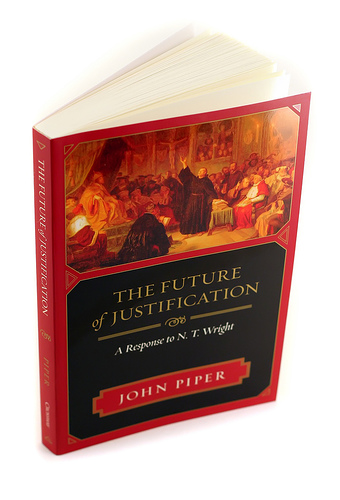
Usually these sorts of scholarly arguments are confined to the Academy.  Several factors have dragged the New Perspective out of the University or Seminary classroom and into the popular media.  First, the growing popularity of N. T. Wright over the last ten years has brought these ideas to the public’s attention.  Wright has attempted to communicate at the popular level both in print and in his many speaking engagements every year.  Second, since Wright is perceived as a representative of the New Perspective, he has come under fire from advocates of the traditional view of Paul’s theology.  This too has taken place in more popular media than most academic debates.  John Piper wrote a very popular book which sought to correct Wright, although he more or less defends the traditional view of justification by faith.  Wright responded with a book intended for laymen, Justification. Third, in the last five years the phenomenon of the Blog has propelled otherwise arcane theological debates into the public eye.  Bloggers do not have the same level of accountability as a major publisher and are far more likely to describe Wright as an arch-heretic bent on destroying God-Ordained Reformation churches.  This sort of thing is picked up by pastors and teachers in local churches and trickles down to congregations.

The New Perspective is not a dangerous idea which will destroy the heart of Christianity, although it will force a reconsideration of some of the assumptions of the Protestant Reformation.  This is not to say it will turn Protestants into Catholics.  As Wright frequently says, all he is trying to do is to continue the reformation by being faithful to Scripture and accurately describing Paul’s theology. Of course, that is what advocates of the traditional formulation is doing too.

I find the reactions to Sanders, Dunn and Wright somewhat bewildering, mostly because I do not work within a context of a Protestant Reformed denomination.  I have always resonated with a more Calvinist view of salvation, but I am not bound by a commitment to a confession nor do I have a strong affinity for Luther and the reformation, although that is probably because my tradition moved beyond the reformation in Eschatology and Ecclesiology.  I agree with Wright that there is nothing wrong with “reforming the Reformation,” Calvin and Luther would want the discussion of Pauline theology to continue and make use of all of the evidence available today.

Because this is an important issue, I am going to devote five or six postings to the New Perspective in anticipation of my Pauline Theology and Literature class I will be teaching this fall.  Here is my plan for this series, I might add one or two more topics before I am finished.  Feel free to suggest a potential topic for the series.

  • What was the Old Perspective?
  • The Beginnings of the New Perspective:  Lake, Davies and Sanders
  • Wright and Dunn: A Newer Perspective?
  • Response to the New Perspective
  • Dispensational Theology and the New Perspective on Paul

I will admit that this is a brief overview.  Each of the topics ought to be a chapter of a book (they probably will be, eventually!)  I am confessing up front that this series is woefully inadequate for a full understanding of the topics.  For this reason I will provide a list of other resources for each post “for further study.”  My goal is to provide a brief orientation to the New Perspective on Paul so that a student may read other works on the New Perspective with some context.