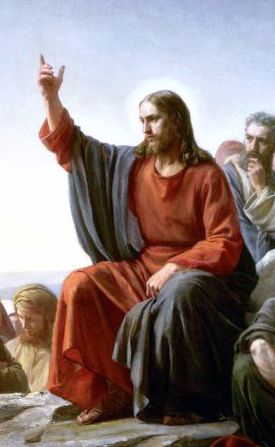
Reading the Parables of Jesus – Joachim Jeremias

In a previous post, I tracked the shift in Parables studies away from the allegorical methods of the medieval church to the “one point per parable” method of Adolf Jülicher.  in the next several posts I want to talk about a few other scholars who developed Jülicher’s ideas in the twentieth century.
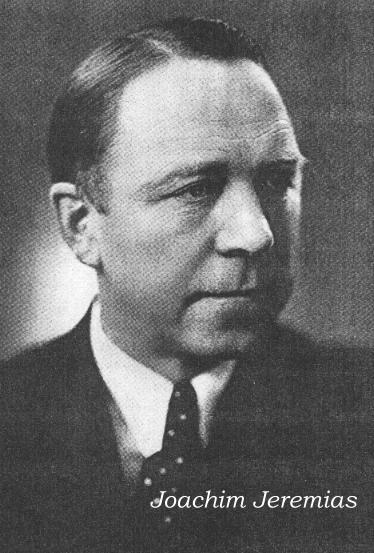
Jeremias’ The Parables of Jesus is perhaps the most influential work since Jülicher. He adapts Dodd’s method by fully applying the methods of form criticism. Like Jülicher, Jeremias rejects allegory, but he also rejects Jülicher’s own reworking of Jesus as an “apostle of progress.” Jeremias goal, in contrast, was to “hear the voice of Jesus” by developing a set of tools which can liberate that voice from the literary context in which it has been preserved (9).

Jeremias creates a methodology for detecting the “transformation” of the parables from their original form to the form found in the gospels. These are areas in which he thought the early church had adapted the parables. Some are certain, such as the translation of Jesus’ words from Aramaic into Greek or “representational changes” as the story was re-cast in a non-Palestinian culture, but others are suspect.

Jeremias sees later churches adding conclusions and introductions to the parables and placing the parable in a new contexts to better fit the Gospel author’s theological tendency. Any “moralizing” was an example of the hortatory use of the parable in the early church. Any allegorizing was an influence of the Sitz im Leben (life-setting) of the early church, such as the “delay of the parousia” in the parable of the Ten Virgins (61). Jeremias accepted the realized eschatology of Dodd, but interpreted the parables as applicable to Jesus’ ministry, especially his ministry to the poor.

While fully accepting Jülicher’s view of the parable as similitude rather than metaphor, Jeremias is not free from allegorical interpretations. Jeremias describes the Parable of the Banquet in Luke 14:7-15 as an allegory of salvation. The characters of the Prodigal Son story represent other referents outside of the narrative world, such as the father as God. The wicked husbandmen was  allegorized by the early church, but the idea that the vineyard is Israel comes from Isaiah 5. This allegorical symbolism is “unique in the parables of Jesus” (55). In the parable of the Ten Virgins, the oil represents repentance (132).

Like Dodd, the kingdom in the parables is fully realized in the ministry of Jesus. The “eschatological overflowing of divine fullness” is to be found in the person of Jesus and in the salvation he is bringing into the world (92-93). That there is in fact a coming crisis is clear from the parables, but that crisis is a judgment on the “nation rushing upon its own destruction, and more especially on its leaders, theologians and priests” (126). In this “demand for decision,” Jeremias anticipate some later developments in parables research in his discussion of the existential and eschatological motifs in the parables.

I remain unconvinced that there is much hope of discovering the church-setting of the Parables.  Why Matthew preserved one parable and Luke preserved another is a matter of the author’s decision and it is difficult (if not impossible) to decide what motivated that decision in some community to which the gospel is addressed.

Jeremias is still an important work since was among the first to take the historical setting of Jesus’ parables seriously.  The first step in his method was to establish the parable in the world of first-century Judaism.  This is something that still remains the first step in accurately reading a parable.

Bibliography: Joachim Jeremias, The Parables of Jesus. Tr.S. H. Hooke. New York: Charles Scribner’s Sons, 1955.
Reading the Parables of Jesus – C. H. Dodd

In a previous post, I tracked the shift in Parables studies away from the allegorical methods of the medieval church to the “one point per parable” method of Adolf Jülicher.  in the next several posts I want to talk about a few other scholars who developed Jülicher’s ideas in the twentieth century.

C. H. Dodd’s Lectures on the Parables of the Kingdom was a major step forward from the foundation of Jülicher. Dodd attempted to read the parables in their proper historical context (Sitz im Leben Jesu, the life-situation of Jesus),  but he also attempted to deal with the problem of eschatology raised by Schweitzer. Schweitzer suggested that Jesus thought of the kingdom as present in his own ministry and that his actions in Jerusalem would bring the kingdom fully into the world. Dodd, on the other hand, understood the kingdom of God as having fully arrived with the ministry of Jesus. Jesus is not reforming Judaism or correcting their misunderstanding of the Kingdom, he is creating something new.

The Parable of the Patched Garment and Wineskins, for example, indicates that the old age has already passed away and the new has already come. For Dodd, Jesus did not come to reform Judaism, but to bring “something entirely new, which cannot be accomplished by the traditional system” (117). There is no future eschatological climax to history. History reached fulfillment in the person of Jesus.  This is a “realized eschatology” which emphasizes the already to the exclusion of the not yet.

The parables of the kingdom are therefore an attempt by the early church to take the words of Jesus and create a new eschatology as an alternative to that of the Jews of the Second Temple period. Dodd is aware of apocalyptic texts which describe the kingdom as appearing dramatically in the near future. He cites the Assumption of Moses 10 and 2 Baruch 73 as evidence that there were many Jewish in the Second Temple period who were eschatologically minded, but texts like Matthew 12:28 and Luke 11:20 indicate Jesus’ teaching ran counter to that expectation (35-36).

This “realized eschatology” controls Dodd’s reading of the parables so that he occasionally detects places where the evangelists have obscured Jesus meaning. For example, the parables of the talents was originally about the Pharisees and ethical conduct but the early church adapted it to the delay of the parousia. But the eschatological parables are from Jesus himself, there is no long drawn out period of oral transformation within the life of the church (122-139). Form criticism is correct that the parable must be taken out of the artificial context of the Gospels, but Dodd does not propose a method of determining the artificial context.

Dodd deals with the eschatological parables in his chapter on “parables of crisis.” By this point in his book he has repeatedly argued that Jesus was not expecting a future apocalyptic kingdom, so he merely re-affirms his belief that the apocalyptic interpretation of these parables is a secondary addition developed by the early church. In the parable of the Faithful and Unfaithful Servants in Matthew 24:45-51 and Luke 12:42-36, Jesus’ original parable concerned responsibility of those charged to lead and faithfulness to the task given. He had the chief scribes and teachers of the law in mind, not a future coming kingdom. That idea was “naturally enough and legitimately enough re-applied” by the early church to a new situation.

Dodd’s chief contribution to Parables study is his application of “realized eschatology” to the apocalyptic parables of Jesus. He attempts to do justice to the elements of Jesus’ teaching which describe the kingdom as present and those which describe the kingdom as future, although Dodd’s emphasis is decidedly on the presence of the kingdom. This theological position will be extremely influential on subsequent parables studies.

Does Dodd’s view of the parables satisfy every aspect of the parables of Jesus?  Were they devoid of any hint of a future kingdom?  Which parables might be difficult for Dodd to explain through the lens of “realized eschatology”?

Bibliography: C. H. Dodd, The Parables of the Kingdom (London: Nisbet and Co, Ltd, 1935).

Parables and the Historical Jesus

It is sometimes said that in the parables of Jesus we hear the true ipsissima vox Jesu: the real voice of Jesus. Joachim Jeremias, for example, begins his classic The Parables of Jesus by stating that the we “may be confident” that we stand on a particularly firm historical ground. The parables reflect the sorts of things we might expect in the teaching of a first century Jewish rabbi. The images are drawn from the life of the common people of Galilee and Judea. Many have an apocalyptic edge to them that we know was common among people of the Second Temple Period.

Yet many scholars wonder if the parables as we read them in the gospels accurately reflect the original form and content of Jesus’ teaching. Is it possible to interpret the parables in the context of the life and teaching of Jesus? Can we know that the parables reflect true voice of Jesus? Or to put it another way, have the original parables been creatively adapted and re-applied to the situation of a later church or community by the gospel writers?

Until the middle of the nineteenth century, the parables were assumed authentic but the original intent of Jesus’ teaching was set aside in favor of elaborate allegories which applied to the time of the interpreter. Details of the story became fodder for preaching the gospel or some moral lesson, often incorporating elements of later church theology. For example, Augustine took the “meaning” of the oil in the parable of the Good Samaritan as the Holy Spirit, and the inn-keeper as Paul. Nothing in the parable even hints at this meaning, the “message” is from the mind of the interpreter.

This allegorical method was overturned by Adolf Jülicher. He effectively challenged popular allegorical interpretations by applying form criticism the parables. He argued that the parables were not allegories. He rejected the detailed and imaginative interpretations (Paul as the inn-keeper, etc.) Instead, parables had a single message, a “moral of the story” which could be expressed simple timeless truth. Rejecting allegory was a great contribution to the study of parables, but Jülicher also cast doubt on the possibility of knowing the original setting of the parables of Jesus. Elements of a given parable could have been added to the parable to make it more “up to date” and to make it more applicable to the present church. For Jülicher , it was not possible to know if Jesus was the original speaker of a given parable.

Here is a thought experiment you can try: Retell the story of the Prodigal Son to a group of junior high boys. How much of the story do you change in order to make it “current”? How does the son spend his inheritance? (Big car, big TV, women, gambling, etc.) If you retell the story to a group of elderly ladies at their home Bible Study, my guess is that the prodigal spends his money differently (shawls and Matlock videos?)  I imagine that a retelling of the Prodigal Son will have more than a few different details in an African village, or in a European city, or in a village in Vietnam.  But the core of the story will always remain the same, the point of the story does not change.

It is natural for their to be some shifting of details when a story is retold, but the sense of the story remains the same.  Jülicher was right to reject allegory, but perhaps he went too far by placing the stories into a later context beyond that of the historical Jesus.

How much adaptation is there in the parables as we have them int he Synoptic Gospels?  Did the gospel writers adapt the parables to a new (later) context?  What is at stake theologically if they did?

Luke 18:9-14 – The Pharisee and the Tax Collector

in the Parable of the Pharisee and the Tax Collector (Luke 18:9-14), Jesus makes a clear contrast between two men, a Pharisee and a tax collector.  Everyone knows Pharisees are  good, religious people and the tax collectors are desperately sinful and greedy traitors.  The twist in the parable is that the Pharisee does everything right from a religious perspective, yet does not “receive grace.”  The tax collector is inept at religious duty and rather embarrassing in his inability to pray the right prayers.  Both men in this story have a chance to receive grace from God, they have a chance to receive forgiveness and “go away justified.” Why does the Pharisee not forgiven? Jesus is not condemning the spiritual discipline and devotion of the Pharisee in this parable (or anywhere else, for that matter).

In verse 9, we are told that the parable is a response to “those that were confident in their own righteousness and looked down on everyone else.” The prefect participle πεποιθότας (pepoithotas) indicates they have been (already) convinced they are right with God.  But they are not simply self-confident:  they “despise” others. The verb ἐξουθενέω (exoutheneo) has the connotation of disdain, “to show by one’s attitude or manner of treatment that an entity has no merit or worth” (BAGD). Imagine a very wealthy person who treats the “help” poorly. The poor servants are not worthy of consideration at all, they care mistreated or simply ignored as people.  This is the attitude of those Jesus targets with this parable.

Jesus’ ministry is focused on these despised people, the outsiders and outcasts who are beneath consideration in polite society of religion of the first century. It is obvious that other Jewish teachers would love to see these outsiders return to covenant faithfulness and “get right with God.” The difference between Jesus and most religious groups in first-century Judea was that Jesus sat down and ate with sinners, showed them some respect, and forgave their sins. If the stories of rabbi Shammai reflect his character, he might have taken a stick to a person who came to him and asked “what must I do to be saved?”  If someone did want to repent and they asked an Essene what was required, they would be given a fairly hefty Manual of Discipline and put on probation for three years!

We are not told who the self-righteous in Luke 18 are, but the first group that comes to mind are the Pharisees. Jesus is questioned by a Pharisee in Luke 17:20, but the persons being taught in chapter 18 are the disciples. Jesus does not answer the Pharisee, but teaches his disciples in 17:22. In 18:1 the disciples are still the focus of the teaching.  There may be no connection at all between the Pharisee of 17:20 and this parable.

If this is true, then it is likely that there were a few disciples who were self-righteous, perhaps a bit arrogant because they knew since they were following Jesus, they were “right” and the Pharisees were wrong. The parable is not aimed at “those arrogant Pharisees over there,” but at Jesus’ closest followers, the inner circle of disciples who were appointed by Jesus himself.  Instead of the imaginary legalistic Pharisee, Jesus is pointing his finger and Peter, James and John.  He is telling them that they are not right with God just because they joined the right teacher or (finally) understood that Jesus is the  Messiah.  They too have to ask for mercy and experience the grace of God.

Jesus’ parable also points a finger at us.  Modern (American) Christians can be an arrogant lot. We think that we have been so close to God for so long that we (obviously) are the closest to God. Sinners need to shape up and be more like us if they want to be right with God.   Instead of a Pharisee, or “those disciples back then,” put yourself in this parable – are you the Pharisee?

You are not right with God because you gave up your sins, as if that is even possible.  You are not right with God because you endured a particular religious ritual.  You are not right with God because you kept the ten commandments for most of your life.  You are not right with God because you are a good person.

You are not “right with God” because you signed the right doctrinal statement or can quote the proper creed, or because you attend the right church, or because you have the best worship music, or because your book sold 20 million copies.

You are not right with God because you don’t drink coffee at Starbucks, or because you do eat a particular chicken sandwich, or because you shoot guns, or you do not own guns, or you voted for the right candidate.

You are right with God because you asked for mercy and experienced his grace.

The Sheep and the Goats – Matthew 25:31-46 (Part 2)

What they have done is taken care of “the least of these” is very simple practical ways, usually described as social responsibilities, things that were valued by the Jews at the time of Jesus. The idea that a righteous person takes care of the poor and needy is found throughout the Hebrew Bible and rabbinic thought and becomes cornerstone to Christian ethics.

Job defends himself by arguing that he has not defrauded the poor (Job 31:16-21).  These same sorts of “good deeds” are typical of righteous Jews in the Second Temple Period.  For example, Tobit 4:16-17: “Give some of your food to the hungry, and some of your clothing to the naked. Give all your surplus as alms, and do not let your eye begrudge your giving of alms. Place your bread on the grave of the righteous, but give none to sinners.”  Likewise, Sirach 7:35 says “Do not hesitate to visit the sick, because for such deeds you will be loved.  Feeding the hungry and giving drink to the thirsty are things which the person of God does because they are God’s people (Prov 25:21, Ezek 18:7-9).

The sheep are also praised for sheltering the foreigner and stranger as well as clothing the naked.  This pair deals with basic hospitality requirements in the Ancient Near East. The word for stranger may mean someone from your country that is passing through your village or someone from another country.  Think of this as “when I was an immigrant, refugee, etc. in your land, you sheltered me.”  In b.Shab we read “Hospitality to the wayfarer is greater than welcoming the presence of the Shekinah.”  Job claims that “no stranger had to spend the night in the street, for my door was always open to the traveler” (Job 31:32)

They also visit the sick and the prisoner.  Visiting the sick becomes a key virtue in the early Church (see James 5:14, for example).  Visiting the prisoner was necessary since the Greco-Roman prison system did not provide any food, water, or other needs for prisoners.  If the person was to survive in prison, there had to be friends on the outside to bring the person food and water.

The Testament of Joseph 1:5–6 “I was sold into slavery, and the Lord of all made me free; I  was taken into captivity, and His strong hand succoured me. I  was beset with hunger, and the Lord Himself nourished me. I  was alone, and God comforted me; I  was sick, and the Lord visited me; I  was in prison, and my God showed favor to me.

Babylonian Talmud (t. Bab. Nedarim) “he that does not visit the sick, is as if he shed blood:  says another, he that visits the sick is the cause of his living; and he that does not visit the sick, is the cause of his death: and, says a third, whoever visits the sick shall be preserved from the damnation of hell.”  Visiting of the sick was reckoned, by the Jews, a very worthy action: they speak great things of it, and as what will be highly rewarded hereafter.”

There is a question of application here – usually this verse is used to guilt people into giving to a food drive or money to a homeless shelter.  While that application is fine (I am a big fan of helping the poor), but I am not so sure that is what Jesus is talking about.  The people who enter “eternal life” are those who have actually done the will of God by caring for the least of the brothers.  In every other text in the gospel of Matthew, the brothers of Jesus are the disciples, the Jews who are following Jesus.  It is possible that Jesus is not referring to the generic poor of all ages, but specifically the disciples who will suffer greatly for their testimony.