The first line of Psalm 73 may have been a popular proverb at the time the Psalm was written. At the very least, it is a common theme in the Psalms. Those who are the true worshipers of God are pure in heart. In Psalm 24, for example, only those who have clean hands and a pure heart may ascend the holy hill of God (Ps 24:3-4). In Psalm 51:10 David famously asks God to create a clean heart and a right spirit within him.
But Psalm 24:5-6 goes on to say that the one who has clean hands and a pure heart will be blessed by God; they can expect that the blessings of the covenant will come their way. The converse of this would be that the one who is not pure in hear will not receive the blessings, but rather the curses of the covenant. A “pure heart” is therefore a way of describing a total commitment to God (Kidner, Psalms, 259).
This proverb reflects the covenant relationship which Israel has with God. In Deuteronomy God promised he would bless the nation when they kept the covenant and that he would punish them when they broke the covenant (curses and blessings). If a person did make a good-faith effort to keep the Law and followed the Law when they encountered impurity, then they ought to experience physical prosperity. God ought to give the good health and peace because they are “pure in heart.”
Is it really true that the Lord is good to those who are pure in heart? Is it really true that the Lord sends curses on the wicked? The Psalmist has some doubts about the truth of this proverb in the rest of the Psalm. This doubt is common: how many truly wicked (or exceedingly shallow) people are wealthy and powerful? How many people who have dedicated themselves to God’s work are poor and oppressed?
For me, I am less upset when an evil person succeeds than when a shallow, useless person succeeds. Like the Psalmist, I feel like shouting, “hey God, are you paying attention to these people? Read their twitter feeds and judge them with hellfire!”
If verse one is true on some sort of universal “proverbial” level, is it fair that a long time servant of God dies painfully with inoperable cancer when a mass murderer lives out his years in relative comfort? This is the issue the psalmist explores in Psalm 73.
Psalm 49 describes the fate of the wealthy. Wisdom literature in general has a great deal to say about the folly of relying on one’s personal wealth. Despite this, it seems like contemporary American culture (especially conservative evangelicalism) ignores the biblical associate of wealth and folly. I am tempted to inset a Donald Trump joke here, since there are far too many Christians who are fooled into thinking his wealth means he knows something about running a country (or worse, his wealth means he is blessed by God). If anything, American politics should demonstrate the truth of Psalm 49, reliance on personal wealth and power is folly.
The wealthy are described as cheating the worshiper. To “cheat” or “deceive” is the noun עָקֵב, the root behind the name Jacob. The basic meaning is “heel,” Jacob was the second of the twins born to Rebekah and was given the name “heel grasper” since he was born grabbing the heel of his brother. To “raise one’s heel against” another person is a threatening sign, Ps 40:10 uses this phrase to describe a betrayer, Jesus quotes that Psalm in John 13:18 to describe Judas.
These wealthy people trust in their riches (49:6). Rather than trusting in God, the rich are confident that they can weather any economic problems which come along. Remember Y2K? Some people stocked up on food and water “just in case.” If the worst possible things happened on that date, they could have “boasted” in their own preparedness, they survived because they earned it and deserved to survive.
The fate of the wealthy is the same for the poor, they will both die (49:7-12). Wealth cannot ransom a person from the grave. This line (v.7) begins with a rare interjection which is not in the NIV and is usually translated “alas!” The word (אָח) is a cry of pain, almost like a guttural scoffing noise. The syntax here is significant (infinitive absolute with an imperfect cognate, the same sort of construction in the famous “you will surely die,” Gen 2:17). The ESV uses “truly” to get at the meaning here, the point is the certainty of this not happening: “he most certainly cannot buy his way out of Sheol!”
People who boast in their wealth have foolish confidence (49:12-13). It is not wrong to have wealth, nor does this psalmist praise poverty. The problem is that people who have wealth place their confidence in the wealth, often to their shame. Wealth can disappear in an instant. Their confidence is described as “foolish” (כֶּסֶל). They are relying on something which is unreliable. Imagine if you had an uncle tell you that he was going to help you pay off all your debts because his new business was just about to make a huge profit. He is only waiting for his Nigerian contact to wire him millions….most of us would understand that this is relying on something which is foolish. Perhaps one of the reasons they have such high confidence in their wealth is that they have an entourage of people telling them what they want to hear! There are people following behind approving of their boats, giving more confidence to the wealthy person.
Wealth does not follow a person to the grave (49:16-17). The idea that one leaves their wealth behind when the die common in most cultures, “you can’t take it with you when you go.” This is a common theme in the Hebrew Bible as well (Ps 39:6; Job 27:16, 17; Eccl 2:18, 21, 26; Jer 17:11; cf. Luke 12:20). The wealthy used to name territory after themselves, but after they have died they will live in a bit forever without any hope of returning to the land they once claimed. All of the honor the wealthy expect will not continue after death. The ESV translates יְקָר as “pomp,” probably because the word is used to describe precious stones on a number of occasions (Jer 20:5; Ezek 22:25, Job 28:10). The word appears four times in Esther to describe the honor given to Mordecai when the king honors him. The wealthy expect to be treated with a higher level of honor simply because they are wealthy.
In summary, the writer of the psalm paints a realistic picture of the “rich and famous” foolishly relying on their wealth instead of the God who gave it to them in the first place. The riddle might be, “how can rich people be that stupid?” But before we quickly condemn the celebrities for being foolish, we need to recall that “wealth” is a matter of perspective. Everyone in our church is wealthy compared to the rest of the world – that we have shelter—multi-room homes with indoor plumbing and usually multiple toilets, heat and air conditioning, reliable electricity, cable TV, phone service, internet, etc.
While it is easy to condemn “those rich people,” it is quite easy for us to rely on our own wealth rather than look to the God who is the real source of our blessings.
How did a wisdom Psalm function as a worship song? Psalm 49 is an example of setting a wisdom theme to music, although these themes are not typically part of modern worship. When was the last time you heard a praise and worship song on the futility of wealth or the shortness of this life? This is true for traditional hymns or contemporary worship. There may be good theology in a song, but rarely is there anything akin to wisdom literature in a worship service.
Yet it is not clear how a worshiper would use this song as a part of Temple worship. Older commentaries assume wisdom psalms are late additions to the psalter, Mowinckel (1955) “posited a close relationship between a school of the wise and the Second Temple in Jerusalem in the post-exilic period which led to the production of wisdom psalms.” The main assumption is that wisdom as a genre is post exilic and completely separate from the religious life of Israel. Wisdom is a secular education, not a religious experience.
Our culture has many songs that can be described as educational (from the ABC song to song which set scripture to music, many folk songs have proverbial wisdom in a story format). Most songs we sing in church teach us things, even if we do not think of them as educational. There are quite a few hymns which are decidedly Calvinistic, or hymns which have the theme of the gospel clearly presented. This song is therefore worship, although it is worship that intends to develop wisdom in the heart and mind of the worshiper.
It is possible that the song was used for teaching people about the dangers of wealth. One of the most common themes in the Bible is the dangers of relying on one’s own wealth. The prophets of the Hebrew Bible have a great deal to say about the rich, they gnaw at the bones of the poor (Micah 3:1-3) or steal from the poor by seizing their property (Micah 2:1-2), or impose fines and taxes (Amos 5:11) or cheat them in the marketplace (Micah 6:9-12). This psalm stands in that same tradition, although the psalmist approaches the “problem of wealth” from the perspective of a wisdom teacher. He invites us to ponder a “riddle” about the wealthy in order to teach us something about our own relationship with our wealth
This is a worship theme which would never work in contemporary “praise and worship” music. Most of this music is about the worshiper’s relationship with God, and while some songs are about the Cross, most are about the warm feelings Jesus gives us or how he helps us through our troubles. I cannot imagine a song warning people to avoid accumulating wealth would be very popular on the P&W circuit. Not do I hear very many sermons about doing good things with wealth (usually sermons on money are thinly veiled plagiarisms of Dave Ramsey rather than preaching what the Bible says about wealth!)
Bibliography: Katharine J. Dell, “‘I Will Solve My Riddle to the Music Of The Lyre’ (Psalm XLIX 4[5]): A Cultic Setting For Wisdom Psalms?” VT 54 (2004), 466.
Psalm 49 is a wisdom song with many similarities to both Proverbs and Ecclesiastes. Wisdom literature is primarily found in the books of Proverbs, Job and Ecclesiastes, although proverbs and “wise sayings” appear in virtually every book of the Hebrew Bible.
It is somewhat remarkable that wisdom routinely warns about the dangers of wealth (the theme of this Psalm). It is not that wealth in and of itself is wrong or evil, but that the person who is wealthy tends to be corrupted by that wealth, relying on their own resources rather than on the God who gave them their wealth in the first place. Since Solomon is the source for much of the wisdom thinking in ancient Israel, he is the perfect example of a man who was deluded by his own wealth.
The writer invites all people to hear his wisdom. He uses four words here which describe this type of literature.
Wisdom (חָכְמָה, ḥākmâ). This is the common word for wisdom and can have the sense of technical skill or “applied knowledge.” It is not enough to know how to do something (intellectual knowledge). To be wise, a person must apply that knowledge in some useful way.
Understanding (תְּבוּנָה, tebunah). Like wisdom, this noun can have the sense of skill of cleverness, often in the context of being quick to understand something. It is used of the craftsmen who worked on the Tabernacle (Exod 31:3, 35:31, 36:1). This understanding is the result of meditating in one’s inmost being, dwelling deeply on a subject until one has an understanding of it. The verb הָגוּת is only found here in the Hebrew Bible, but may be related to “sighing” or ‘rumbling.”
A proverb (מָשָל, māšāl). While Christians tend to think of a proverb as a short saying, the Hebrew word is used for a wide variety of types of literature, including parables. The point of a proverb is to cause someone to think or ponder the saying or story. The writer invites is to “incline an ear” to the proverb, a phrase which is akin to “let the one who has ears, hear.”
A riddle (חִידָה, ḥîdâ). This word sometimes appears in parallel to a proverb / parable, Ezek 17:2, for example. It is used for riddles in the modern sense (Judg 14:12-19, Samson’s riddle), but also for ‘hard question” (1 Kings 10:1, the queen of Sheba’s tests of Solomon’s wisdom). In fact, solving “riddles” is one of the qualifications of a wise man (Dan 8:23, describing Daniel’s abilities). The word is related to the verb “to lock up,” so it is appropriate that the writer says he will be “opening the door” on a riddle, that is to say, solving the riddle.
Wisdom in Psalm 49 is for all people. The writer claims to teach a universal principle of life which applies to all people at all times, not just the covenant people of Israel. This universal aspect of wisdom literature is why many Christians (and non-Christians) consider Proverbs their favorite book of the Old Testament.
In most Wisdom literature, the one who has hope in the Lord will succeed even if the wicked seem to prosper now. Psalm 37 describes the wise as “waiting for the Lord.” This refers to placing hope in the Lord to keep his promises of loving care for his people as well as rendering righteous judgment. The verb (קוה) refers to hope directed at a target, and “expectation of fulfillment” (HALOT). Perhaps “have confidence” is a better translation since this is an expression of certainty.
The wicked, on the other had, will fade from memory, while the righteous will endure forever. The foolish have “spread themselves out like a tree,” appearing prosperous. The noun translated as “green laurel tree” combines “native” (אֶזְרָח ) and “leafy” (רַעֲנָן). They were like a tree which is native to an area so that it flourishes and has thick leaves. Tanner suggests the wicked are doing well and “showing off” (NICOT, 352 n. 28).
Imagine if you planted a banana tree in your backyard in Michigan in August. It would be warm and humid enough for the tree to flourish for a while. You could even make your yard look like the banana plant belonged there, maybe landscape the yard to look like Hawaii. But what happens when fall comes and the temperature drops? Or when the snow starts? The banana plant will naturally curl up and die since it simply does not belong there!
In most of the wisdom literature, the fool appears to prosper for a time and eventually their foolishness catches up with them and they naturally are forgotten. Memory of their existence will simply fade away. It will be like they never were!
The righteous, on the other hand, will continue to dwell in the good land the Lord has given them. The Lord will continue to be their fortress of protection (v. 39) and he will continue to deliver them (v. 40). The Lord is like a mountain fortress (מָעוֹז) which is for the enemy impossible to capture.
Perhaps the hardest part of living out a life of wisdom as described by this Psalm is to not worry about the current state of the world. It is very easy to look at the way things are going in the world, this country, this state, the local politics of the our city or town, and think the whole world has gone wrong. This is not true, the world was always wrong! It is simply no worse now than it was when a sage wrote this wisdom psalm.
The Lord guarantees a future for the righteous, then ones who have committed to live in this good and safe pasture. The foolish have willingly wandered from that good place and do not enjoy the promises of the Lord. Ultimately, these foolish wicked will receive exactly what they have asked for and deserve.
So, do not fret! The wise person understands there is nothing in this word which has escaped the Lord’s attention and he will set things right. Our responsibility as the people of God in the present age is trust in the Lord’s sovereign lordship of this world and to rest in our certain knowledge he will judge fairly.
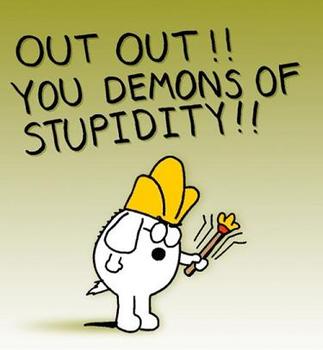 Is it really true that the Lord is good to those who are pure in heart? Is it really true that the Lord sends curses on the wicked? The Psalmist has some doubts about the truth of this proverb in the rest of the Psalm. This doubt is common: how many truly wicked (or exceedingly shallow) people are wealthy and powerful? How many people who have dedicated themselves to God’s work are poor and oppressed?
 These wealthy people trust in their riches (49:6). Rather than trusting in God, the rich are confident that they can weather any economic problems which come along. Remember Y2K? Some people stocked up on food and water “just in case.” If the worst possible things happened on that date, they could have “boasted” in their own preparedness, they survived because they earned it and deserved to survive.
 It is possible that the song was used for teaching people about the dangers of wealth. One of the most common themes in the Bible is the dangers of relying on one’s own wealth. The prophets of the Hebrew Bible have a great deal to say about the rich, they gnaw at the bones of the poor (Micah 3:1-3) or steal from the poor by seizing their property (Micah 2:1-2), or impose fines and taxes (Amos 5:11) or cheat them in the marketplace (Micah 6:9-12). This psalm stands in that same tradition, although the psalmist approaches the “problem of wealth” from the perspective of a wisdom teacher. He invites us to ponder a “riddle” about the wealthy in order to teach us something about our own relationship with our wealth

You must be logged in to post a comment.