I am leaving today to lead a tour in Israel and Jordan. This is my sixth trip to Israel since 2005 and I am looking forward to this one a great deal. I have 14 students on this trip and they are all ready for an adventure. We arrive in Tel Aviv and begin with a walk through the Old City, the Rampart Walk, Western Wall and Davidson Archaeological Park. We have a couple of days in Galilee, visiting all the “Jesus sites” as well as Tel Dan. We will cross into Jordan at Tiberius, see Jerash and Mount Nebo on the way to Petra. Finally, after crossing back into Israel at Eilat, we get a few days in the Negev, visiting Arad, Masada, En Gedi, Qumran and a few other sites.
Ten Dan, 2011
I am particularly looking forward to the Southern Temple and City of David excavations, there are always and exciting things to be seen there. One of the highlights of my tours is spending a few days at Tamar, an archaeological part south of the Dead Sea. The site is small but unique, with remains from the Iron Age (include a small Solomonic Gate and a four-room house), an Edomite shrine, a Roman bath and store rooms, a Turkish water system, a building once used as a jail during the British mandate, and an Israeli bomb shelter.
Look for frequent updates from Israel and Jordan over the next two weeks!
I am back in the warmth of Michigan today, having recovered somewhat from the long travel day yesterday. Or yesterdays, I suppose. We drove from Petra, Jordan to Jerusalem, then Tel Aviv, flew to JFK in New York, then to Chicago, then drove from Chicago to Holland and on to the Grace Bible College parking lot in Grand Rapids where it all started less that two weeks before. We gained back the seven hours we lost traveling to Israel, but I could use another week to recover.
We planned to leave Petra about 9AM, which is close to when we actually left this time. It was only about 32 degrees when we boarded the bus in Wadi Musa, about ten degrees cooler than Grand Rapids, Michigan. The sky was bright blue with no clouds, quite striking in the desert. We made great time, only making one stop on the way to the King Hussien Bridge / Allenby Bridge border crossing. Suliman made the border stop as painless as possible, and we left him at the border. The Israeli side was remarkably painless as well, we moved through security much more quickly than when I was there in May. Our driver was waiting and ready to drive us to the Jaffa Gate of the Old City in Jerusalem.
As we went up the Jericho road we could tell the weather was going to be chilly and cold. Dark clouds loomed over the city, and as expected we hit rain as soon as we got to the city. I was told that it had rained most of the day, but we got a nice break for the three hours we were there. We had a late lunch at Jacob’s Pizza just inside the Jaffa Gate. (I recommend it, fast and friendly service even though 19 people packed into his little shop to avoid the cold!) This little restaurant is typical of the strange things you see in the Old City – it was still decorated for Christmas (Santa and a Tree), there was strange classical music on the stereo (including the Death March), and two flat screen TV’s playing Tom and Jerry cartoons (with the sound muted). Positively surreal.
Some of the group split off for some shopping, I lead a group down to the Holy Sepulcher. Since it was cold day in January, the streets down through the Christian Quarter were nearly deserted (making us prime targets for the vendors, “Hey mister, you forgot to look in my shop!”)
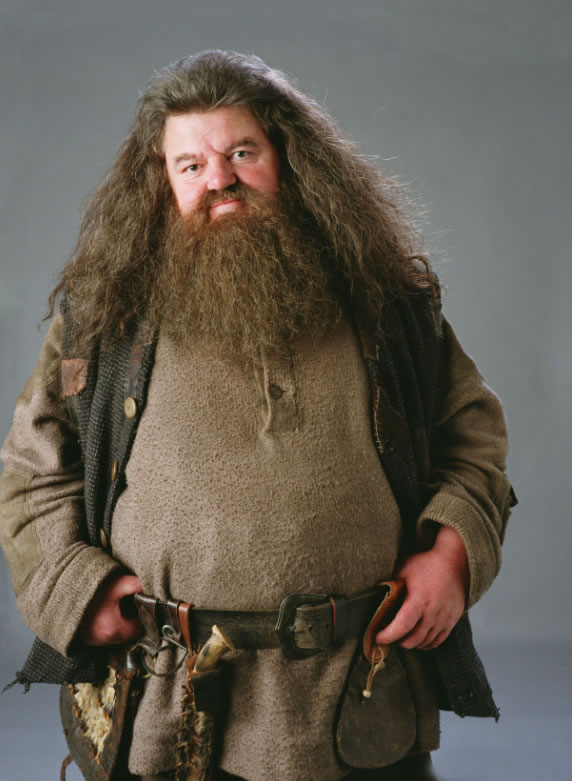
The crowd was also light inside the Church so we were able to get to look inside the Tomb without a long wait. I must admit that it was somewhat disappointing. The family ahead of me looked like they were on a trip to Disneyland and were taking the whole thing rather lightly. There was an empty Coke bottle shoved behind a candelabra just before the entrance. The orthodox priest who was there to keep things moving inside the shrine looked like Rubeus Hagrid’s cranky brother. I would have liked my time in the shrine to be spiritually moving, but the whole thing seemed set up to distract my attention away from the Resurrection.
One of my fellow-travelers Ray Crumb spent more time poking around the side rooms and drew my attention to the first century tombs directly behind the Tomb of Jesus. There is a little Coptic Chapel attached to the Tomb, opposite that is a door which leads to the Syrian chapel. My interest was in the two small tombs, but there were a number of people in the Syrian chapel venerating an icon of some sort. My copy of Murphy-O’Connor’s Archaeological Guide gives no details on this very plain room other than a name on a plan of the site.
This points out one of my frustrations with the Holy Sepulcher – I am ignorant about 90% of what is in the church! There are all kinds of chapels and art pieces, but all the guide books are interested in is the Tomb. If any reader knows of a serious “guide to the Holy Sepulcher” please leave a comment. Every time I go in the place I leave wanting to know what each room is for and where “those mysterious stairs lead.”
After some final shopping we were ready to head to the airport, although it was really too early yet. The weather was just too cold to enjoy the evening. I did all my shopping in the Franciscan Book Shop, picking up a copy of Fr. B. Bagatti, Excavations in Nazareth (part 1, 1969). I realize most people have probably already bought a copy of this one, but it makes for some good reading for me. It contains many diagrams and sketches of the Church of the Annunciation, among other things. (This is the sort of report I want on the Holy Sepulcher!)
Assuming that my jet-lag subsides, I will edit the previous posts on the Israel 2012 trip and fix any spelling errors (which I blame wholly on the iPad’s auto-replace feature) and add a few more pictures. I will update my Flickr site as well, so check back sometime this weekend for my final thought on our trip.
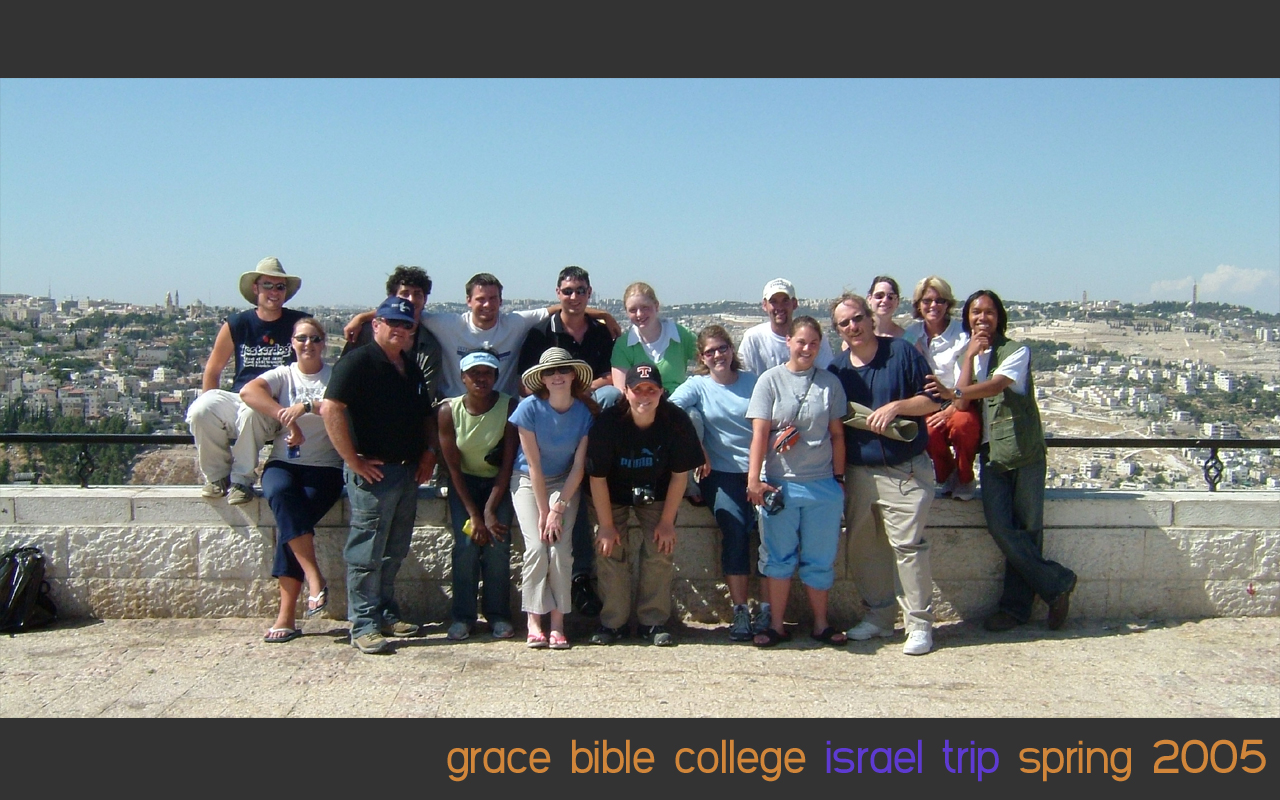
Galilee. We spent today traveling around Galilee, beginning with a drive up to Mount Arbel. Part of the “Horns of Hattin” the summit is 390 meters above the Sea of Galilee and provides an overall view of the north and west corner of the lake. There are signs at the top near the Carob Tree lookout which point out important towns and villages long the shoreline. There are quite a few spectacular photo opportunities at the summit, I have taken group photos at the Carob Tree several times. Actually, I set the all time record for group photos, using every camera in the group, some twice.
From Arbel we drove through Tiberias to the Jordan River. It was very quiet there, no other tour busses and few people were at the baptismal site. We had a chance to stand by the river and talk about about the more likely locations for the baptism of Jesus, then I read from Matthew 3, beginning with John’s preaching and the account of Jesus’ baptism. Since we had just driven through Nazareth, it was easy to picture Jesus walking from his hometown after he was rejected in the Synagogue to Capernaum.
(As a somewhat oddball aside, there is a small olive tree with a plaque dedicating it to Glenn Beck as a “friend of Israel.” I decided next time I come to the Jordan I am going to sneak in a plaque with my name on it and stick it some place so I too can have a dedicated tree or bush. Possibly a shrubbery.)
Since we were on the south end of the lake, we continued north around the east side of the lake (passing Ma’agan, my favorite place to stay in Galilee) and visited Kursi. This is a little 6th century Byzantine church built near the place Jesus cast out the demon into a herd of pigs. There are many problems with this tradition, not the least of which is that the cliff the guides point out as “the cliff” is so far from the Lake that the pigs would have to fly several hundred feet to hit the water and drown. To my knowledge there is no evidence of a cemetery there either. Still, the location is on a natural road to the Golan Heights, so there may be more to the tradition than meets the eye. We took a few minutes to read Luke 8:26-39 and I talked a bit about why it is important that the demons knew exactly who Jesus was, while the disciples witnesses the calming of the sea and could only ask, “who is this man?” (Luke 8:25).
We continued around the lake to Capernaum. The major attraction for most people the site of Peter’s house. There is a large Catholic church looming over the remains of a house from first century Capernaum and there is very old tradition that this was Peter’s house. I suppose that this might be true, but that does not matter as much to me as the fact that there is a large fourth century synagogue quite near the house, which appears to have a first century synagogue underneath it. I would love to see more work done on the back corner to determine if that room is in fact the first century synagogue, but it would also be a shame to destroy the beautiful later building.
We took a few minutes to read Mark 2:1-12, another passage where people wonder who Jesus is. In this case, Jesus claims to forgive sin, prompting a charge of blasphemy in the minds of the teachers of the Law. Since Jesus did not immediately heal the man, how could he claim to forgive sin! Yet Jesus does heal the man in order to show that the Son of Man has authority to forgive. As a bonus, we were able to walk right down to the shore of the Sea of Galilee, where I read John 20, a resurrection appearance of Jesus on the shore of Galilee. If we assume Peter’s house was on that edge of Capernaum, then it is likely that the beach where Jesus met his disciples was in that area.
After lunch in Nof Ginnosaur, we finished the day at the Mount of the Beatitudes. Like all the sites we visited this day, it was extremely quiet, no tour busses were in the garden when we arrived. We spent a few minutes quietly inspecting the church and garden and then gathered for a time of reflection in one of the pavilions normally reserved for eucharist. Another advantage of the January tour is that the place was deserted – usually reservations are required to use those areas (and raging Protestants like me are not likely to get that reservation!) I read from Matthew 5 and reflected a bit on Jesus and the Law. Since it was our last time together as a group before some of us split off to go to Petra, we had a time of sharing some of the “highlights” of our short tour.
We are off early tomorrow to cross the border into Jordan. We have a day of touring on our way down to Petra. It is hard to believe that this tour is just about over, or that I have to return to the frozen tundra of Michigan in just a few days.
Today was a long travel day. Starting out early from Tamar we traveled west and north past Tel Aviv to Caesarea. This is an extensive site which the Israeli Parks authority has developed into a very nice walking tour. Starting out from the Theater, we had a nice view of the Mediterranean Sea. The theater is used for modern performances, so I have seen the stage crowded with modern scaffolding and equipment. This time there was nothing on the stage so the view was beautiful.
We walked through an area of collected pillars and sarcophagi to the Palace / Pratorium. Once again this is a breathtaking view of the sea. Fisherman usually gather on the rocks for some deep sea fishing I have always seen them there, so I assume the fishing must be good. We saw one guy jump the fence into the park with his fishing gear to save the 38 shekels. Most of our group stopped to step into the Sea, marking the Red-Med-Dead trifecta in three consecutive days. That is a first for my tours, although unintentional. (There are a few people out by the Sea of Galilee this evening, so they may add that water to the list.)
Some of the mosaics in the public areas at Caesarea look like they are being restored, although I did not notice much change since the last time I was there in 2009. (Sorry 2011 people, we skipped this site on that tour!) There are a pair of mosaics with variations on Romans 13:3 in the 4th century “tax record office” to encourage the new Christian businessmen to pay their taxes accurately.
We lunched on Mount Carmel in the Druze Village on the way to the Carmelite Monastery. This might have been a bad idea since there were so many Israelis visiting Mount Carmel for Shabbat – the streets around the Druze Market were packed and there was a major traffic jam. Our bus driver Jimmy made his way through without problems, but it was slow going!
They have recently fenced off the hillside we used to walk down to avoid paying to enter the Monastery, and there was a fair amount of haze in the air by that point. Mount Carmel is the site of Elijah’s confrontation with the priests of Baal, and the monastery has a memorial to Elijah. What was interesting to me on this trip is that at 4:30PM the sun was at an angle which illuminated the Mediterranean Sea. Recall that after the priests of Baal had been executed, Elijah went to the edge of the mountain and looked to the sea to see of the drought would come to an end. Having visited this site earlier in the day I did not know that you could see the ocean from the general area of the Monastery.
We drove through the valley of Jezreel to Nazareth, although there is not much to see in that city. It is an incredibly noisy town, with no easy way to get through quickly. When we were making our way up the hill toward Nazareth Illit, the sun was setting and the valley was soaked in reds and browns. Turning toward Galilee we could see the rising near-full moon.
I have had an unusual number of coffees today, so I may just write tomorrow’s blog early. I think that an extra Turkish coffee has been known to evoke visions….
[Why no pictures? The internet at the Leonardo in Tibereas is expensive and slow, a bad combination. I will come back and add pictures when I get to a faster, cheaper connection.)
We started our day with a drive to Mamshit, a Nabatean caravan city near Arad. I had never been there before today, although I did visit Avdat in 2005. Both cities (along with Petra) are along Spice Route and were built by the Nabateans to service caravans traveling from Yemen through Petra and on to Gaza. When we arrived some bedouin boys were herding sheep on the opposite hill, so our young ladies made friends and tried out their basic Hebrew phrases. I expect they are now Facebook friends now.
There are two churches at the site, both with nice mosaics. These are among the oldest in Israel since both date to the early 400’s. The western church has a deep cistern excavated in the atrium, the east has a cover of the cistern so you can see more how the room might have looked. The western church has a cross-shaped baptismal wth very narrow steps. There were two dedications in the eastern church, but the floor was fenced off so it was hard to get a good photograph.
A large Nabatean home has been restored, including stables and a number of other rooms. There are some frescos which are partially preserved whch are worth seeing. A coupe of rooms were filed with unused stones, many of which had interesting carvings or other decorations. One was a square with four round holes, although we could not really tell what it was used for (I suggested “cup-holder” but no one was buying it).
From Mamshit we drove forty minutes to tel Arad. Usually this is one of my favorite sites since it is so well-excavated for both Canaanite and Israelite levels. The contrast between the Canaanite Sacred section and the Israelite temple in the fortress is quite amazing. The site gives me a chance to talk a bit about Canaanite religion which appeases the gods and attempts to cajole them into sending the rains and the worship of the Lord. The God of the Bible will bless his people, but only when they are obedient to the covenant. There is no appeasement or manipulation as with the worship of Baal.
One problem with Arad was that it was extremely windy and cold. Around the Dead Sea the temperatures were in the 70’s and less breezy, so fool that I am I left my coat behind.
We drove back to the Dead Sea for lunch and a swim, or at least a float. Most of our group dared enter the waters, although it was quite cold and breezy. I think that the Dead Sea is a great expereince, but it is better in the spring and summer! (In the interest of full disclosure, I sat on the shore and drank a coffee while everyone else froze in the salt water.)
Tomorrow we travel to Caesarea and then on to Galilee. I will be at a hotel in Tiberias, near the Sea of Galilee. Hopefully I can get to the internet for a few blog entries before we cross over to Jordan and visit Petra. I enjoyed the stay at Tamar, Derrick and Kate are excellent hosts. The food was great and the group seems to have liked “sukkah life” after dinner.


 in the group, some twice.