Acts 1:14 and 2:46 – “Of One Mind”

In the days leading up to Pentecost, Luke describes the disciples of Jesus as being of “one mind.” This nouns (ὁμοθυμαδόν) is repeated in 2:46 (translated simply as “together” in the ESV) and 4:24 to describe the worship of the apostolic community. As Keener notices, the word forms an inclusio, framing the events of Pentecost with the idea of the unity of this early community of believers (Acts, 1:751). In fact, the unity of the early community is an important theme in Acts.

The word means “one passion” (ὁμός, “common,” and θυμός, “passion, anger”), and can be used for any group that has a single interest, whether for good or bad. For example, in Acts 8:6 it describes the crowd paying close attention to Philip the Evangelist). In Acts 15:25 the word is used for the unanimous decision of the Jerusalem council.
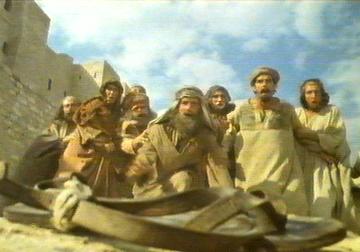
The shoe is the sign. Let us follow His example.

The shoe is the sign.
Let us follow His example.

But the word is not always positive since the crowd in Acts 7:57 were also “of one mind” when rushed out to stone Stephen, in 18:12 for the Corinthian Jewish attack on Paul, and in 19:29 for the mob in Ephesus which rushed into the theater to (potentially) persecute Gaius and his companions. and 12:20 (political parties in agreement). It can even be used quite generically, as in Acts 5:12 where it simply has the sense of the word is simple “together.”

The idea of unity is important for Paul in his letters. In Phil 1:27, for example, he urges the readers to “be of one mind.” In Col 3:14 Paul tells his readers to “put on love” since that will bind them together in “perfect harmony.” There are examples in the Hebrew Bible of people coming together as “one person” (Ezra 3:1, Neh 8:1). The Greco-Roman world thought that harmony was a virtue, Dio Chrysostom said “For when we praise human beings, it should be for their good discipline, gentleness, concord, civic order, for heeding those who give good counsel, and for not being always in search of pleasures” (Or. 32.37).

In the first century, groups that were peaceful and harmonious were attractive, no one would join a movement which was perceived as fragmented and tempestuous. The reason that Luke highlights unity throughout the book is that unity and harmony where attractive to the Greco-Roman world. Luke presents the community in Jerusalem as unified around certain beliefs about Jesus as well as a few practices (prayer, sharing meals together, etc.)

If there is anything in the earliest community of followers of Jesus which ought to be a model for all churches, it is this unity of mind and purpose. It is fairly easy to point to church splits or denominationalism as symptoms of a larger problem. Everyone knows of a church which has been through a split, a pastor who was divisive, or a denomination which seems designed to fight with other Christians. It quite easy to point the finger at Fred Phelps (someone I do not consider a Christian). There are plenty examples of disunity in churches I respect.

But the early community did separate on some theological issues, primarily who Jesus was, and later in the book of Acts there will be significant differences between Paul and other Jews on the issue of Gentile salvation. While Acts 15 is sometimes used as a prime example of unity, there are some serious differences between the parties even in that point in story of Acts. This means that there are some things that are intensely important, things that unify Christians everywhere. It also means there are less-important issues. How can the church of the twenty-first century use the unity of the believers in Acts as a model for “doing church” today? What is it that ought to unify us, what might separate us?

My guess is that the things with unify are more important that the things which separate.

Acts 2 – Peter and the Hebrew Bible

Peter’s sermon is a summary of the sorts of things he would have preached in any similar context.  He is speaking to rather well educated Jews in the Temple, people who knew their Hebrew Bible very well.  Rather than pursue modern logical arguments, he turns to the Psalms and shows that David does not exhaust the meaning of the text. Since the messiah is to be a new David, the psalms Peter cites are turning into prophecies of Jesus’ resurrection.

Peter and Paul by El GrecoIn order to show that the Messiah would rise from the dead, Peter quotes Psalm 16:8-11. In this text, David states his faith that God will not abandon him in the grace not “allow him to see decay.” Peter points out that David died and was not resurrected, his tomb was still venerated in Jerusalem to that day. Perhaps people in the audience had already visited the tomb of David during their visit to the City! Modern tours of Israel often visit the Upper Room and the Tomb of David at the same time since they are relatively close together.

Psalm 16 is remarkable in that both Peter and Paul cite it as a prophecy of the resurrection of Jesus (cf., Acts 13:32-37). Yet when one reads Psalm 16, there is little there that hints at a messianic interpretation. To tease out a messianic implication from the psalm Peter blends it with Psalm 132:11 and applies it to Jesus.

To me, this is an exegetical maneuver which I would not a student to make, and probably if I heard a pastor use Scripture in this way I would probably have a few things to say about his exegetical method.  But int he context of Jewish interpretation of Scripture, this makes sense.  Combining texts in this way creates new possibilities which are then applied to new situations.  I think this might be a case where we should be careful how we try and apply Scripture, Peter is not giving a lesson on how to read the Hebrew Bible, only showing that these texts allude in some way to the resurrection.

To further his case, Peter cites Psalm 110, another well known messianic prophecy. There David is told that he would be exalted to the very throne of God and that God would make all his enemies his footstool. This too cannot have been exhaustively fulfilled in the life David. Although David was given great victories, and he was the greatest king in Israel’s history, he was not raised to the level of the throne of God!

Peter therefore tells the crowd that Jesus non only rose from the dead but was taken up to heaven like Elijah or Moses (or Enoch, for that matter). In those three cases, the person was a highly respected prophet who did not experience death. Like the great men of old, God confirmed Jesus’ message by doing miracles through him, but he allowed him to die in order to initiate the new covenant.

Since Jesus fulfills the psalm which David could not, he is confirmed as the Lord and Christ (Acts 2:36). This is the most shocking point in the whole sermon – everything which the Hebrew Bible looked forward to had happened with Jesus, he was in fact the Lord and Messiah.

Acts 2 – Peter’s Sermon

Peter’s sermon in Acts 2 is critically important since it demonstrates how the apostles interpreted the life, death and resurrection of Jesus, including the Ascension. Peter uses the Old Testament in this sermon and cites texts which were fulfilled in the events of Jesus’ life, but also in the events of Pentecost.

Peter Preaching Mildorfer

Peter first explains the significance of the Holy Spirit (2:14-21). Beginning with a prophecy from Joel 2:28-32, Peter states that the presence of the Spirit in the apostles at that moment is what Joel predicted. In short, it is proof that the New Covenant has begun! Several other texts from the Hebrew Bible indicate that the Spirit of God would fall upon his people when the New Age begins (Isa 32:14-15, 44:3; Ezek 11:19, 37:14).

Second, Peter explains that Jesus of Nazareth fulfilled the purpose of God in his death and was vindicated by God in his resurrection and ascension (2:22-35). The life of Jesus is summarized simply by stating that Jesus was from Nazareth and he was confirmed by God through many miracles. Since this is a summary of the actual sermon, it is entirely possible Peter illustrated this point with his personal experience and witness. Remember that the main theme of chapter one was that the twelve were to be witnesses of these events!

There are several words used to describe the miracles (signs and wonders). Signs is the most significant, since σημειον (semeion) typically refers to a miracle done to prove some sort of point, to make some sort of revelation. Peter states that God did the miracles through Jesus, not that Jesus himself did the miracles. He adds “as you yourselves know,” indicating that at least some of the crowd were witnesses to the miracles of Jesus. It is equally likely that the crucifixion of Jesus by the Romans as a rebel was well known by the crowds in Jerusalem.

But Jesus is not dead – God raised him from the dead in fulfillment of prophecy. Peter goes about proving the resurrection quite a bit differently than we do today. He does not mention the empty tomb or challenge the Pharisees to produce a body to prove that Jesus was really dead. Rather than pursue modern logical arguments, he turns to the Psalms and shows that David does not exhaust the meaning of the text. Since the messiah is to be a new David, the psalms Peter cites are turning into prophecies of Jesus’ resurrection.

Before looking at Peter’s use of the Psalms, I want to pause and think a bit about what Peter is claiming here. He is clearly saying that the messianic age has in some way already begun. The Spirit has been poured out on those who believe that Jesus is the Messiah. The dead have already been raised. Miracles are in fact happening. Remember that the crowd assembled to hear this sermon are religiously observant Jews who are spending time in the Temple during a religious feast. Peter is claiming that the age anticipated in Isaiah, Jeremiah, Ezekiel and the Twelve is beginning at that moment!

If this is on the right track, what might a religiously observant and biblical educated Jew in the first century have expected, if the messianic age was beginning? I suspect the crowd had a more than a few people with rather fervent messianic hopes. They might have expected Israel to be re-gathered from the nations to Mount Zion to worship the Lord. It is not a surprise, then, to find that Jews from all over the world who believe in Jesus as Messiah settle in Jerusalem to prepare themselves for his soon return.

Are there other elements of this sermon which contribute to the idea that Pentecost is the beginning of the eschatological age?

Acts 2 – Pentecost in the Book of Acts

The Jewish festival of Pentecost is important for understanding the events of Acts 2. The Feast of Weeks or Shavuot celebrates the first fruits of the harvest. It happens fifty days after Passover (seven weeks) in the late spring / early summer. This festival included an offering of two loaves made with the wheat given in the first fruit offering (Lev 23:15–16; Deut 16:9).

Pentecost, Shavout

For first-century Jews, Shavout was a declaration of “God’s ownership of the land and his grace in bringing forth food” (Sanders, Judaism, 139). The book of Ruth is read during this festival. That Ruth takes place during the wheat harvest may be the reason, but Ruth is not only a gentile convert to Judaism, she is the ancestor of King David. “There may also be a messianic significance in the choice of this work, i.e., that all the world will turn to Judaism eventually” (The Encyclopedia of Judaism; Leiden: Brill, 2000, 1:43). Since Acts begins the story of the Gospel beginning in Jerusalem and eventually going out to the whole world, this background may be significant. A significant problem for this view is our lack of certainty that Ruth was read at Pentecost in the first century. Even if it was, would Luke be aware of the reading, and would he want to tease out any messianic significance for reading Ruth at the Feast of Weeks.

According The Book of Jubilees, Pentecost was the day on which Moses was given the Law (cf. Tobit 2:1, 2 Macc 12:32). Although the Book of Exodus does not make this clear, there is a tradition that the Israelites arrived at Mount Sinai 50 days after the first Passover (Exod 19:1). Some scholars (Knox, Snaith) see a connection between this tradition and the gift of the Holy Spirit. Since Moses gave out the Law to Israel on this day, Jesus gives the Holy Spirit to the church. Joseph Fitzmyer suggested Luke was aware of the tradition since there are some indirect allusions to the giving of the Law in Acts 2, such as the image of fire descending from heaven (Exod 19:18). For some, the descent of the Spirit as “tongues of fire” alludes to the theophany at Sinai.

However, as Keener points out, there is no scholarly consensus on the meaning of Pentecost in this passage (Acts, 1:784). There are some parallels with a covenant renewal ceremony (Jubilees 6.17) or traditions about Pentecost in the (potentially later) Targumim. Keener concludes Luke use of Pentecost as a festival has no more significance to his narrative than providing large crowds and a short interval after Passover (Acts 1:787).

It is likely the first fruits of the harvest refers to those who receive the Holy Spirit in Acts 2. The new age has begun and the Holy Spirit has come for the first time. But there are two other potential Pentecosts in the book of Acts. In Acts 10 the Holy Spirit falls on Cornelius, a God-Fearing Gentile and he speaks in tongues just as the Jewish believers do in Acts 2. Peter makes this point himself in Acts 10:47: the Gentiles in Cornelius’ home received the Holy Spirit “just as we have.”

There is a third reference to Pentecost in Acts 20:16. Paul wants to return to Jerusalem before Pentecost if possible. This was a dangerous journey, especially since Paul wanted to deliver the collection from the Gentile churches at Pentecost. By delivering a gift to the poor in Jerusalem the Gentile churches demonstrate that they too have received the Holy Spirit. Paul’s return to Jerusalem at Pentecost is calculated to highlight his harvest among the Gentiles. That there are three references to Pentecost are not unexpected since Luke repeats important events three times several times in Acts (Cornelius’ conversion, Paul’s conversion, the rejection of Israel, etc.)

Whatever the intended imagery, the day represents the largest crowd in the Temple area since Passover fifty days before. Peter and the other apostles will be able to preach to large crowds of Jews gathered to worship God in the Temple (Acts 2-3).

What is there in Peter’s sermon that makes some use of this Pentecost imagery?  Why did God choose Pentecost for the outpouring of the Spirit?


Bibliography: W. L. Knox, Acts, (NCB, Oxford: Clarendon, 1967), 80-84; N. Snaith, “Pentecost, the Day of Power,” ExpTim 43 (1931-32): 379-80; Mark J. Olson, “Pentecost,” ABD 5:222.

Acts 1:12 – Archaeology and the Upper Room

In his Acts commentary Clint Arnold says archaeologists have recovered several Herodian homes near the Tomb of David, one of which is the traditional site of the upper room (ZIBBC, 11). I visited this room on my first trip to Israel in 2005 and recall being unimpressed. Although I was skeptical at the time, there is at least a possibility that the location known as the Cenacle today is built on top of the site of the original upper room. Yet Jerome Murphy-O’Connor argued the location of the Cenacle in Jerusalem ought to be seriously considered as evidence for the location of a Jewish-Christian congregation in the second century.

The Cenacle Today

The Cenacle Today

The evidence for this is less an exercise in archaeology but a study of traditional locations of holy sites in Israel. The Cenacle (the Latin cena means “dinner,” so the place is a “dining room”) is a building outside the south wall of the Old City of Jerusalem which contains the so-called Tomb of David and the Upper Room. As he comments in his article, “Nothing visible. . . has the slightest claim to authority.” The building was converted to a Mosque in 1524, which was closed in 1948 after Israelis took the Zion Gate. Since then there have been only a few archaeological studies of the site, but they have confirmed that there was a building there in the second or third century.

Two witnesses from the fourth century claim that there was a “little church” on Mount Sion as early as A.D. 130. Epiphanius was a Christian born in Eleutheropolis (Bet Guvrin) in 315 and directed a monastery there for thirty years. He claimed there were seven small synagogues left around Jerusalem, include a small one on Mount Sion which was “like a hut.” He then quoted Isaiah 1:8, which predicted that Jerusalem would be “ploughed and sown.” The Bordeaux Pilgrim also describes seven small synagogues, including one on Mount Sion (although it is likely the Bordeaux Pilgrim drew on the same source as Epiphanius).

Jerome Murphy-O’Connor thinks this “little synagogue” was a Jewish Christian church. Both Epiphanes and the Bordeaux Pilgrim were Christians from large metropolitan areas and knew what church looked like as opposed to the general design of a synagogue. For them, the Mount Sion building was built like a synagogue, so it must be Jewish. On the other hand, if this were a church built by Jewish Christians, it may have looked more like a synagogue.

If the Jewish Christians returned to Jerusalem, it is possible they returned to the general location “where it all started” for them and built a little church. This indicates a continuation of Jewish Christianity in Jerusalem well into the second century. What is more, it argues for the authenticity of the traditional site of the upper room, even if the present building is relatively modern.

Bibliography: Clint Arnold, Acts (ZIBBC; Grand Rapids: Zondervan, 2002); Jerome Murphey-O’Connor, “The Cenacle and Community: The Background of Acts 2:44-45,” pages 296-310 in Coogan, Exum, and Stager, eds., Scripture and Other Artifacts (FS for Philip J. King; Louisville, Kent: Westminster John Knox, 1994).