Over the last few posts, I have argued that literal interpretation is best understood as reading a text to understand the author’s original intent. What I am really arguing for here is a consistent use of the grammatical-historical method, which takes into account the use of metaphors and other symbolic language. For some, understanding Revelation and metaphors requires a symbolic interpretation of the book.
Reading Paul or narrative texts like the Gospels or Acts is fairly straightforward. If Luke tells us Paul went to Philippi, we do not have to work very hard to determine the text’s deeper meaning. However, when Paul describes the church as a “temple of the Holy Spirit,” he employs a metaphor that describes the church in some ways, like a temple. The reader must determine what elements of the comparison are important and which are not.
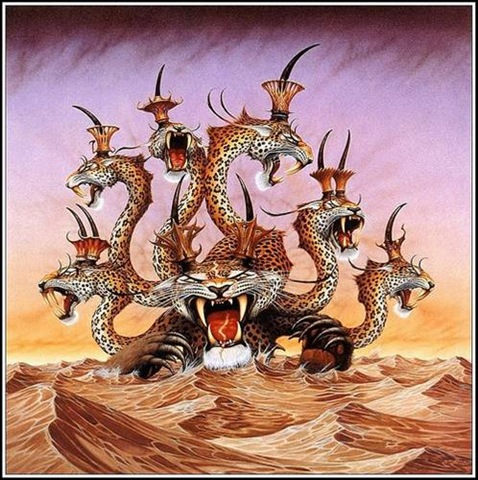
Literally?
For any text, when an author uses metaphors or other figurative language, the reader must “enter into the world of the metaphor” and understand what the author intended to highlight or emphasize in the comparison. This becomes increasingly difficult for Revelation since, as I said in a previous post, the book is like a political cartoon from a culture quite different than ours and from an entirely different point in history. We may not know what some of the elements mean since we are generally ignorant of the Jewish or Greco-Roman world some 2000 years ago. This means we must work hard to “get into the world” of the first century to understand what this figurative language might mean.
Please understand that using figurative language does not necessarily mean the reader is free to read it however they want. The reader still must determine the writer’s intent when he uses that figurative language. When someone argues that “Revelation is not literal, so a literal method will not work,” they are opening the door for an allegorical interpretation or perhaps a reader-response method of approaching the text. I argue that we read Revelation the same way we read Romans, even if it is hard.
Can these assumptions be applied to the Book of Revelation? Outside of the apocalyptic portions of Daniel and the book of Revelation, most scholars agree with the literal interpretation methods to find a text’s meaning. However, some argue that these principles must be set aside once we enter the world of apocalyptic literature. Craig Blomberg offers three ways in which reading the genres of Revelation properly will be helpful when reading Revelation (Klein, Blomberg, and Hubbard, Introduction to Biblical Interpretation, 368-371).
- As a letter, we must recognize that the author intended to be understood by his readers. The text cannot mean something unintelligible to the first readers.
- As prophecy, we must recognize that it predicts literal events through symbolic language. These events, it appears, take place prior to the return of Christ.
- As apocalyptic, we ought to treat the symbols and images as such and attempt to understand them in their original context, literary, and historical contexts.
I find that the balance between the three genres helps to avoid embarrassing extremes where locusts become helicopters, but also reads rather bland “good versus evil” meditations found in some commentaries, which fail to give full weight to the imagery.
Reblogged this on txwikinger's blog.
This post is quite interesting to me because I just wrote a paper about symbolism in the Book of Revelation. P. Long said when reading Revelation we must, “work hard to “get into the world of the first century in order to understand what this figurative language might mean.” I think this is true, but one of the questions I had was, why doesn’t John just come out and plainly say what he was trying to say. One of the reasons the article written by Gregory Beale gave me was that, “the symbols are likely there in order to make the diligent reader of God’s word dig deeper in order to get the richer treasures” (Calvin theological Journal, April, 2006. Pg, 56). I think that John definitely wrote it for a specific purpose. Literal things are going to come from the symbolic images expressed in the book. I believe P. Long’s post and Beale’s ideas match up quite closely. P. Long mentioned that the locusts in Revelation 9 aren’t meant to be interpreted as helicopters. Instead when we work hard to get back to the meaning John had for the text, we might figure out what they actually could be symbolizing. That is why I too believe that following a good balance between the 3 genres is probably the best option. I believe that is the first step we need to take in order to capture the true intent of the letter.
I think as one reads through the book of Revelation that it is difficult to fully comprehend the metaphors that are being presented. I think many times when people read the Bible they are taking the words or metaphors and turning them into something totally different of what it actually means. I think we do need to be careful on how we interpret these kinds of things when we read scripture. I don’t think we will exactly learn every single detail about Revelation based on all of the metaphors. I think it will take time and a determined mind to really try and focus on what the author has to say to us and try to wrap our minds around what it says, at the same time not trying to interpret the text in the way we want it to be read.
Revelation, to me, is the most confusing book in the Bible. It is extremely difficult to interpret. There are so many ways in which it can be interpreted. It can be interpreted figuratively, literally, etc. There is so much obscure imagery in Revelation and I have no idea what’s literal and what is metaphor. I believe that a lot of it is metaphor. However, like P. Long said, it is difficult to understand these metaphors because they come from a time that is so different from where we live now. However, I like the idea of the three ways to read Revelation. I find it very helpful actually. We must read this book like any other book. We must read it with its original context in mind, with its original readers in mind and knowing that it is symbolic but also literal. This is a very simple way to read Revelation that I will keep in mind next time I read this book.
I agree with Sarifariy, that Revelation is a very hard book to understand and I think that perhaps, if we are honest with ourselves, we will realize that we are not going to understand it fully and exhaustively, and have to be okay with that.I don’t think we can know for sure what type of prophecies are in Revelation, so it seems kind of pointless to stick to one view point. Noone will know the exact time when Christ will return and how and when everythingelse will play out.
I was reading a commentary on Revelation by Adam Clarke and after describing the imagery and symbolism that Revelation contains, he stated that he had no idea what they meant and was not even going to try to decipher them. Many have tried to, but nobody can state anything for sure, they are all guesses.One person’s assumptions seem adequate until another one was examined. “I have read elaborate works on the subject, and each seemed right till another was examined. I am satisfied that no certain mode of interpreting the prophecies of this book has yet been found out, and I will not add another monument to the littleness or folly of the human mind by endeavouring to strike out a new course(Adam Clarke’s Commentary).
But again,that’s not to say that we shouldn’t read it at all. It is in the Bible for a reason and contains truths that can be applicable to us (of course), especially if we dig into the context and background of the book…
This blog post by P. Long on how to read Revelation, literal or allegorical, is extremely important and relevant in how we decide to read apocalyptic literature. This blog reminded me of some lectures from Professor Pat McGillicuddy in which he outlined, when preaching and studying God’s word, we must build a bridge from their time to our time. This is in reference to how when we read the Bible we must first understand the history, context, culture, and original people the Scripture has and thus for application and to aid in understanding Scripture, we can make connections to our town.
In this process, Professor McGillicuddy suggests what He calls, and I believe P. Long is writing on the same concept in his blog, reading Scripture normally. To read Scripture normally is to recognize all the factors of history, context, culture, and people groups to help understand if Scripture is being allegorical or literal. P. Long is correct, it takes a lot of work, especially for books such as Daniel and Revelation, to gain the knowledge of history, culture, etc. But P. Long is also correct that to do this work is the same no matter which part of Scripture we are diving into and as Christians we ought to be seeking as full a picture of Scripture as possible, this including learning the complexities of the context of books such as Revelation.
“reading Scripture normally” is another way to say “literal interpretation,” but it avoids the perception someone reading Revelation literally thinks a dragon/beast thing is really going to rise from the sea in the future. To read Revelation literally is to attempt to understand what the original author meant by his rather disturbing metaphors.
Indeed, reading the book of Revelation can be difficult due to the fact that there exists a cultural barrier between the time it was written, approximately some 2000+ years ago, and our modern, American society of today’s day and age. The culture, language, society, norms, and mindsets of the men and women of this period were vastly different than our own. It is also an inherent danger with figurative language that some will fall into the trap of subjectivism, where one simply says that something can mean anything one wants it to. This is both incorrect, wrong, as well as not what God intended for us when we are reading this type of scripture and figurative literature. As to what type of method should be should to best interpret the book of Revelation, such as literal, figurative, allegorical, and so on, the answer to this is that no one method can describe the entire book. Instead, a combination of different study methods is best suited for it, as well as allowing the reader to better understand its passages. For example, when John is referring to the four living creatures, they are unlike anything known to mankind, and his only option for describing them in any comprehensible way is to compare them to something that we do in fact already know. He uses wording such as “like a lion”, “like an ox”, “like an eagle”, and so on. He must compare them to earthly things. It is most likely that whatever the four living creatures look like, they do not appear exactly as an eagle, ox, or lion does. This is simply a figurative comparison. However, for other sections of the book of revelation, there is no need to attempt to “figure out” or decipher what it is talking about. In Revelation chapter 7, it says that there will be 144,000 individuals of Israel sealed, and lists 12,000 coming from each tribe, such as Benjamin, Gad, Judah, and so on. In this case, 144,000 means just that, literally 144,000, and 12,000 literally means the number 12,000 of something. One must use the wisdom God has given us to know when to apply figurative interpretation, and when to apply literal interpretation.
There are a lot of great points that P Long makes within this blog post. When we read scripture, we have to read it for the time it was written, and bridge that gap between then and now. There are some passages that take no effort to read what they are saying, like P Long said, if Luke said that Paul went to Philippi we do not have to question or try to understand what he is saying. But the same way we read that scripture is the same way we have to read all scripture.
An important aspect of reading scripture is to look to the context which it is written. Some questions to ask yourself while reading scripture is where was it written from, who is it written to, who is writing it, what happened historically within the context, what is the culture which it was written in? By going through these questions, we can figure out what kind of writing it is in certain passages. It does take a lot of work to do this, but it is beneficial in order to read the real meaning and get a better grasp on what is being said within the scripture. It can be hard to do this while reading Daniel and Revelation and get frustrated, since other books of the Bible are very easy to read and understand what is being said, like the gospels. It takes a lot of extra work to understand and comprehend what is being said within the chapters of Revelation and Daniel. I think another factor is to ask the Holy Spirit to come and illuminate truth to us from scripture while reading it to help us understand what is happening within the verses. I believe that without the Holy Spirit speaking to us while we read, it is useless trying to understand the passages on our own.
Revelation and metaphors
I enjoyed reading this blog. I like viewing the book through a few lenses. I think this is important when reading the bible. In this blog post, you had mentioned a few ways to approach the book. I Especially liked this blog because of our short paper number four. We had to pick a chapter in revelation and look at the metaphors, then talk about the three views in which the book can be interpreted. You have Preterist, who believes that the events in revelation had happened in the first century, then idealists who think the book is completely ideas and metaphors. Then there is the futurist, they believe the book will come to fruition at the end of history.
When it comes to reading the bible, more specifically reading revelations, I like what P.Long said that this is a letter, so we are to read it as if we intercepted this letter. Now the events apply to us. But this is also apocalyptic and prophecy from the first century, so there are some literary devices that we may not be familiar with.
I do have a question though when reading revelations and looking at all the metaphors, does that mean this book could be seen through an idealist view? Or do I have the wrong idea of idealism? That is beside the point. I think it’s important to not get so black and white when reading literature like this. So well done!
Reading Revelation has always been hyped up as a very complicated book. Full of metaphors, prophecies, allegories, I have always been told it is confusing and difficult. I really appreciate this post in particular, as I begin to dive into reading Revelation for myself. The three concepts, as to how to read Revelation, I found really helpful. Looking at the book as a letter, prophecy, and in an apocalyptic setting makes the reading process less overwhelming, because now I know through what lenses I should be reading (Long, 2012, para. 6). It makes sense that we should treat this book like any other piece of scripture, reading it first literally, then looking at context, and also taking into account the present metaphors. I think one particular reason this book seems so overwhelming is just the sheer fact that I am not acquainted in Jewish or Greco-Roman customs enough to understand what would be metaphorical and what would be cultural. I need to do a better job of jumping into reading the book and figuring it out as I go. And by selecting better resources to help guide me through the process. Revelation is a book that is worth exploring, but it can be important to have the right tools to do so.
Revelation and its metaphors are what make the book extremely controversial. As the reader of Revelation there must be an understanding of what the metaphors mean and how to interpret them. The approach to understanding Revelation must be thoroughly examined. The figurative language used in Revelation gives way too many different interpretations and speculations regarding what these metaphors mean. The different approaches to interpreting this book have been highly debated. How do we know how to interpret what? The reader must be aware of the true meaning of the metaphors and whether they are allegories or literal. All the parts of Revelation serve different purposes and different meanings. Each meaning leads to specific understanding of the book. “Outside of the apocalyptic portions of Daniel and the book of Revelation, most scholars agree with the methods of literal interpretation to find the meaning of a text. But, some argue, once we enter the world of Apocalyptic, these principles must be set aside. Craig Blomberg offers three ways in which reading the genres of Revelation properly will be helpful when reading Revelation” (Long,2012). The three ways He is referring to allow the reader to properly understand the meaning and importance of revelation. Many people give outlandish interpretations about t apocalyptic literature in the Bible. Understanding what is meant is extremely important in being able to properly view the metaphors for what they are and see the literal significance of apocalyptic literature.
Revelation was composed during a tumultuous period in early Christianity, likely around the end of the first century AD, when Christians faced persecution under the Roman Empire. Many scholars believe that the imagery and symbolism used in the book would have been familiar to its original audience, drawing from Jewish apocalyptic literature and contemporary political and religious events. Additionally, the language and literary techniques employed in Revelation were common in ancient Jewish and Christian writings but may seem foreign to modern readers. P. Long’s insights are valuable in approaching the Book of Revelation with the appropriate mindset. Understanding the context in which it was written, including the historical, cultural, and linguistic background, is crucial for interpreting its metaphors and symbolism accurately. By viewing Revelation as a product of its time and place, readers can gain a deeper appreciation for the author’s intended message and how it would have resonated with its original audience. This approach allows for a more nuanced understanding of the text and helps to guard against misinterpretation or imposing modern perspectives onto ancient writings. Therefore, a thorough understanding of these literary conventions is necessary to interpret the text accurately. Interpreting Revelation requires careful study and consideration of its historical context, literary genre, and theological themes. While there may be room for diverse interpretations, it’s essential to approach the text with humility and a willingness to engage with scholarly resources and interpretations that can provide insights into its meaning.
Nothing in communication grates my soul more than reader-response approaches to texts not intended that way. It feels like such a lazy way to read a book, but is also understandable as an approach considering the prevalence of individualism in our culture and world today. As Dr. Long puts forth citing Blomberg, the books of the Bible had authors and audiences, authors who sought to be understood and audiences who desired to understand fully. If we hold this to be true, then it follows that the author’s intention needs to be sought out the most to be understood as the primary and most correct understanding of a text, especially a letter. This post made me think of the classic misunderstandings that happen when communicating via text messaging. Considering the fact that text is sometimes quite direct and less metaphorical and we still have a hard time understanding one another from time to time, how much harder it must be to work through the metaphorical nature of Revelation. Furthermore, having lived on three different continents and four different school systems, I call to mind the minute differences in literature in the more scientific subjects and the vast differences in the more humanities-based subjects since the former subjects are less affected by cultural differences. The most interesting comparison I can attest to is reading psychology books that have references to the contemporary culture they were written in, say an American or Australian book, and being so confused about how the story told demonstrates the point being put forth. Like understanding these stories required an understanding of the cultures out of which they arise, understanding Revelation requires an understanding of John’s day so that the metaphors actually make sense.